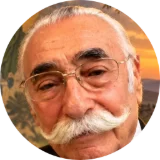
This text is one of Seyit Derviş Tur Dede’s writings on the Alevi faith. For a general introduction: What is Alevism? Its faith, history and core values
Düzgün TV. Dear friends of the Ehl-i Beyt (Ahl al-Bayt, the family of the Prophet), who follow and listen to us: may almighty Allah accept, in His glorious presence, the Muharram fast that all of you are keeping and the mourning for Karbala, the lokma (consecrated food offerings) you give and the prayers you say. May almighty Allah not deprive us of the company and the sight of the Prophet Muhammad, nor of the path and erkân (rites) of the Ehl-i Beyt. Today is the day sanctified by the Holy Qur’an, the day on which the Ehl-i Beyt was massacred. Not every heart can bear to recount, on this day, the cruelty inflicted on the Ehl-i Beyt. If I am overcome with emotion while speaking, please bear with me and forgive me. I offer you all my love and affection.
Now let us come to Imam Hüseyin (Husayn) and the events of Karbala:
Dear souls (canlar): the hatred that brought about the events of Karbala went even beyond the lust for power of that time; it was the continuation of the old enmity of the Umayyads (the sons of Umayya) towards the Hashimites. It is the hatred that Abu Sufyan spewed out because he had lost Abu Jahl and many others of his kin in the Battle of Badr. That is why they constantly instilled the poison of revenge in their sons and grandsons. Muawiya’s refusal to recognise the caliphate of Imam Ali was a continuation of that old enmity. His demand for vengeance for the blood of Caliph Uthman (Osman) was merely a pretext for it. And the fact that, when he was losing the Battle of Siffin, he had pages of the Qur’an fixed to spears proves what a false Muslim he was.
His mother, the harlot Hind, attempting at the Battle of Uhud to eat the liver of Hamza, the uncle of the Prophet Muhammad, shows plainly how much enmity they harboured towards the descendants of the Prophet Muhammad. The greatest misfortune is that after the Prophet Muhammad, the ordering and governance of the religion of Islam remained for 86 years – and, if we count the 12 years of Uthman’s caliphate, for a full 98 years – in the hands of the Umayyads, the most merciless enemies of the religion of Islam.
After Muawiya himself had Imam Ali martyred through a host of tricks and malice and had seized the caliphate by force, he turned the religion of Islam brought by the Prophet Muhammad completely upside down. He increased the Prophet Muhammad’s worship of two times a day with two prostrations (the prayer) to five times. He extended the three-day Ramadan fast, kept in honour of the Night of Power (Kadir gecesi), to 30 days. By way of appointment he placed his son, Yezid (Yazid), accursed of Allah, on the seat of the caliphate. With this injustice he invented the passing of the caliphate from father to son in Islam. And before he died, he left his son the following testament!
Muawiya: “There are people in Medina, whose names I shall give you, whose oath of allegiance (biat) I could not obtain. Yet until today I have managed them and have not driven them to revolt: Abdurrahman, son of Abu Bakr; Abdullah, son of Zubayr; Abdullah, son of Umar; and Hüseyin, son of Ali. As long as you do not obtain their allegiance, your caliphate is in danger at every moment. The others you can win with worldly goods and positions. But Hüseyin, son of Ali, is your most dangerous rival. You can never win him with wealth or office. You must take either his allegiance or his head.”
Look at the hatred they bore towards the lineage of the Ehl-i Beyt: by satanic cunning they had Imam Ali martyred. They had Imam Hasan poisoned by his wife Ja‘da (Cuda). The cruel Muawiya, who could never have enough of the blood of the Ehl-i Beyt, on his deathbed too charges his accursed son to kill Imam Hüseyin. Muawiya dies in the last week of March in the year 680 CE.
Immediately after his father’s death, Yezid’s first act is to send an urgent decree to the governor of Medina, Walid, son of Utba (Atabe), giving the following order: “O Walid! As for the people in Medina who still have not given the oath of allegiance from my father’s time: either you take their allegiance or you send their heads to Damascus (Şam).” Governor Walid, on receiving this harsh order from Yezid, is bewildered. Marwan – whom the Prophet Muhammad had banished, and who was a cousin of Abu Sufyan and of Caliph Uthman – had been appointed by Muawiya as deputy governor of Medina to act as a spy, an informer who passed every piece of news on to Muawiya. The governor first summons his deputy Marwan and explains the situation to him. Together they decide to summon Imam Hüseyin and read him the order that has arrived; they call Imam Hüseyin to the governor’s office, read him the order and ask his opinion.
Imam Hüseyin: “O Walid! This is a delicate matter. For someone from the Ehl-i Beyt like me to give allegiance to a ruler of Yezid’s standing in this way, between two walls – that cannot be. Tomorrow gather the people of Medina in the mosque and read out this order, and I shall then state my view there,” he says. Walid: “That is right; it is best that we do so tomorrow.” Just as Imam Hüseyin is leaving the room, Marwan, accursed of Allah, rebukes the governor: “Where are you letting Hüseyin go? You must imprison him. You will never get this opportunity again.” Hearing this, Imam Hüseyin turns to Marwan: “O bastard of Zarqa! Nothing good can be expected from an accursed one like you, who incurred the Prophet’s loathing and curse and was banished. From you only discord and mischief can be expected,” he says, and goes out to his house.
Thereupon, the next day the governor of Medina, Walid, gathers the people and reads out the order from Yezid. Imam Hüseyin mounts the pulpit (minbar) and gives this answer: “O people of Medina, O Walid! You know that we are the Ehl-i Beyt of the Messenger of God. Our exalted place is the rank of velilik (friendship with God). There is a verse concerning us which says that on the path of truth we stand for good morals and righteousness: ‘I have purified the Ehl-i Beyt from the impurities of the world.’ O Walid, now you want me to give allegiance to an accursed troublemaker, an agitator, a corrupter, a tyrant, a drunkard, a liar and a cheat. By accepting the allegiance and caliphate of such a tyrant I would be surrendering this spiritual, sacred value entrusted to us, and the right to the wrong. To stain this entrusted heritage or to hand it over to another is never in our power. If you would ask about the allegiance of my brother Imam Hasan: many of you acted with hypocrisy. You left him alone. And so that no Muslim blood would be shed, and to protest against you, he withdrew from the caliphate on certain conditions. If Muawiya later did not keep his word and resorted to a pseudo-lawful trick (hile-i şeriye), my brother Imam Hasan bears no blame for that whatsoever. As for me, it is impossible for me to accept this.”
After this incident, because of the various pressures exerted on him, he no longer feels safe in Medina. Within this one month he receives over a hundred letters from Kufa. In all of them it says: “We do not recognise Yezid’s caliphate; do not delay, come here. We shall give you our allegiance together.” He constantly receives such letters of entreaty. While these events continue, Marwan, accursed of Allah, keeps informing Yezid that the governor of Medina, Walid, has great respect for Imam Hüseyin and therefore will never be able to carry out the orders given. Receiving these reports, Yezid writes to the governor of Medina, Walid, in a harsh decree: “Either take Hüseyin’s allegiance or cut off his head and send it to Damascus.” Hearing this, the governor of Medina, Walid, says: “God forbid! I cannot kill anyone from the Ehl-i Beyt. I cannot allow the blood of the descendants of Muhammad to be shed.”
Not knowing what to do, Walid goes to Imam Hüseyin, informs him of the situation and pleads with him: “O Hüseyin, the accursed one called Yezid will not leave you in peace here. When he realises that I cannot commit this injustice, he will send in my place a tyrant like himself. I fear that some harm will befall you in this land. My request to you is that it would be better for you to go to a country that is not under Yezid’s command.”
Thereupon Imam Hüseyin thinks long and hard. He visits the graves of his grandfather the Prophet Muhammad, his mother Fatima al-Zahra (Fatima-tüz-Zehra) and his elder brother Hasan al-Mujtaba. In particular, Imam Hüseyin’s brother Muhammad ibn al-Hanafiyya (Muhammed Hanefî) insists that he should not go to Kufa. Muhammad Hanefî says: “First go to Mecca; its people will show you respect. If they give you allegiance, stay there. If its people too fear Yezid, go to Yemen. For Yemen is not under Yezid’s command; he can do nothing to you there. Whatever you do, do not go to Kufa; the people of Kufa are treacherous. The treachery they committed against our father Imam Ali and our brother Imam Hasan they will commit against you too.” Imam Hüseyin finds this proposal of his brother Muhammad Hanefî sensible and begins preparations to emigrate to Mecca.
Imam Hüseyin’s departure took place in the 60th year of the Hijra, on the 4th day of the month of Sha‘ban (8 May 680 in the Gregorian calendar). He sets out from Medina to go to Mecca. On the way, Abdullah, son of Muti, was coming from Mecca to Medina. He meets Imam Hüseyin on the road. Abdullah, who knows Imam Hüseyin’s situation, first pays his respects (niyaz) and asks for his blessing (himmet), and then gives this advice: “O most beloved grandson of Muhammad, darling of our mother Fatima, go to Mecca. I hope its people will show you love and respect. But if out of fear of Yezid they do not give you allegiance, go to Yemen; Yemen is good for your safety. Whatever you do, do not go to Kufa; the people of Kufa are fickle. What they did to your father and your brother they may do to you too.” After this conversation, Abdullah continues on his way towards Medina and Imam Hüseyin on his towards Mecca.
Imam Hüseyin, having left Medina on 8 May, arrives in Mecca on 25 May. The people of Mecca welcome Imam Hüseyin’s caravan with great enthusiasm. With respect and reverence they bring him into the city. They settle Imam Hüseyin’s household in a blessed place known as “Şeab Ali” (Shi‘b Ali). As though circling the Kaaba, the people of the Hijaz visit him for days, group after group, wave after wave, declaring their loyalty. They ask how they might be of service.
Disturbed by this, the governor of Mecca, Said, son of As, one of the leading Umayyads, sends Yezid the following message: “The notables and the people of Mecca show great respect to Hüseyin, son of Ali; for them, Imam Hüseyin’s caliphate is valid, and it is therefore dangerous for him to remain here” – so he reports to Yezid in detail. Some time later he himself, obeying an order from Yezid and also fearing an uprising of the people, secretly leaves Mecca and goes to Damascus.
The Kufans choose the qadi (judge) of Kufa, Shurayh (Süreyh), as their representative, swear before him that they will give allegiance to Imam Hüseyin, and send him to Mecca with a letter of invitation. Before this man has even reached Mecca, they send Mesma of Hamadan and Abdullah Bekri after him with yet another letter of invitation. Every week they renew their invitation through someone else. After examining the letters sent by the Kufans at length, Imam Hüseyin calls Abdullah, son of his uncle Abbas, to him. He reads him the insistent letters sent by the Kufans. In view of this situation, he says that he wishes to go.
His cousin Abdullah says to him: “O apple of the eye of the Messenger of God, O generous Imam, we all know how fickle the people of Kufa are. Was it not the people of Iraq who brought great calamities upon our father and our elder brother? They have never kept their word. I fear that they will bring disaster on you too. It is not right to believe their words at the first moment. Since for you the side of answering the call weighs heavier, first send a trustworthy man of yours, let him investigate their loyalty, and let them give allegiance to him in your name. Then you can set out according to the situation.
After this conversation with his cousin Abdullah, Imam Hüseyin summons Müslim, son of his uncle Aqil, and tells him the matter. “O my friend, who does not hesitate to sacrifice himself when misfortune confronts me! I want you to go ahead to Kufa and investigate the situation. Are the Kufans truly faithful to the word they have given? Will they give allegiance to you in my name? If, as in these letters, they accept you and give you allegiance in my name and keep their word, then I shall come there with our family.”
Hazrat Müslim, following this order from Imam Hüseyin, sets off at once in great haste. He takes with him two of his beloved children, seven-year-old Mehmet and nine-year-old İbrahim. When Hazrat Müslim reaches Kufa with his two children, he becomes a guest in the house of Mukhtar (Muhtar), son of Abu Ubayda, a friend of the Ehl-i Beyt. When the notables and the people of Kufa hear that Müslim ibn Aqil has come in the name of Imam Hüseyin, they come in droves and declare their loyalty. Seeing this trust and loyalty, Hazrat Müslim informs Imam Hüseyin that there is no objection to Imam Hüseyin coming and that the people of Kufa stand by the word they have given.
But Yezid’s supporters in Kufa – accursed men named Abdullah Bahili, Ammar son of Walid, and Arm (Amr) son of Sad – join together and inform Yezid of the situation by letter: “The governor of Kufa, Numan son of Bashir, is doing nothing and is even a partisan of Imam Hüseyin; if this continues, Iraq will soon be lost to him,” and in their letters they beg him to send a reliable commander to Kufa without delay. On receiving this news, Yezid appoints the governor of Basra – Ubaydullah son of Ziyad (Ziyad oğlu Übeyd), a tyrant and enemy of the Ehl-i Beyt at least as bad as himself – as governor of Kufa and gives him the following order: “Kill at once Müslim son of Aqil, who is taking allegiance in Kufa in the name of Imam Hüseyin. Prevent Imam Hüseyin from entering Iraq; if he falls into your hands, take his allegiance in my name. If he does not give it, take his head and send it to Damascus.”
Ubaydullah ibn Ziyad, the enemy of the Ehl-i Beyt, is exceedingly pleased with this order. He immediately sets about preparing a plan. Ibn Ziyad (Ubayd, son of Ziyad), cunning as the devil, puts on the same clothing that Imam Hüseyin wore, draws a veil over his face and comes to Kufa long before Imam Hüseyin. The people of Kufa, who in those days were awaiting Imam Hüseyin, think that Imam Hüseyin has come; they give him a magnificent welcome, saying “Welcome, O grandson of the Prophet!”, and declare that they will give him allegiance – at which the tyrant Ubayd uncovers his face: “Look who I am! So you have abandoned Yezid and are attempting rebellion – see what I shall do to you!” he says, and goes straight to the governor’s mansion.
As soon as Ubaydullah ibn Ziyad arrives at the governor’s mansion, he reads out the decree from Yezid granting him the governorship of Kufa. He hurls threats: everyone is obliged to obey his orders; otherwise, “you will be punished with heavy penalties.” “Hand Müslim ibn Aqil over to me. Whoever hides and defends him, I will have beheaded,” he says.
Hani, one of the friends of the Ehl-i Beyt, who did not want to give Müslim up, was hiding Müslim in his own house. He had been denounced by another accursed man. Ubaydullah ibn Ziyad summons Hani to his office and orders him to hand Müslim over. When Hani says, “O Ubayd! To hand over to his enemy a stranger who has taken refuge in my house is impossible for me,” he has Hani flogged and killed on the spot.
Learning of this, Müslim gathers the people who had given him allegiance in the name of Imam Hüseyin and goes into battle against Ibn Ziyad. Throughout the fighting, Ubayd constantly watches from the palace window Müslim’s soldiers, who fight victoriously for two days without a break. Realising that he will lose the battle and seized by fear, Ubaydullah ibn Ziyad tells his supporters with him in the palace: “Shout in every direction that within the hour an army of 20,000 men from Damascus is about to enter Kufa. Let the Kufans go home at once, or they will all be ruined together with their families.” With this satanic idea Ibn Ziyad deceives the Kufans and succeeds in scattering the soldiers around Müslim.
The Kufans who support Yezid shout again and again from the palace windows, loud enough for all to hear, to Müslim’s supporters who are about to win: “Yezid’s army is coming! If you do not go home, you will be wiped out together with your wives and children.” Hearing this, the treacherous Kufans scatter in fear within an hour. Müslim looks around and sees that no one but himself is left on the square. To save his life he too flees and takes refuge in the house of Muhammed Kesir. One of the idolaters (müşrik) reports that he is there. Ibn Ziyad has Müslim seized and martyrs him on 11 September 680. The tyrant Ubaydullah ibn Ziyad is not content with killing Müslim; he also finds the two innocent little ones he had brought with him and martyrs them.
On the very day Müslim was martyred – 11 September 680 in the Gregorian calendar – Imam Hüseyin bids farewell to his relatives and sets out from Mecca to go to Kufa. While Imam Hüseyin is travelling towards Kufa, the governor of Kufa, Ubaydullah ibn Ziyad, sends Hurr (Hür), son of Yezid of the Tamim, with a cavalry troop of 300 men to meet him and make sure that Imam Hüseyin does not go elsewhere. When Hurr finds Imam Hüseyin’s caravan, he approaches Imam Hüseyin respectfully. He asks why he wishes to come to Kufa. Imam Hüseyin: “O Hurr, the Kufans have invited me insistently. If you do not believe it, here, read their letters. That is why I set out for Kufa.”
Hurr: “I know nothing of such an invitation. I have only been charged by the governor of Kufa, Ubayd, with bringing you to Kufa. I shall not leave your side.” Imam Hüseyin turns to Hurr: “Death is easier than this,” he says, and orders the people with him to turn back. But each time, Hurr prevents it with his soldiers. Now, I want to tell you the fabricated story found in the history books written by all the Sunni scholars (ulema), which is meant to justify Muawiya and Yezid or legitimise their crimes. For many Alevis keep telling this fabricated event – and we tell it too – either in the sense that Imam Hüseyin went to Karbala knowingly, or because they believe what is told is true. Look at the invented story:
On a dark night, while Hurr’s soldiers are asleep, Imam Hüseyin breaks camp with his caravan. He leads it a long way along the bank of the Euphrates (Fırat) towards Mecca. But the night is so pitch-black that one cannot see one’s hand before one’s eyes. As they advance a good distance through the darkness, Imam Hüseyin’s horse Zülcenah (Dhu’l-Janah) will not move on, as if nailed to the ground. Whatever Imam Hüseyin does, it will not take a single step. Then Imam Hüseyin asks those with him: “Does anyone among you know this place? What is its name?” One of the companions says: “They call this place ‘Arzı Mariye’.” When the Hazrat asks, “This place must have another name too,” another companion says this time: “My lord, one of the names of this place is also ‘Kerbi bela’ (grief and affliction).” When Imam Hüseyin hears this name, he says “Allahu akbar” and dismounts from his horse.
“So this is the place they call ‘Hazel ardu Kerbibelâ’ (this is the land of grief and affliction),” he says, and grows sorrowful. The companions around him ask: “O Hazrat, why did you dismount and grow so sorrowful? Surely there is a wisdom in this.” Imam Hüseyin: “O my friends, my children, I heard Gabriel (Cebrail), peace be upon him, telling my grandfather, the master of the two worlds, Muhammad Mustafa, that this place would be for us a sea of cruelty and affliction. Later, when I was going with my father Ali al-Murtaza to the Battle of Siffin, we camped here. My father laid his head on the knee of my brother Imam Hasan and rested a little. Suddenly he raised his head and sighed deeply. My brother Imam Hasan asked: ‘What is it, father, what happened, what did you see?’ Imam Ali said: ‘My son, just now I saw in a dream that this desert of affliction was covered in blood, and my darling Hüseyin was calling for help amid these waves of blood, but no one heard his cry and no one went to his aid.’ Then he looked sorrowfully into my face: ‘O light of my eyes, my Hüseyin, if the time comes and an event that will burn hearts happens in this desert of affliction, and you meet with disaster, what will you do?’ And I said: ‘O my father! I shall be patient and await Allah’s command.’ Now I know where I have come. Dismount from your horses, pitch the tents.” The companions ask: “O Hazrat! To save us from Yezid’s soldiers you roused us in the darkness of this night and set us on the road back to Mecca. Now you order us to pitch the tents here. If we stay here, Yezid’s soldiers will find us again and prevent us from going.” Imam Hüseyin replies: “O my friends, in this land I shall be reunited with my father and my grandfather. Whoever loves the world, let him go in the darkness of this night.” Hearing this, some people take advantage of the darkness of that night and leave.
Imam Hüseyin knew very well that the moment he had been awaiting for years had come, that the place he had come to was the one Gabriel, peace be upon him, had told his grandfather Muhammad Mustafa about, and that he would await God’s (Hak) decree here. That is why, they write, he did not hesitate to pitch the encampments (haymagah) there knowingly?
This story tells how Gabriel told the Prophet Muhammad that his grandson Imam Hüseyin and the other children of the Ehl-i Beyt would be mercilessly killed in Karbala by Muslims of your own community (ümmet), how Imam Ali saw this in a dream and told Imam Hüseyin, and how Imam Hüseyin knew all this in advance and went to Karbala knowingly. They wrote it in such a convincing style, based on miracles (keramet) and belief (itikat), that it is impossible not to believe it. Indeed, it is the scholars of that age, supporters of Yezid who sold their conscience, who say: “What can one do – Hüseyin and Yezid fought each other, and Hüseyin lost the battle.” It is a story they invented to legitimise Yezid’s crime. Imam Hüseyin went to the aid of the Kufans, who presented themselves as oppressed and helpless. He fulfilled the responsibility of being of the Ehl-i Beyt. The other story is a fabrication of the Umayyad consensus council (icma heyeti). No scholar who has not sold his conscience accepts it.
It is just like the claim that Imam Ali was martyred while praying in the mosque: “Ali went to the mosque, why don’t you go to the mosque?” – like the assimilation lie used to bring Alevis into the mosque. There is reason, there is logic. Had Imam Hüseyin known that on his way to Kufa he would meet with such a disaster, that his women and children, his whole family, would be killed thirsting in that desert – would he have gone at all? Had he gone knowingly and taken no precautions whatsoever, would he have told his cousin Müslim ibn Aqil beforehand: “Go to Kufa in my place; if there is no danger and everyone gives you allegiance in my place, let me know, and then I will come”? This is exactly how, over 86 years, the Umayyad clan stuck the label of the Prophet Muhammad onto their betrayals of Islam, their massacres and their invented orders, told the nations of the world “this is Islam”, and made them accept a fabricated Islam. Except only the friends of the Ehl-i Beyt:
Now let us come to the events that were to unfold at Karbala.
Meanwhile, the governor of Kufa, Ibn Ziyad, summons Umar, grandson of Abu Waqqas and son of Sad, to his office and says: “O Umar, I will make you governor of Rey, but on one condition. I will give you four thousand cavalry soldiers. With them you will march against Hüseyin. You will take his allegiance to Yezid; if he does not give it, you will take his head and bring it to me. After that you will take up your post as governor.” As he says this, he hands him a decree appointing him governor of Rey. Umar asks to be excused from this task. He begs him to send others against Hüseyin. When Ibn Ziyad says, “In that case, give back the decree I gave you for the governorship of Rey,” Umar asks for a respite: “Give me until tomorrow, so that I may think.”
When Umar goes home and consults his relatives, they all say: How can you do such a thing? How can you stand against Imam Hüseyin? Do not undertake such a thing. Worldly goods stay in this world – and none of them gives consent. Umar: “Killing Imam Hüseyin is fire, but the governorship of Rey is a sweet office.” With this thought he cannot sleep until morning. In the morning Umar goes to Ibn Ziyad and says: “You appointed me to this governorship, and the people have heard it. Would it not be better if you sent me to my post and sent one of the men whose names I shall give you against Hüseyin?” To which Ubayd ibn Ziyad says: “I am not going to consult you about my affairs. Either you take command of the soldiers and go, or, if you are not going, you give back the decree of governorship we gave you.” Receiving this answer, Umar says, “Very well, I am going,” and, coveting worldly goods, accepts the task that humanity has cursed to this day.
Umar’s grandfather, Seyd Vakkas (Abu Waqqas), was one of the dearest and most loyal companions of the Prophet Muhammad. He had been given the glad tidings of Paradise. His father Sad was a companion known for his loyalty to Imam Ali. Their descendant, the cruel Umar, who deserved the curse of Allah, succumbing to his own filthy ego (nefs) and ambitions, agrees to kill the most beloved grandson of the Prophet Muhammad, whose name he honours with blessings (salavat) and from whom he hopes for intercession (şefaat). Look at this creature that has received no share of humanity: it agrees to do injustice to the descendant of people who were the friends of his grandfather and of his father.
Umar, grandson of Seyd Vakkas and son of Sad, knew very well the rank of Imam Hüseyin and of the Ehl-i Beyt. In return for the governorship of Rey he casts himself into the fire of Hell, takes command of the army and goes to Karbala. Arriving in Karbala, Umar sends word to Imam Hüseyin informing him of the task he has taken on. Imam Hüseyin gives the following answer: “I came here at the invitation of the people of Kufa; if you do not want me, I will turn back and go.”
Umar sends this answer from Imam Hüseyin to Ubaydullah ibn Ziyad. Ubayd to Umar: “Now that Hüseyin has fallen into our clutches, do not let him escape. Propose to him that he give allegiance to Yezid. If he accepts, we will find a solution. If he does not accept, surround the Euphrates side with soldiers and give them no water.” Receiving this order, Umar closes off the Euphrates side with 500 soldiers. He prevents Imam Hüseyin’s followers from getting water.
Thereupon Imam Hüseyin sends word that he wishes to meet Umar face to face. Umar accepts the proposal and they meet. Imam Hüseyin says to Umar: “Let me go back to Medina, or go somewhere else outside the borders of the Muslims. I have no eye on any office. I am one of the Ehl-i Beyt; therefore it is impossible for me to accept Yezid’s caliphate. If you accept a drunkard like Yezid as caliph, I will not interfere in your order. Just as I lived in Medina in Muawiya’s time, I wish to live quietly, keeping to myself.”
Umar finds this proposal reasonable. He immediately writes it down and sends it to the governor of Kufa, Ubayd. Ubaydullah ibn Ziyad gathers his leading commanders. He reads them the message that has come. One of the commanders, Shimr (Şimir), son of Dhu’l-Jawshan (Zül Gevşen), stands up and makes this proposal: “Now that Hüseyin has fallen into your hands, make use of the opportunity. Wherever you let him go, he quickly becomes strong in every place he goes. Against him your power will remain weak. Now, while you have this opportunity in hand, Hüseyin and his companions must bow to your order and surrender. I swear I have learnt this: Umar talks with Hüseyin until the early hours. He cannot carry out your orders.”
Then Ibn Ziyad writes the decree of cruelty: “Either Hüseyin and his companions obey my order, or, if they do not, you will make war on them and have them trampled under the hooves of the horses. If you do not carry out my order, withdraw from command. Hand over the command and the soldiers to Shimr, who brings this letter.” Ubayd to Shimr: “Take this order to Umar; if he acts as I have written, listen to him and follow his command. If he objects, you are the commander over him and the soldiers. Then strike off the heads of both Umar and Hüseyin and bring them to me.”
The cruel Shimr, regarding the opportunity as booty, comes joyfully to Karbala. He gives the decree to Umar. Umar reads the decree and turns to Shimr: “May Allah curse you, what ugly news you have brought. My aim was to settle the matter. But I swear Hüseyin will not accept this.” The cruel Shimr is waiting for Umar to refuse so that he himself can take the command. Shimr asks Umar: “What will you do?” Umar: “What can I do? Having no choice, I will carry out the order,” he says. It is then that he takes the decision of cruelty that is not forgiven in this world.
On receiving this ill-omened order brought by Shimr, Umar, as the first step of the cruelty he is about to commit, orders the soldiers to advance on Imam Hüseyin. At that moment Imam Hüseyin is sitting on his knees in front of his tent, his head between his two hands, lost in thought. Hazrat Zeynep suddenly sees that Yezid’s army is coming towards them. She at once comes to Imam Hüseyin and rouses him from his slumber. Imam Hüseyin: “Just now I saw the Messenger of God (Resulullah) in my dream; he said: You will come to us.” As soon as Mother Zeynep (Zeynep Ana) hears this, she cries out and begins beating her knees. While they are in this state, Umar’s troops begin to tighten the ring. Noticing this, Hazrat Abbas says to Imam Hüseyin: “These soldiers are coming at us; what should we do?” Imam Hüseyin then sends Celal Abbas to Umar to ask for one day’s respite. Umar accepts this proposal from Imam Hüseyin and withdraws the soldiers.
When Imam Hüseyin fully realises the gravity of the situation, he speaks thus to the relatives and friends who have come with him that far: “My faithful friends, my relatives, from this moment I give you leave. Make use of the darkness of this night. Leave this place tonight, go to the towns and villages, disperse. May God (Hak) help you all and reward you with good. Do not stay here and plunge with me into the sea of affliction. The enemy wants only me; if necessary, they will kill me. My heart does not consent to your going to death together with me.”
However much he insists, it is not accepted by everyone. Yet that night, once again, those who would go, go. His brothers and close relatives answer together: “We do not accept this. God forbid – if, after we had gone, some disaster befell you, we could never forgive ourselves. We will live together and die together; we do not wish to outlive you.” Then Imam Hüseyin prays for them all.
As a precaution in the darkness of the night, he has brushwood, thorn, reeds and similar burnable things piled up around the tents, so that, when the soldiers try to make their first assault on the tents, these can be set alight and their entry in the first charge delayed at least in part. As a second precaution, he has the tents moved close together and their ropes tied to one another, so that if a secret attack is made on one of the tents in the darkness of the night, the other tents will notice it.
The side of the Ehl-i Beyt, having spent the last night in worship until morning as a precaution, is still at the morning prayer, and dawn is just breaking, when from Yezid’s army come the sounds of the horns that open the battle. The soldiers under the command of the accursed Umar begin taking their positions battalion by battalion. On the right, as military commander, stands Umar son of Hajjaj; on the left the accursed infidel Shimr, son of Dhu’l-Jawshan; and in the centre, as commander-in-chief, Umar, grandson of Seyd Vakkas and son of Sad, who deserved the curse.
Seeing this, the leader of the martyrs, Imam Hüseyin, no longer has any doubt that the intentions of the infidels are evil. While ordering his own side to prepare, he thinks that he too must fulfil his duty as Imam one last time. With this in mind, Imam Hüseyin has his blessed horse Zülcenah brought forward. He winds the turban (imame) of his grandfather the Prophet Muhammad Mustafa around his head and puts on his cloak (hırka), mounts his horse and rides out to face Yezid’s army. To remind once more the infidels who invoke blessings on the Prophet Muhammad how wrong their deeds are and that they face a grave responsibility, he makes this speech:
“O people of Kufa! I know that you have become too deaf to understand the words I shall say to you. And you have become too blind to see the robe on my body and the turban on my head. I say these words to see whether I can hold you back from the fire into which you will fall. One day, in the presence of God (Hakk), I shall bring a case against you. I am speaking so that this speech of mine may be evidence for that day. O shameless people! The turban on my head, the sword at my waist, the cloak of felicity on my back, the horse beneath me belong to my grandfather the Prophet Muhammad. I am the heir of the knowledge of prophethood. I am the darling of Fatima. In all my life, has any evil from me ever touched you?
O cruel people! Praise be to God, I am the grandson of your Prophet, upon whom you invoke blessings. I am the son of his beloved daughter Fatima al-Zahra. Ali al-Murtaza is my father. The Prophet Muhammad said of him: “Lehmuke-lehmi, Dehmuke-demmi, ruhuke-ruhu, Enne Medine’tül ilmi ve Ali-yün bâbuha. Men küntü mevlahu, Ali-yün mevla.” Its meaning (as rendered in the Turkish original): Ali’s flesh is in my flesh, his blood is of my blood, his soul of my soul. I am the city of knowledge; Ali is the gate of that knowledge. Through Ali one comes to me. Whoever’s mawla (master, patron) I am, Ali too is his mawla.
“O infidels! I am of the lineage of Muhammad Mustafa. Has he any child besides me? I am of his Ehl-i Beyt – who doubts it? Have you no belief, no faith at all? Look, the community of the Prophet Jesus (İsa) rub their faces on Jesus’s threshold and on the tracks of his donkey. The Jews rub their faces on the footsteps of Moses (Musa). And you? You want to kill your Prophet’s child and family by denying them the water of the Euphrates, which flows freely even for wolf and bird.
O people of Kufa! What have I done to you? I have not taken your property, I have not shed your blood, I have done you no harm – why do you declare my blood lawful? O you who do not fear Allah, you called me here with oaths. I left my homeland, my country, my friends, my relatives, and came here in answer to your call. Now, in these foreign lands, do you want to leave my children orphans and bring them to ruin? Just as I had no connection or dealings with you before, so I have none now. Let me go back to my homeland as I came, or emigrate to another country. Here are the letters you sent. Under these letters are all your signatures. You called me to this country with pleas and entreaties. You have brought this matter to this point. You are the cause of this fire of discord.
Where are your tongues that sang like the verse of Ihlas (Surat al-Ikhlas)? Have you turned to stone? Speak! O Umar son of Sad, O Umar son of Hajjaj, O Shis son of Rabia, O Sinan son of Anas, O Shimr son of Dhu’l-Jawshan – what cruelty is this? What injustice is this? Suppose I am an ordinary person. Not the slightest harm from me has touched any one of you. I am a guiltless innocent. How can you deem this cruelty fitting for a guiltless person? And then – do you not know which month this is? Which day today is? This month is Muharram, one of the blessed months. Did your Prophet not forbid the shedding of blood in this holy month?
Today is the tenth of Muharram, the day sanctified by the Qur’an. It is the day of Ashura (aşure), on which my grandfather Muhammad Mustafa and my father Ali al-Murtaza offered prayers and salutations for all the prophets. Are you not Muslims? With what face will you expect intercession from my forefather tomorrow? What are you waiting for! Kill, kill the last of the Ehl-i Beyt, the grandson of your Prophet on whom you invoke blessings! Come on, what are you waiting for! Vomit out on me your hatred of the Prophet Muhammad!” – with these words he ends his speech.
This people of Yezid, without faith and without religion, all together deny the letters they had sent. But the soldiers who hear this speech at first freeze, silent as stone. Soon whispering and stirring begin. When the commander-in-chief Umar son of Sad notices this, he shouts at Imam Hüseyin: “O Hüseyin, these words you speak are of no use at all. Either you give allegiance to Yezid or we take your head.”
Imam Hüseyin replies: “O Umar, I told you before that I am one of the Ehl-i Beyt and that it is impossible for me to consent to such unjust things.” Hearing these words, Hurr – one of the commanders of Yezid’s army, who had first been charged with pursuing Imam Hüseyin and had prevented his return – leaps forward from among the soldiers: “O tyrants! Is this how the Prophet’s child is treated? Had I known that you would commit such cruelty, I would not have prevented his return to Mecca – I would even have helped him.
I do not leave the right path,” he cries. “Rather than Yezid’s filthy wealth, I prefer to attain the intercession of the Prophet Muhammad,” he says, and comes over to Imam Hüseyin. When Hurr reaches Imam Hüseyin, he throws himself at his feet. “O Imam, forgive me; I was the first to prevent your return. Permit me now to be the first to be martyred for your sake,” he says, asking forgiveness – and Hurr’s brother and his loyal servant also leave Yezid’s army and take their place at Imam Hüseyin’s side. They are also the first to be martyred on the field of Karbala.
Umar, grandson of Seyd Vakkas and son of Sad, accursed of Allah, says: “O soldiers, O commanders, see: I am starting the battle. Bear witness to this before Ibn Ziyad,” and so it is this accursed one who shoots the first arrow at Imam Hüseyin. Seeing this, the soldiers of the infidels (küffar) begin from every side to rain arrows upon Imam Hüseyin. When Imam Hüseyin sees that he has fallen into calamity at an unexpected moment, he calls to his companions: “O faithful believers who keep your word, be ready for battle and await martyrdom.”
This cruelty and massacre against the beloved grandson of the Prophet Muhammad and all the rest of his household began in the 61st year of the Hijra, on the 10th of the month of Muharram, a Friday, immediately after dawn had broken. The Gregorian date is 10 October 680. Imam Hüseyin’s sons, brothers and companions, together with himself, were 68 people; together with six-month-old Ali Asgar and Hurr, his brother and his servant, the total number of martyrs was 72.
Four of them are the children of his uncle Aqil: Müslim and his brothers Cafer and Abdurrahman. Müslim’s children are the Hazrats Abdullah, İbrahim and Muhammed. Two are the sons of his uncle Cafer-i Tayyar, the Hazrats Muhammed and Abdullah. Six are the sons of Imam Ali, Imam Hüseyin’s half-brothers through a different mother: the Hazrats Fazl, Avn, Abdullah and Abbas. Two others are the sons of Imam Hasan, the Hazrats Abdullah and Kasım. Two are the sons of Imam Hüseyin, the Hazrats Ali Ekber and Ali Askar. Ali Askar is a six-month-old innocent baby. In Karbala exactly 19 souls of the lineage of the Prophet Muhammad were martyred.
No sooner has Imam Hüseyin said “Be ready for battle” than Hurr comes to him at once. When he insists, “Grant me your blessing, let me be the first to fight for your sake, do not deprive me of this reward,” Imam Hüseyin prays for him and permits him to fight. The battle that begins in this way goes on. By ten o’clock in the morning 53 companions drink the sherbet of martyrdom. Now the turn comes to his relatives and brothers. His relatives and his brothers, one by one, fought heroically and with faith against Yezid’s army and drank the sherbet of martyrdom.
Of his brothers, Hazrat Abbas had remained last. He mounts his horse and, reaching the battlefield, turns to Yezid’s army: “O merciless people of bandits, far from humanity! O faithless people! The grandson of the Prophet, Imam Hüseyin, says: ‘Have you killed all my companions and close relatives? What kind of hatred is this? What kind of enmity is this – have you still not had your fill of blood? Do you feel no remorse for this cruelty you are committing? What do you want from these little innocents, from these women? These guiltless, innocent people are dying of thirst. At least give them water. And let us go, to Rum (Byzantium), to India, to China; we will leave the Arabian Peninsula to you.’”
While some of the soldiers, moved by this speech, begin to turn against their commanders, the accursed Shimr, Shis (Sit) son of Rabia, and Ahcer leap forward and threaten the soldiers. Turning to Hazrat Abbas they say: “O Abbas, do not trouble yourself in vain; Yezid has given a definitive order. From Ubayd, son of Ziyad, we have the promise of throne and dominion. Even if the whole face of the earth were sweet water and we were its guardians, we would give no water to Imam Hüseyin’s followers, his household or himself.” Hazrat Abbas comes back and tells Imam Hüseyin what has happened. Meanwhile, hearing the moans for water coming from the tents, he cannot bear it.
He takes two leather waterskins, mounts his horse and, with such a battle cry, gallops towards the Euphrates that the enemy soldiers do not know what has hit them. No one dares to stand in his way. Reaching the waters of the Euphrates, Hazrat Abbas is about to drink when he seems to hear again the moans of thirst from the tents. He gives up drinking, fills the waterskins and turns back. With the waterskins on both shoulders, heedless of the arrows piercing his body, he races like a bullet towards the tents of the Ehl-i Beyt – when Nevfel son of Erzak, the accursed, coming from behind, cuts off Hazrat Abbas’s right arm at the shoulder with a sword stroke, and it falls. Heedless of this too, Hazrat Abbas continues on his way with all his speed, to get the waterskin on his left arm there in time. At that very moment another accursed one strikes his left arm with a sword and severs his left arm from his body as well.
Even in this state Hazrat Abbas does not want to let go of the waterskin. As he tries to carry it, holding it in his teeth, another cruel accursed one shoots an arrow and pierces the waterskin. And so that water flows away into the Karbala desert like the tears of the oppressed. As Hazrat Abbas moans, covered in blood, Imam Hüseyin reaches him. Faced with this heart-rending sight, Imam Hüseyin looks around him. “You are monsters in human form; I have nothing more to say to you,” he says. As he presses Hazrat Abbas to his breast and carries him to the front of the tents, Hazrat Abbas says: “O Imam, I could not bring the water in time, forgive me,” and drinks the sherbet of martyrdom.
Seeing this cruelty, Imam Hüseyin’s son Ali Ekber insistently asks his father for permission to fight – to avenge his uncle Abbas and so as not to witness the cruelty that will be done to his father – receives permission, girds on his weapons, mounts his horse and goes out at once onto the battlefield. With the ardour for martyrdom that wells up within him, he drives his horse this way and that and introduces himself by reciting verses. Because he closely resembles the Prophet, the infidel Umar son of Sad says: “Look, this is Hüseyin’s eldest son. His face and features are exactly those of the Prophet. His majesty and valour are exactly those of his grandfather Imam Ali. Let no one face him alone. Let him race his horse around the field for a long time; with this zeal he will soon perish of thirst himself.”
However much Hazrat Ali Ekber roams the battlefield crying out, no one comes out to face him. At last his patience runs out. He drives his horse against the enemy army standing before him and kills whoever crosses his path. He returns to his father and complains that he is very thirsty. After receiving his father’s blessing prayer (hayır dua), he exchanges mutual forgiveness (helalleşmek) with all those in the other tents and goes out again onto the battlefield to fight. This time Umar, accursed of Allah, sends his most skilful warriors and wrestlers against him. But Hazrat Ali Ekber kills whoever comes at the first charge. Seeing this, the accursed Umar son of Sad orders Muhkem son of Tufeyl to advance on him with an army of 2,000 men. Yezid’s army, surrounding Ali Ekber, showers him with arrows from every side, and by the arrows coming like rain from all around, that sultan of martyrs too drinks the sherbet of martyrdom there.
Now the turn had come to Imam Hüseyin. After giving counsel to his household, Hazrat Imam Hüseyin entrusts the little ones to the elders. Praying, he commends them to God. Imam Zeynel Abidin (Zayn al-Abidin), lying sick in bed, seeing that his father has been left alone, cannot bear it; he rises from his bed and girds on his weapons. He wishes to go out to the battlefield to fight, if his father permits. Imam Hüseyin says to his son: “You are not yet permitted to be martyred. For our lineage will continue through you. The imamate entrusted to us will be carried on by the descendants who come from you.” And he gives him the material and spiritual trusts (emanet).
In addition there are certain counsels about the imamate that remain a secret to us. These too he entrusts to his sister, Mother Zeynep.
He makes his preparations to fight Yezid’s soldiers. Once more he exchanges mutual forgiveness with the women of the Ehl-i Beyt. Just as he leaves the tent, the innocent eyes of Ali Asgar, the six-month-old babe still at the breast – eyes that seem to say, “Father, do not go without giving me water” – sear his heart. Unable to bear this, Imam Hüseyin takes Ali Asgar, presses him to his breast and goes out to the battlefield. Facing the enemy, Imam Hüseyin takes his darling Ali Asgar between his two hands and lifts him up into the air. “O tyrants! Suppose I am guilty towards you – but why do you not give a single drop of water to this sinless, guiltless little one?” The infidels answer all with one voice: “O Hüseyin, Yezid and the son of Ziyad have strict orders concerning the water. Until you give allegiance to Yezid, there is no water for you and your children.”
Just as Imam Hüseyin turns to go back to the tents, at that moment one of Yezid’s men, accursed of Allah, named Harmala (Harmele), shoots an arrow and strikes Ali Asgar in the neck. Shedding tears of blood, the Hazrat Imam draws the arrow out of the little one’s neck. But Ali Asgar drinks the sherbet of martyrdom in his father’s arms. With a deep sigh Imam Hüseyin lays the blood-soaked child before his mother Shahrbanu (Şehri Banu). He turns back, mounts his horse and enters the battlefield with such fury that the majesty of that moment fills all the enemy soldiers with fear. That beloved of God, left alone on the battlefield, standing alone against the enemy army, leaning on his spear, says these words to the army of the infidels:
“O people of Sufyan! You are going to kill me too; I am not in the least troubled by that. Nor do I grieve for myself at all. The only thing that grieves me is this: ‘You said, we believe in my forefather Muhammad Mustafa. You believe in the religion he brought, you offer prayers and blessings upon him. Yet you commit the greatest betrayal and cruelty against him and his children. You do not follow his command and the laws he laid down. Tomorrow you will attribute the cruelty and evil you commit to Islam. Do not forget that you are neither Muslims nor have you anything whatever to do with the religion of Islam. As long as the world exists, you will be remembered as the accursed. Even if you regret what you have done, it will be of no use any more. My precious father and my most valued grandfather are the best and most precious of all the creatures and human beings God has created. And I am the most perfect son of those two best ones. My father is the sun, my mother is the moon. And I am the star of these two full moons. My grandfather is Muhammad Mustafa, my father is Ali al-Murtaza. The religion of Islam came to you for their sake. And I am their child and their heir. Kill, kill – what are you waiting for? Kill the pillar of the religion of Islam, so that you may return once more to the customs of the Jahiliyya (the pre-Islamic age of ignorance).
These words must have affected Yezid’s soldiers, for the commanders immediately notice the situation. Those deserving of the curse – Bihter, Shis, Shimr, Umar and the other commanders – answer all together: “O Hüseyin, our fight against you is the order of our ruler Yezid. Your only salvation is to give allegiance to Yezid. Either give allegiance to Yezid, or do not drag this out and be ready for battle,” they say. The accursed commanders-in-chief give orders to their officers and rain arrows upon Imam Hüseyin. The Hazrat protects himself from these arrows and escapes with a slight wound.
At that moment such a sandstorm breaks out that no one can see anyone. After the storm has passed, Imam Hüseyin asks the enemy to fight him in single combat. Then one of the commanders from Damascus, the accursed Lemin son of Kahtiba, comes out to face him: “O Hüseyin, you stand alone against so many soldiers. Your grandfather and your father killed the grandfathers, fathers and relatives of many of them at Badr. In the Battle of Siffin your father again killed many of them. That hatred is still in their hearts. And now here again the relatives of many of them have died, and their hatred has grown once more. Your only way out is to give allegiance to Yezid,” he says.
Imam Hüseyin: “O man of Damascus, I did not come here to fight. You stirred up this discord and invited me here. And today you have killed my children and my relatives here. And now you want to threaten me and take my allegiance to Yezid? I am one of the Ehl-i Beyt; it is impossible for me to accept this injustice and to surrender the right to the wrong. Know this.” After saying this, Hazrat Şahmerdan (King of the Brave) lets out such a battle cry that at that moment the earth seems to quake. With one sword stroke he cleaves Lemin, accursed of Allah, in two.
Imam Hüseyin calls for another fighter to face him. But the soldiers must have been frightened both by that battle cry and by that blow, for for a while no one comes out against him. Later, the accursed Umar son of Sad sends out the famous Zeyd Etbani, known throughout the Arab lands for his fighting skill. No sooner has the tyrant come than he attacks at once, but the Hazrat finishes him off too. Imam Hüseyin, exhausted by thirst, drives his horse towards the Euphrates and presses on, striking down whoever stands in his way. Seeing this, the accursed Shimr shouts orders to the soldiers:
“O soldiers of Kufa! O soldiers of Damascus! Do not give Hüseyin the chance to drink water; if he drinks water himself and his horse drinks water too, we cannot defeat him. He will kill us all, and all our efforts will be in vain.” With these words he incites the soldiers to attack Imam Hüseyin. Şahi Merdan, however many soldiers come at him, cuts down whoever comes before him and succeeds in reaching the waters of the Euphrates. He scoops up water in both hands to drink, the thirsty ones in the tents come to his mind, and as he hesitates at that moment to drink, the Yezidis, cunning as the devil, shout:
“O Hüseyin! The soldiers have entered the tents to rape and plunder – is it fitting for you to drink that water now?” Hearing this, Imam Hüseyin leaps onto his horse at full speed, breaks through the enemy ranks and reaches the tents – but the tents are standing intact; they have not been raided. Then he understands that it was a hostile trick to stop him drinking water. The women and children in the tents are moaning, “Water! Water!” And the lamentations for those martyred up to that moment rise to the highest heaven (arş-ı âlâ).
The Hazrat Imam enters his tent once more. Pressing Imam Zeynel to his breast, he says to him: “O light of my eyes, never stray from the path of patience. For patience is the nature of the imams and the saints (evliya). The line of the imams will continue with you. O piece of my heart! O light of my eyes! You will remain as the sign of Muhammad Mustafa and Ali al-Murtaza. You will carry on the religion of Islam brought by our grandfather and our father without deviating from it and without staining it. It will continue with you and with your lineage. And you will teach future generations the sacred values of the Islam that our grandfather and our father brought and practised. Just as this people of denial has now gone astray, tomorrow they will stray from the religion too. Do not follow them and do not believe them. Sadly, after this they will pull Islam over their old religions of the Jahiliyya era as a cover, and – how bitter – they will present this too to the whole world under the name of the Islam brought by the Prophet Muhammad. In a little while I shall take your greeting to my grandfather and my father,” he says.
After that Imam Hüseyin gathers the women. He tries to comfort Mother Zeynep, Ümmü Gülsüm, Şehribanu and the other women one by one with words of praise, and says: “O women! Today is your day of mourning; prepare for it. But do not tear your collars, do not pull out your hair; keep yourselves covered as far as possible and try to protect yourselves from strangers (namahrem). Strive to be steadfast before the enemy.” While the Hazrat gives these warnings, tears flow constantly from his blessed eyes, and everyone around him is weeping.
Imam Hüseyin once more presses Imam Zeynel to his breast and, in sorrow but with the delight that the ardour for martyrdom gives, mounts his horse and enters the battlefield with such a battle cry that the earth shakes. When Umar son of Sad, accursed be he, sees Imam Hüseyin in this state, he forbids his fighters single combat. He shouts: “O heedless ones, the valour and lion-heartedness of the Prophet Muhammad and of Imam Ali are gathered today in Hüseyin. Even if the bravest warrior in the world came out against him, he would cut him to pieces. The effect of thirst and the wounds he has received, and his parting from the Ehl-i Beyt, have enraged him beyond measure. Do not go against him one by one. We have no choice but to go against Imam Hüseyin all together with all the soldiers.” At the order of the commander Umar, all the enemy soldiers attack the Sultan of Martyrs from every side.
.
This is Karbala!
Hüseyin, son of that Lion of Allah, once more breaks through Yezid’s army on the plain (deşt) of Karbala and reaches the Euphrates. But this time, just as he is about to drink, the infidel Haris son of Temim shoots an arrow and breaks the teeth in his mouth. Because of this he again cannot drink; he turns back, attacks the enemy soldiers and sends whoever comes before him to Hell. From the wounds he receives from the arrows coming like rain from all around, and from the blood flowing from these wounds, he loses his strength. Despite his body riddled with wounds, he still kills every enemy soldier he strikes while defending himself at the same time. The moment of martyrdom had come. With the weakness that thirst and wounds give him, he fights and at the same time turns towards the tents, so as to be close to his Ehl-i Beyt. At that moment a group of cruel infidel soldiers attacks him again. Imam Hüseyin, while fighting the enemy soldiers coming at him on one side, tries on the other to get closer to the tents. But he no longer has the strength to stay on his horse and falls to the ground. Seeing this, the women’s lamentations pierce the heavens. They throw themselves to the ground.
While the Hazrat is sitting on the ground, barely holding himself up, the cruel Umar son of Sad draws his sword and advances on him. When the Imam says with a stern look, “Have you come to kill me, Umar?”, he draws back, afraid of his majesty. The cruel Umar sends the other commanders. Even in that state Imam Hüseyin kills everyone who comes at him. Because he is continually losing blood from his body, he can no longer move. And so that pillar of the Muslim religion is laid low where he is. Though doomsday breaks out in the tents of the Ehl-i Beyt and the lamentations rise to the skies, the people of Yezid – their eyes blind, their ears deaf, their hearts turned to stone – neither see nor hear it. Seeing Imam Hüseyin lying on the ground, the enemies of the Prophet run to vent their hatred: some run to kill Imam Hüseyin, some to plunder the tents. Seeing this, Imam Hüseyin says:
“O lineage of Sufyan, O Umar! Let us accept that there is no trace of belief and faith in you. At least do not abandon the notion of honour, which belongs to the rules of the Jahiliyya era, as your nature requires. Evil is being done to women and children; this is not right. Stop these savage acts,” he commands. After this speech, Umar brings the soldiers out of the tents and, although he gives the order that from now on no one is to touch the tents, it was far too late. By then what was done was done, and the tents had been plundered.
On the other side, Imam Hüseyin, lying weak on the ground, gathers himself one last time and sits up. At that moment an arrow shot by an accursed one had pierced his face. When Imam Hüseyin pulls out the arrow, he passes his blessed hands over the blood covering his luminous face and says: “God willing, in this state I shall go into the presence of my grandfather, my father, my mother and God (Hakk).” At that moment, everyone who comes at him to kill him draws back in horror at the enormity of what is happening. Seeing this, the accursed Shimr shouts, “What is wrong with you, what are you afraid of?”, whereupon the accursed Dera son of Serik cuts off the Hazrat’s arm with a sword stroke. Sinan son of Anas (Enis) strikes with a sword and cuts through the other shoulder.
After those two great blows, the leader of the martyrs is laid low again where he sits. The accursed Havli son of Yezid and his son Sebel come to cut off Imam Hüseyin’s head, but, frightened at the savagery they see, they draw back. As Imam Hüseyin tries to rise again, the accursed Sinan strikes him with a spear and stretches him on the ground once more. At that moment another accursed one comes to cut off the Hazrat’s head. Imam Hüseyin says: “O poor servant of orders! You are not my murderer. Do not commit this evil deed, lest you deserve the curse and burn in Hell; then you will meet the severest of punishments.” Then the poor man, who had come at the commander’s order, says weeping: “O true Imam! Grandson of the Prophet from whom we seek intercession – though we have done you so much cruelty, you still have pity on us. I have no more doubt that you are the true Imam,” and turns back weeping.
Seeing this, Sinan son of Anas – God’s curse be upon him – wanted to perform this evil deed alone, so as to be rewarded by Yezid. At that moment the accursed Shimr was quicker and, before Sinan, placed his foot on the holy breast of Hazrat Imam Hüseyin.
At that moment Imam Hüseyin opens his eyes and asks: “O luckless man with the black face! What are you called?” That tyrant said: “They call me Shimr, son of Dhu’l-Jawshan.” Imam Hüseyin: “O Shimr, lift the skirt of your armour from your face so that I may see your face.” Shimr lifts the skirt of his armour and shows his hellish face. The Hazrat sees that the hell-bound one’s teeth protrude like a boar’s tusks. When Imam Hüseyin sees that accursed one so, he says: “Sadakallahu Resullah” (the Messenger of Allah has spoken the truth). For the Prophet had shown Imam Hüseyin his murderer in the hidden world (batın âlemi).
The leader of the martyrs, Imam Hüseyin, says to the accursed Shimr, who has climbed onto his breast: “O Shimr, you will be my murderer; I know this. O Shimr! What month is this? What day is today? What hour is this?” The accursed Shimr answers: “This month is Muharram, today is Friday. And this hour is the time of prayer.” Imam Hüseyin: “In this blessed month in which war is forbidden, on a Friday at the hour of prayer, while the whole Muslim world is offering prayers and blessings upon the Prophet Muhammad, you, O tyrant, are murdering that Prophet’s grandson. How can you bow to this base command on such a blessed day? O tyrant, at least get off my breast and give me a little time; I wish to be martyred while performing my worship with my bloody mouth, longing for water.” Hearing this, the accursed Shimr gets off the breast of the King of Martyrs (Şahi Şehidan). Imam Hüseyin, who has no strength to sit up, rises and sits with Allah’s help and begins his worship. The accursed Shimr, regretting that he has permitted the worship, while Imam Hüseyin is still in the second prostration, without waiting for the worship to end, severs Imam Hüseyin’s blessed head from his body with one blow. At that moment a black cloud covers the sky, and in the darkness such a storm breaks out that it seems as if doomsday had come. After this storm, the accursed people again attack the tents of the Ehl-i Beyt and plunder whatever there is. When Shimr, accursed of Allah, sees Imam Zeynel, he draws his sword to kill him too. Hazrat Zeynep and the other women step in front of him and prevent it. Seeing this, the accursed Umar son of Sad prevents it, saying: “O Shimr, enemy children taken captive are not killed.” That Imam Zeynel Abidin remained in the world with the sacred trusts, as the Prophet’s lineage, is a wisdom of God. And so the Alevis, giving thanks and praise that the Prophet’s lineage has remained in the world, fast for twelve days in the name of the Twelve Imams, and together with this fast they also keep the mourning for the martyrs of Karbala.
To obtain the rewards promised by Ibn Ziyad, the accursed Umar son of Sad distributes the heads of the martyrs: twenty-two to the Huvazen tribe, fourteen to the Beni Temim tribe, thirteen to his own tribe, six to the tribe of the sons of Esad, five to the Erdeşir tribe and twelve to the Sakife tribe, and he orders all the tribes to fix these heads on the tips of spears. Moreover, in each tribe, as if marching past in a parade, the heads fixed on spears are to be at the front. He orders that they march reciting poems of boasting, and that all preparations be made to enter Kufa in a splendid manner.
The commander-in-chief, the accursed Umar son of Sad, orders Shimr to have the women of the Ehl-i Beyt mounted naked on camels. With these inhuman acts against the women of the Ehl-i Beyt, this lineage of Yezid, blinded by greed for dominion and self-interest, proves its hatred and enmity towards the Prophet Muhammad. The guiltless and innocent women of the Ehl-i Beyt, who can barely stand on their feet from weeping, are additionally led across the battlefield, and are shown how the bodies of the martyrs have been trampled under the hooves of the horses. By showing them these inhuman acts, they increase the pain of the women of the Ehl-i Beyt many times over. Naturally, the lamentations of the women who see this mercilessly staged sight make earth and heaven tremble. Above all, Mother Zeynep, seeing Imam Hüseyin’s body naked, turns towards Medina and cries: “O my grandfather! The body lying here naked in blood, its head severed, is your beloved Hüseyin. Once you used to press him to your breast; he was the light of your eyes. You used to lay your face against his face. You used to say: whoever hurts Hüseyin hurts me. See now: the two-faced, false, cruel Muslims have taken out on your beloved grandson Imam Hüseyin the hatred they had stored up against you.”
Havli son of Yezid, deserving of the curse, had earlier secretly taken Imam Hüseyin’s head to his house outside Kufa and hidden it there, so that the next day he could hand it to Ibn Ziyad with his own hands and receive a reward. In the morning Havli himself presents Imam Hüseyin’s head to Ibn Ziyad on a tray. Afterwards the army under the command of Umar son of Sad brings the other martyrs’ heads to Kufa. The accursed Ibn Ziyad orders Shimr to take all the heads, with an army column of 5,000 men, to Damascus, to the accursed Yezid. After this long journey, the soldiers under Shimr’s command enter Damascus with the severed heads in a festive mood. Yezid orders all the tradesmen in Damascus to close their shops and everyone to come to the festival ground. Then they begin parading the severed heads on the tips of spears, and the women of the Ehl-i Beyt naked on the camels, through the streets of Damascus. Then they bring them before Yezid’s palace and make them dismount.
Imam Hüseyin’s severed head is presented on a tray to Yezid, accursed of Allah. That irreligious, faithless, drunken, accursed Yezid looks at Imam Hüseyin’s severed head on the tray. Touching its lips and teeth with the stick in his hand, he spews out this hatred: “If our forefathers killed at the Battle of Badr were alive, they would say: Bless your hand, you have taken our revenge.” This last utterance of Yezid, accursed of Allah, is clear proof of how hostile they were to the Prophet Muhammad and to the Muslim religion he brought.
- Bugün Müslüm biat aldı caydılar
Bugün dünya kendilerin sandılar
Bugün masum yavrulara kıydılar
Bugün Ali Aba şehit oluyor
Today Müslim took the oath of allegiance – they broke it,
today they thought the world was theirs,
today they slaughtered innocent little ones,
today Ali Aba is being martyred. - Bugün Ümmügülsüm Zeynep ağladı
Bugün Ehli Beyitler kara bağladı
Bugün zalim mazlumları tığladı
Bugün Abbas Kasım şehit oluyor
Today Ümmügülsüm and Zeynep wept,
today the Ehl-i Beyt put on black,
today the tyrant stabbed the oppressed,
today Abbas and Kasım are being martyred. - Bugün arşı âlâ hep yere düştü
Bugün cenazeler güneşte pişti
Bugün olan işe melekler şaştı
Bugün Ehli Beyitler şehit oluyor
Today the highest heaven fell to the ground,
today the corpses baked in the sun,
today the angels were astonished at what was done,
today the Ehl-i Beyt are being martyred. - Bugün Mustafa’nın ciğer paresi
Bugün Murtaza’nın ol dür danesi
Bugün Ehli Beyt ‘in bütün hanesi
Bugün Ali Ekber şehit oluyor
Today Mustafa’s darling,
today Murtaza’s precious pearl,
today the whole house of the Ehl-i Beyt –
today Ali Ekber is being martyred. - Bugün Kerbelâ ’ya sam yeli esti
Bugün zalim Yezit suları kesti
Bugün Şah Hüseyin atından düştü
Bugün ehli iman şehit oluyor
Today the scorching wind blew over Karbala,
today the tyrant Yezid cut off the water,
today Shah Hüseyin fell from his horse,
today the people of faith are being martyred. - Bugün sallanıyor hem dünya hem arş
Bugün zalimlerin kalbi oldu taş
Bugün ehli mümin tutar kara yas
Bugün Ali Aşkar şehit oluyor
Today both the world and the Throne are shaking,
today the tyrants’ hearts have turned to stone,
today the believers keep black mourning,
today Ali Asgar is being martyred. - Bugün Ali Ekber’e ok attılar
Bugün bütün çadırları yaktılar
Bugün zalimler de dinden çıktılar
Bugün Ehli Beytim esir oluyor
Today they shot arrows at Ali Ekber,
today they burned all the tents,
today the tyrants too abandoned the faith,
today my Ehl-i Beyt is being taken captive. - Bugün bütün arşı âlâ ağladı
Bugün Kâbe karaları bağladı
Bugün zalim mazlumları tığladı
Bugün Kasım Vahap şehit oluyor
Today the whole highest heaven wept,
today the Kaaba put on black,
today the tyrant stabbed the oppressed,
today Kasım and Vahap are being martyred. - Bugün melekler de ah vah eyledi
Bugün diller hep Hüseyin’i söyledi
Bugün o Yezitler suyu vermedi
Bugün Kerbelâ da susuz yanıyor
Today the angels too cried “alas” and “woe”,
today all tongues spoke only of Hüseyin,
today those Yezids gave no water,
today in Karbala they burn with thirst. - Bugün Muharrem’in ayın onudur
Bugün Ehli Beyt ‘in matem günüdür
Bugün Kasım Fatima’nın gülüdür
Bugün açan güller bir, bir soluyor
Today is the tenth of the month of Muharram,
today is the day of mourning of the Ehl-i Beyt,
today Kasım is Fatima’s rose,
today the blossoming roses fade one by one. - Bugün bak ki o kâfirler nettiler
Bugün Ehli Beyti esir ettiler
Bugün alıp Şam’a doğru gittiler
Bugün ol Kerbelâ kanla doluyor
Today see what those infidels did:
today they took the Ehl-i Beyt captive,
today they carried them off towards Damascus,
today that Karbala is filling with blood. - Bugün Adil Ali’yi ağlattılar
Bugün suyolunu hep bağlattılar
Bugün arşı kürsü hep sallattılar
Bugün Şah Hüseyin şehit oluyor
Today they made Adil Ali weep,
today they had the waterway blocked completely,
today they made the Throne and the Footstool of God tremble,
today Shah Hüseyin is being martyred.
On Muharrem! Şafak ağır, ağır ağlayarak açıyor. Gökyüzü kan kırmızı!
Güneş kana boyanmış, ağlayarak doğuyor. Burası Kerbela!!!!!
Irak çölü alev, alev yanıyoır. Sanki az sonra olacakları bildiriyor.
Haymagah’da Aliasgar su, su diye feryat ediyor. Burası Kerbela!!!!!
Kur’da kuş’a sebil olan Fırat suyu, ağlaya, ağlaya akıyor. Burası Kerbela!!!!
Rüzgâr sanki hançer yemiş yaralı şehit gibi, inleye inleye esiyor. B.K!
Hurma dalları içini çeke çeke bir kılıç gibi hıçkıra, hıçkıra gıcırdıyor. B.K!!
Bura da, tabii duruş matem. En gerçek bakış gözyaşı. Burası Kerbela!
En göze görünür renk siyah. Toprak’sa kıp kırmızı hep şehitler kanı.
En cana yakın duygu gönül acısı, gözyaşı. Ehibeyt’in feryadı.
Burada tarih donmuş maziye akmıyor. Beyinler donmuş düşünmüyor.
Burada kalpler taş kesilmiş. Mavi gök, siyahlara bürünmüş kapkara B.K!!!
Burada gözyaşı çağlamadan dinmiyor. Melekler dahi kan ağlıyor. B.K!
Burada tek bir ses duyuluyor, Ehlibeyt’in feryadı. Çocukların innemesi.
Celal Abbas, su getiremediğine yanması, kollarının kopuşuna inlemesi,
Oluk, oluk Şehitlerin kanı akarken, Ümmü Gülsümün feryad ettiği yer. B.K!
Çadırlarda bir feryattır göklere yükseliyor. Ciğerlerin parçalandığı yer. B.K
Zeynep Ana saçlarını yoluyor, gözyaşının sel olup aktığı yer. B. K!!!
Bir feryattır dalga, dalga semaya yayılıyor. Bu ne zulüm. Bu ne kin Ya Rab!
Güneş kararmış karanlıklar içinde, Ehlibeyt’im yezitlerin elinde esir. B.K!
Burada diller iki cümle söylüyor. Ya Hüseyin, ya Hüseyin, ya Hüseyin.
Kemter, Şehit düşen şühedalar aşkına, sakahüm ya Hüseyin diye yasını tutuyor.
Kubbede siyah bayrak, Kerbela’da kâtliamı anlatıyor, acıyı simgeliyor B.K!
Ehlibeyt’e rahmet olsun. Yezide ve onun soyuna, ervahına lânet olsun.
Ehlibeyte rahmet, Yezit’e lânet. Selamullah ya Hüseyin. Selamullah ya Hüseyin. Selamullah ya Kerbela’da susuz düşen şühadalar.
The tenth of Muharram! Dawn breaks heavily, heavily, weeping. The sky is blood-red!
The sun is dyed in blood; it rises weeping. This is Karbala!!!!!
The Iraqi desert burns in flames, as if announcing what is soon to happen.
In the encampment Ali Asgar cries out, “Water, water!” This is Karbala!!!!!
The water of the Euphrates, free to wolf and bird, flows on weeping, weeping. This is Karbala!!!!
The wind blows moaning, like a wounded martyr struck by a dagger. T.i.K.!
The palm branches creak, sobbing like a sword, sighing deeply. T.i.K.!!
Here the natural posture is mourning. The truest gaze is a tear. This is Karbala!
The most visible colour is black. The earth, though, is deep red, all of it martyrs’ blood.
The feeling closest to the soul is heartache, the tear. The lament of the Ehl-i Beyt.
Here history has frozen and does not flow into the past. Minds have frozen and do not think.
Here hearts have turned to stone. The blue sky has wrapped itself in black, pitch-black. T.i.K.!!!
Here tears do not cease without pouring in torrents. Even the angels weep blood. T.i.K.!
Here only one voice is heard: the lament of the Ehl-i Beyt. The whimpering of the children.
Celal Abbas burning because he could not bring water, his moaning at the severing of his arms,
the place where Ümmü Gülsüm cries out as the martyrs’ blood flows in streams. T.i.K.!
From the tents a lament rises to the heavens. The place where hearts are torn apart. T.i.K.
Mother Zeynep tears her hair, the place where her tears flow as a flood. T.i.K.!!!
A lament spreads wave upon wave to the sky. What cruelty is this, what hatred, O Lord!
The sun has darkened; in the darkness my Ehl-i Beyt is captive in the hands of the Yezids. T.i.K.!
Here tongues speak two phrases: Ya Hüseyin, ya Hüseyin, ya Hüseyin.
Kemter (the humble one, the author) keeps mourning for the sake of the fallen martyrs, crying “Sakahüm ya Hüseyin”.
The black flag on the dome tells of the massacre at Karbala; it symbolises the pain. T.i.K.!
Mercy be upon the Ehl-i Beyt. Curse be upon Yezid and his lineage and his spirits.
Mercy to the Ehl-i Beyt, curse to Yezid. Selamullah ya Hüseyin (God’s peace be upon you, O Hüseyin). Selamullah ya Hüseyin. Selamullah, O martyrs who fell thirsting at Karbala.
Further articles on Alevism
Faith and erkân
- What is Alevism? (main page)
- What does Kızılbaş mean? Who is called an Alevi?
- The Four Gates and Forty Stations in the Alevi faith
- What is ikrar, and where does it come from?
- Islam and the Alevi faith
- The meaning of the word Islam and its distortion
- The place of women in the Alevi faith
- The Fourteen Pure Innocents and the Seventeen Kemerbest
Cem and rites
- What is a Cem? The cemevi, Cem rules and the twelve services
- What is the semah? The sanctity of the semah
- What is musahiplik, and where does it come from?
- The görgü rite (görgü cem)
- Funeral rites among Alevis
- The marriage rite among Alevis
- What is düşkünlük?
Feasts, fasts and holy days
- The month of Muharram and the sanctity of the fast
- Hızır İlyas
- Nevruz among Alevis
- The Feast of Sacrifice (Kurban Bayramı)
The Twelve Imams
- Who are the Twelve Imams?
- Imam Ali
- İmam Hasan
- İmam Hüseyin
- İmam Zeynel Abidin
- İmam Muhammed Bakır
- İmam Cafer-i Sadık
- İmam Musa-i Kâzım
- İmam Rıza
- İmam Muhammed Taki
- İmam Ali Naki
- İmam Hasan Askeri
- İmam Mehdi
The Seven Great Poets (Yedi Ulu Ozan)
- Who are the Seven Great Poets?
- Seyyid Nesimi
- Şah İsmail Hatayi
- Fuzuli
- Yemini
- Virani
- Pir Sultan Abdal
- Kul Himmet
- Noksani Baba
History: Ahl al-Bayt, Ghadir Khumm and Karbala
Books and Alevi organisation in Europe
- Erkânname
- The first Alevi organisation in Europe (memoirs)
- Alevi İslam Şah’a Giden Yol (book)
- All books
German: Alevitentum: Grundlagen, Glaube und zentrale Begriffe · Geschichte der Aleviten-Organisation in Deutschland
About the author: Seyit Derviş Tur Dede
Born in 1936 in Başköy (Çayırlı, Erzincan) into a seyyid family belonging to the Babamansur (Şah Mansur) ocak. He is a co-founder and the first chairman (1990–1993) of the Federation of Alevi Communities, the forerunner of the Alevi Federation of Germany (AABF). From 1994 to 2003 he chaired the federation’s Council of Dedes. He is the author of the books Erkânname (2002) and Avrupa’da İlk Alevi Yapılanması (The First Alevi Organisation in Europe, 2016); his work is cited as a source in academic publications by researchers such as Martin Sökefeld, Zeynel Gül, Burak Gümüş and Bülent Keleş.
Translated from the Turkish original by Seyit Derviş Tur.