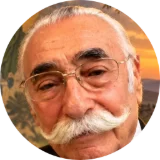
In brief: Pir Sultan Abdal is the great folk poet and pir (spiritual leader) who founded a dergâh (lodge) in the village of Banaz near Yıldızeli (Sivas) and who is counted in the Alevi tradition among the Seven Great Poets (Yedi Ulu Ozan). His real name is Haydar. He refused to submit to Hızır Paşa – once his own mürid (disciple), later governor of Sivas – and was hanged in Sivas at the end of the 16th century because he would not stop invoking the name of the “Shah”. Seyit Derviş Tur Dede treats him, before his resistance to the Ottomans, as a Khorasan pir trained in the Ardabil (Erdebil) dergâh.
The following text is taken from Seyit Derviş Tur Dede’s book Erkânname. For a general introduction: What is Alevism?
Contents
- Who was Pir Sultan Abdal?
- Who is the “Shah” in Pir Sultan’s poems?
- The village of Banaz and his arrival from Khorasan
- His visit to the dergâh of Hacı Bektaş Veli
- How the disciple Hızır became a pasha
- His arrest in Sivas and the years in the dungeon
- The execution of Pir Sultan Abdal (Sivas)
- Poets bearing the name Pir Sultan
- Pir Sultan as a Khorasan pir
Who was Pir Sultan Abdal?
The fame of this great folk poet is so exalted that it is not granted to everyone. Highly contradictory views have been put forward about his personality and life. Authors do not even agree on his name. Besides those who say there are five or six poets bearing the name Pir Sultan Abdal, there are also those who claim that many of the poems bearing the pen names Pir Sultan Abdal or Abdal Pir Sultan, apart from the pen name Pir Sultan, do not belong to the real Pir Sultan. When one looks carefully at the dialect of the poems and the language of the time, it becomes clear that, even if the pen name is the same, their essence is far removed from Pir Sultan. The dates of the great poet’s birth and death are also based on estimates. Nor do the authors have definite knowledge as to which of the Hızır Paşas who were contemporaries of Pir Sultan Abdal had him executed.
Folk culture is one of the most important and most fertile sources of national culture, and folk poetry is one of the most effective and widespread branches of this source. That is why the oppressed Alevi people guarded it like the apple of their eye for centuries and brought it down to our day, passing it from ear to ear and from generation to generation. In the past, however, it was always despised and pushed into the shadows by Ottoman rulers and intellectuals. Fortunately its value has begun to be grasped in our time, but unfortunately only and exclusively his rebellion, resistance and struggle against Ottoman oppression has been brought to the fore. His status as a pir and the service he rendered in matters of faith are overlooked by some political organisations.
Who is the “Shah” in Pir Sultan’s poems?
All historians, in describing Pir Sultan Abdal’s life and personality, have dealt in every respect with his attachment to the Safavids, in particular to Shah Tahmasp, the son of Shah İsmail. In tasavvuf (Islamic mysticism), the word Shah is used to address the pir to whom one is bound and Imam Ali. In his poems, Pir Sultan makes it clear and plain that he addresses his pir and Imam Ali as Shah.
Pir Sultan’ım arşa çıkar ünümüz
Şah’ta bizim ulumuzdur Pir’imiz
Hakk’a teslim olsun garip canımız
Dönen dönsün ben dönmezem Pir’imden
I am Pir Sultan; our fame rises to the Throne of God;
the Shah, too, is our great one, our pir.
May our poor soul be surrendered to God;
let whoever will turn back turn back – I will not turn from my pir.
Gidi Yezit bize kızıl baş demiş
Meğer Şah’ı sevdi dese yeridir
İmanı çürükler sevmedi Şah’ı
Sevdiğimiz Şah’ı merdan Ali’dir
The wretched Yazid has called us “Kızılbaş” (Redheads);
he would do better to say: “They love the Shah.”
Those of rotten faith did not love the Shah;
the Shah we love is Ali, the hero of heroes.
Gönül çıkmak ister Şah’ın köşküne
Can boyanmak ister Ali yoluna
Pir’im Ali on iki İmam aşkına
Açılın kapılar Şah’a gidelim
The heart longs to rise to the Shah’s pavilion;
the soul longs to be dyed in the colour of Ali’s path.
My pir is Ali – for the love of the Twelve Imams:
open, you gates, let us go to the Shah!
Pir Sultan Abdal certainly did not address the shahs of Iran as Shah. In Alevi-Bektashi belief the word Shah is used, in the vast majority of cases, for Imam Ali and his descendants. In his poems Pir Sultan Abdal is seen to be devoted to Hacı Bektaş Veli and to Seyyid Ali Sultan, of the same lineage, Kızıl Deli and Balım Sultan. He addresses these erenler (saints), whom he recognised as pirs, as Shah. Pir Sultan is an outstanding poet of the rank of pir, remembered by the people with great love and reverence. Like his art and personality, his life too has become legendary in the mouths of the people and has given rise to a number of menkıbes (hagiographic legends) and accounts. Pir Sultan’s faithful, steadfast, honourable and courageous personality has become an epic and a legend among the people.
The village of Banaz and his arrival from Khorasan
According to the information drawn both from Pir Sultan’s own poems and from poems written about him by others, his real life, together with his era and surroundings, was as follows. It is not known when Pir Sultan, who lived in the fifteenth century, came to settle in the village of Banaz in the Çırçır sub-district of the Yıldızeli district of Sivas. But he lived the greater part of his life in Banaz. The village is a highland village at the foot of Mount Yıldız, 1,700 metres above sea level. Pir Sultan’s real name is Haydar. His lineage is said to have been Yemeni; that he came at a certain age after receiving his spiritual initiation (irşad) at the Ardabil dergâh in Khorasan is shown among the people by the hand-mill stone in front of his door, which he is said to have brought with him from Khorasan, as proof. This shows that Pir Sultan Abdal was not born in that village and came to Banaz at a fairly mature age.
When Haydar was seven years old, he began to graze his father’s sheep. One day, while grazing the sheep, he fell asleep. “In his dream a white-bearded pir holds a dolu (a consecrated drink) in one hand and an apple in the other and offers them to Haydar. Haydar drinks the dolu at that moment, and as he takes the apple from the pir’s palm he sees a shining green mark. At that moment he realises that this old man is Hacı Bektaş Veli, and at once embraces him and kisses his hand. Hacı Bektaş Veli says: ‘Let your name be Pir Sultan; may your fame spread to the four corners of the world; may no saz surpass your saz and no word surpass your word; may you never depart from the path of Ali’s descendants; may God be your helper’ – and vanishes.” When he wakes up, Haydar’s inner eye has opened, and from that day on he begins to play the saz and sing under the name Pir Sultan. With the following beyits (verses) he also states plainly that he came from Khorasan.
Benim aslım Horasandan Hoy’dandır
Kırkların içindeki Dergâh ordadır
Allah’ın Arslan’ı Ali nurdandır
Kırkların ser çeşmesi Pir’im Ali’dir
Cümlemizden Ulusu Kızıl Delidir
My origin is from Khorasan, from Khoy;
the dergâh amid the Forty is there.
Ali, the Lion of God, is of light;
the head-spring of the Forty is my pir Ali;
the greatest of us all is Kızıl Deli.
Pir Sultan Abdalım destim demanda
İsmim Koca Haydar neslim Yemen’de
Garip başa bir hal gelse zamanda
Orda her kişinin dostu bulunmaz
I am Pir Sultan Abdal; my hand is raised in prayer;
my name is Koca Haydar, my lineage is in Yemen.
Should misfortune one day befall the poor stranger,
not everyone will find a friend there.
His visit to the dergâh of Hacı Bektaş Veli
After serving for many years at the Ardabil dergâh in Khorasan, he came – like other Khorasan pirs sent to the land of Rum (Anatolia) – and settled in Banaz. On arriving in Anatolia, at the first opportunity he visited the dergâh of Hünkâr Hacı Bektaş Veli and sang this beyit for his pir:
Arzuladım size geldim
Hünkâr Hacı Bektaş Veli
Eşiğine yüzüm sürdüm
Hünkâr Hacı Bektaş Veli
With longing I came to you,
Hünkâr Hacı Bektaş Veli;
upon your threshold I laid my face,
Hünkâr Hacı Bektaş Veli.
Pir elinde dolu içtim
Doğdum elinize düştüm
Ak cenneti gördüm geçtim
Hünkâr Hacı Bektaş Veli
From the pir’s hand I drank the dolu;
I was born and fell into your hands;
I saw the white paradise and passed on,
Hünkâr Hacı Bektaş Veli.
Güvercin donunda duran
Cümle eksikler bitiren
Beş taşı şahit getiren
Hünkâr Hacı Bektaş Veli
You who appear in the guise of a dove,
you who make good every lack,
you who brought five stones as witnesses,
Hünkâr Hacı Bektaş Veli.
Kırk budakta şem’a yanar
Dolusun içenler kanar
Aşıkların semah döner
Hünkâr Hacı Bektaş Veli
On forty branches candles burn;
those who drink your dolu are quenched;
the lovers turn in the semah,
Hünkâr Hacı Bektaş Veli.
Bahçende gördüm gülünü
Erenler sürsün demini
İmam Rıza’nın torunu
Hünkâr Hacı Bektaş Veli
In your garden I saw your rose;
may the erenler prolong your hour,
grandson of Imam Rıza,
Hünkâr Hacı Bektaş Veli.
Balım Sultan er köçeği
Yol var yoldan içeri
Cümle erenler gerçeği
Hünkâr Hacı Bektaş Veli
Balım Sultan, foster-child of the erenler –
there is a path within the path;
you truth of all the erenler,
Hünkâr Hacı Bektaş Veli.
Pir Sultanım gerçek veli
Erenlerden çekmem eli
On iki İmam’ın yolu
Hünkâr Hacı Bektaş Veli
I am Pir Sultan – you true saint,
I will not withdraw my hand from the erenler;
the path of the Twelve Imams,
Hünkâr Hacı Bektaş Veli.
After this visit Pir Sultan’s fame spread further and further in every direction. With this undoubting faith Pir Sultan joined the ranks of the erenler. He became the pir of his dergâh – respected, beloved, a cure for the sorrow of the sorrowful and the hope of the hopeless. Now every Friday crowds of canlar (fellow believers) came in groups, joined their hands and stood in the dar (the posture of accountability). The difficulties of those who had troubles were resolved. People whose account had been heard and who had been absolved sacrificed the animals they had brought, fed the hungry, clothed the naked and, having received their share of blessing from the pir, returned to their homes.
How the disciple Hızır became a pasha
Hızır Paşa, too, is said to have come from the village of Sofular between Sivas and Hafik. He had heard Pir Sultan’s name and came to receive his share of blessing from him. First he served in the pir’s dergâh, and then he became the pir’s mürid. For seven years he served at his door. He learned edep (proper conduct) and erkân (the rites). One day he said: “My pir, grant me your blessing (himmet) so that I may attain a position and become a great man.” Pir Sultan placed his hand on Hızır’s head, plunged into the inner, hidden world (batın), and then said:
“Hızır, I give you leave, I pray for you; you will go and become a vizier, become a pasha – but then you will come and hang me!” Hızır says, “Oh, my pir, how could I do such a thing? You are my one sacred being in the world,” kisses his hand and foot, receives leave and sets out on the road to Istanbul. Hızır goes to Istanbul and, through the pir’s blessing, enters the palace. Through the pir’s blessing he rises very quickly in the palace and is given the office of pasha. Appointed pasha, Hızır is sent to Sivas as governor (vali). Having come to Sivas as governor, Hızır had forgotten, or no longer cared about, the vow (ikrar) he had made in Pir Sultan’s dergâh. He began to oppress the poor and needy and to consume what is unlawful (haram). He no longer respected honour and no longer sought justice. He had two kadis (judges); one was named Kara Kadı (the Black Kadi), the other Sarı Kadı (the Yellow Kadi). They took bribes, made the wrongdoer appear in the right, caused many souls to suffer and extinguished many hearths. Hearing of this, Pir Sultan named the two dogs at his door, one Kara Kadı and the other Sarı Kadı, and always called the dogs “Kara Kadı, Sarı Kadı”.
Kara Kadı and the dogs that do not eat what is unlawful
One of Pir Sultan’s enemies goes and tells the kadis about this. When the kadis, who held the highest authority after the governor, hear of it, they fly into a rage. At once they send gendarmes and have Pir Sultan brought from Banaz to Sivas with his hands bound. They ask Pir Sultan: “You have given your dogs our names – is that true?” Pir Sultan: “Why should I hide from you what God knows? Yes, I have given my dogs your names, but they are much better than you. You eat what is unlawful; they do not.”
The kadis ask: “How do you know?” Pir Sultan replies: “If you wish, let us put it to the test.” The kadis: “How will you test it?” Pir Sultan says: “I will call my dogs, they will come, and we will test it here.” At these words the hacıs and hodjas of the town gather, prepare one dish of lawful (helal) food and one dish of unlawful (haram) food, and set them before the kadis. The kadis begin and eat the unlawful food. Then lawful and unlawful food is again placed before Pir Sultan’s dogs. The dogs sniff the unlawful food but do not eat it. They sniff the lawful food, begin eating and eat it to the end. Thus all the dignitaries of the province, the hacıs and hodjas, saw with their own eyes and learned that the kadis eat what is unlawful. Pir Sultan rose, kissed his dogs on the eyes, took up his saz and sang this poem:
Karabaşlı koca kadı
Sende hiç din iman var mı?
Haram helal demez yersin
Sende hiç din iman var mı?
You black-headed old kadi,
have you any religion or faith at all?
You eat without asking what is haram or helal –
have you any religion or faith at all?
Fetva verir yalan yulan
Domuz gibi dağı dolan
Sırtına vururum palan
Senin gibi hayvan var mı?
You issue fatwas full of lies and deceit,
you roam the mountains like a swine;
I will strap a pack-saddle on your back –
is there any beast like you?
İman eder amel etmez
Hakk’ın buyruğuna gitmez
Kadılar yaş yere yatmaz
Hiç böyle şeytan var mı?
He professes faith but does not act on it,
he does not follow the command of God;
the kadis do not lie down on wet ground –
was there ever such a devil?
Pir Sultan’ım zatlarımız
Gerçektir şöhretlerimiz
Haram yemez itlerimiz
Bu sözümde yalan var mı?
I am Pir Sultan; we are of noble essence;
our renown is true;
our dogs do not eat what is unlawful –
is there any lie in these words of mine?
The ban on invoking the name of the “Shah”
Pir Sultan returns to his village and continues the same life in his dergâh. Some time later, on an order from Istanbul, Hızır Paşa had Kara Kadı and Kör Müftü (the Blind Mufti) write a fatwa: “It is forbidden to invoke the name of the Shah. Whoever utters the name of the Shah shall have his tongue cut out and shall be killed.” After this fatwa, out of fear, no one dared speak the name of the Shah of Iran openly. Hearing of this, Pir Sultan was deeply grieved by this ban imposed on human thought and the human heart. Thereupon, wherever he went, he praised his pir and Imam Ali as Shah and criticised Hızır Paşa.
Fetva vermiş kocabaşlı kör Müftü
Şah giyenin dilini keseyim deyü
Satır yaptırmış Allah’ın lâneti
Ali’yi seveni keseyim deyü
The big-headed blind mufti has issued a fatwa,
saying he will cut out the tongue of whoever wears (follows) the Shah;
the one cursed by God has had a cleaver made,
saying he will hack down whoever loves Ali.
Şer kulların örkünü uzatmış
Müminlerin baharını güz etmiş
On İkiler bir arada söz etmiş
Âşıkların yayın asayım deyü
He has lengthened the tether of the wicked servants,
turned the spring of the believers into autumn;
the Twelvers (followers of the Twelve Imams) have made a pact together –
he says he will hang up the bow of the lovers.
Hakkı seven âşık geçmez mi candan
Korkarım Allah’tan korkum yok senden
Riyakâr davranış bekleme benden
Pir Sultan Abdalı asayım deyü
Does the lover who loves God not give up his life?
I fear God; I have no fear of you.
Expect no hypocritical conduct from me,
you who say you will hang Pir Sultan Abdal.
His arrest in Sivas and the years in the dungeon
Some hypocrites went and reported this, too, to Hızır Paşa. Hızır Paşa sent gendarmes and had Pir Sultan brought to Sivas. In addition, as the real reason, Pir Sultan was denounced as a supporter of Shah İsmail.
Banaz’dan sürdüler bizi Sivas’a
Erler himmet edin ben gidiyorum
Garipce canıma kılarlar cefa
Erler himmet edin ben gidiyorum
From Banaz they drove us to Sivas –
you erenler, stand by me, I am going.
They torment my poor soul –
you erenler, stand by me, I am going.
Gidi kâfir dedim gelir imana
Kuzular ağlıyor hep yana yana
Getiripte hapsettiler zindana
Erler himmet edin ben gidiyorum
I thought the wretched unbeliever would come to faith;
the lambs are weeping, burning with grief.
They brought me and threw me into the dungeon –
you erenler, stand by me, I am going.
Gidip gideceğim yolda kalmadı
Güzel Şah’a gelir dedim gelmedi
Pir’imizden bize himmet olmadı
Erler himmet edin ben gidiyorum
Nothing is left of the road I must travel;
I said word would come to the beautiful Shah, but none came;
no help came to us from our pir –
you erenler, stand by me, I am going.
Urganım çekildi sığındım dara
Üstüme döküldü ağ ile kara
Muhbirim üstünde var olsun yara
Erler himmet edin ben gidiyorum
My rope was drawn tight, I took refuge at the gallows (dar);
white and black poured down upon me.
May my informer bear a wound –
you erenler, stand by me, I am going.
Pir Sultan Abdal’ım kolum büküldü
Aktı gözüm yaşı yere döküldü
Sonunda urgan boğazıma takıldı
Erler himmet edin ben gidiyorum
I am Pir Sultan Abdal; my arm was twisted,
my tears flowed and poured onto the ground;
in the end the rope was placed around my neck –
you erenler, stand by me, I am going.
Pir Sultan’ım yaratıldım kul deyü
Zalim Paşa elindemi öl deyü
Dostum beni ısmarlamış gel deyü
Gideceğim amma yol bozuk, bozuk
I am Pir Sultan, created to be a servant;
must I die at the hand of the cruel pasha?
My Friend has sent word to me: “Come!”
I will go, but the road is broken, broken.
Hızır Paşa showed respect to his former pir who came before him, honoured and entertained him, and had all kinds of dishes set before him to eat. But Pir Sultan touched none of them. Hızır Paşa grew curious and asked why he did not eat the food. Pir Sultan: “You are düşkün (an outcast); you have strayed from the path, broken your vow, and drawn upon yourself the sighs of so many orphans and poor people. Not only I – even my dogs would not eat this unlawful food.” Hızır Paşa was greatly offended by this. Noticing this, Pir Sultan opened the window and called his dogs from Banaz. A little later the dogs came, and the dishes were placed before them. The dogs sniffed all the plates and drew aside without eating any of them.
Resentful of this, Hızır Paşa also explains to Pir Sultan that the word Shah has been banned. But the uncompromising stance Pir Sultan adopts during the interrogation changes the course of events. Hızır Paşa orders his arrest. He is imprisoned in the Pasha Fortress in Sivas. This is the place where the Çifte Minare (Twin Minaret madrasa) and the Mahmut Paşa Bath stand today. Where the pashas and the barracks once were, there is also said to have been a large dungeon. The interrogations are said to have taken place there. Yet what he has done to his former pir gives Hızır, too, no inner peace. While he broods over it for days, Pir Sultan calls out from the fortress in which he is imprisoned:
Hızır Paşa bizi berdâr etmeden
Açılın kapılar Şah’a gidelim
Siyaset günleri gelip yetmeden
Açılın kapılar Şah’a gidelim
Before Hızır Paşa sends us to the gallows –
open, you gates, let us go to the Shah!
Before the days of execution arrive –
open, you gates, let us go to the Shah!
Gönül çıkmak ister Şah’ın köşküne
Can boyanmak ister Ali soyuna
Pir’im Ali, on iki İmam aşkına
Açılın kapılar Şah’a gidelim
The heart longs to rise to the Shah’s pavilion;
the soul longs to be dyed in the colour of Ali’s lineage.
My pir is Ali – for the love of the Twelve Imams:
open, you gates, let us go to the Shah!
Her nereye gitsem önüm dumandır
Bizi böyle kılan ahtı amandır
Zincir boynum sıktı halim yamandır
Açılın kapılar Şah’a gidelim
Wherever I go, there is smoke before me;
what has made us thus are sighs and pleas for mercy.
The chain has tightened round my neck, my plight is grave –
open, you gates, let us go to the Shah!
Yaz selleri gibi akar çağlarım
Hançer aldım ciğerimi dağlarım
Garip kaldım şu arada ağlarım
Açılın kapılar Şah’a gidelim
Like the summer torrents I flow and roar;
I took a dagger and sear my heart;
forsaken here, I weep –
open, you gates, let us go to the Shah!
Çıkarım bakarım Kale başına
Mümin, Müslüm hepsi gider işine
Bir ben ‘mi düşmüşüm can telâşına
Açılın kapılar Şah’a gidelim
I climb up and look out from the top of the fortress;
believers and Muslims all go about their work –
am I alone in fear for my life?
Open, you gates, let us go to the Shah!
Pir Sultan’ım der mürvetli Şah’ım
Yaram baş verdi sızlar her yanım
Arşa direk oldu feryadım, ahım
Açılın kapılar Şah’a gidelim
Pir Sultan says: O my generous Shah,
my wound has broken open, every part of me aches;
my cry, my sighing has become a pillar reaching to the Throne –
open, you gates, let us go to the Shah!
“Yine geçmem ala gözlü Şah’ımdan” (Still I will not give up my hazel-eyed Shah)
While Pir Sultan lies in the dungeon, Hızır Paşa is greatly troubled, having nightmares at night. He also knows that this disquiet comes from Pir Sultan. Finally, thinking that he will release him if he can get him to agree not to use the word Shah in the beyits he will recite, he orders that he be brought before him from prison. When Pir Sultan arrives, Hızır Paşa says: “My pir, recite three beyits for me, but let the word Shah not appear in them, and I will set you free.” Pir Sultan, with a mind that does not bow to such pressure and oppression, recites these beyits to him:
Padişah katilime ferman dilese
Yine geçmem ala gözlü Şah’ımdan
Cellâtlar karşımda satır bilese
Yine geçmem ala gözlü Şah’ımdan
Though the Padishah should demand a decree for my killing,
still I will not give up my hazel-eyed Shah.
Though the executioners sharpen the cleaver before me,
still I will not give up my hazel-eyed Shah.
On yedi yerimden vursalar yara
Cerrahlar derdime kılmasa çare
Kement bent ile çekseler dâra
Yine geçmem ala gözlü Şah’ımdan
Though they wound me in seventeen places,
though the surgeons find no cure for my pain,
though they drag me to the gallows with rope and fetter,
still I will not give up my hazel-eyed Shah.
Karadır kaşları benzer kömüre
Münafıklar zarar verir ömrüme
İki ellerimi bağlasalar zincire
Yine geçmem ala gözlü Şah’ımdan
Black are his brows, like coal;
the hypocrites do harm to my life;
though they bind both my hands in chains,
still I will not give up my hazel-eyed Shah.
Eğer beni katsa kervan göçüne
Götürseler Hindistan’a Maçin’e
Urganımı atsalar dâr ağacına
Yine geçmem ala gözlü Şah’ımdan
Though they add me to a migrating caravan,
though they carry me off to India and Machin (China),
though they throw my rope over the gallows tree,
still I will not give up my hazel-eyed Shah.
Ahiri katilime ferman yazsalar
Çıksam teneşire tabut düzseler
Kefenim biçilse mezar kazsalar
Yine geçmem ala gözlü Şah’ımdan
Though in the end they write the decree for my killing,
though I am laid on the washing-board of the dead and they build me a coffin,
though my shroud be cut and my grave be dug,
still I will not give up my hazel-eyed Shah.
Pir Sultan Abdal’ım derim vallahi
Ölsem terk eylemem Pir’i billahi
Huzuru mahşerde dilerim Şah’ı
Yine geçmem ala gözlü Şah’ımdan
I am Pir Sultan Abdal and I say, by God:
even if I die, I will not forsake the pir, by God.
Before the Last Judgement I will ask for the Shah –
still I will not give up my hazel-eyed Shah.
Kâtip ahvâlimi Şah’a böyle yaz (Scribe, write thus to the Shah about my state)
Kul olayım kalem tutan eline
Kâtip ahvâlimi Şah’a böyle yaz
Şekerler ezeyim şirin diline
Kâtip ahvâlimi Şah’a böyle yaz
Let me be a servant to your hand that holds the pen –
scribe, write thus to the Shah about my state.
Let me crush sugar for your sweet tongue –
scribe, write thus to the Shah about my state.
Allah’ı seversen kâtip böyle yaz
Dünü günü hep Şah’a eylerim niyaz
Umarım yıkılsın şu kanlı Sivas
Kâtip ahvâlimi Şah’a böyle yaz
If you love God, scribe, write it thus:
night and day I pray only to the Shah;
I hope this bloody Sivas will fall –
scribe, write thus to the Shah about my state.
Sivas ellerinde sazım çalınır
Çamlı beller bölük, bölük bölünür
Ben dosttan ayrıldım bağrım delinir
Kâtip ahvâlimi Şah’a böyle yaz
In the lands of Sivas my saz is played;
the pine-clad passes divide into bands;
I am parted from the Friend, my breast is pierced –
scribe, write thus to the Shah about my state.
Münafığın her dediği oluyor
Gül benzim sararuban soluyor
Gidi Mervan şad oluban gülüyor
Kâtip ahvâlimi Şah’a böyle yaz
Everything the hypocrite says comes to pass;
my rosy face turns pale and fades;
the wretched Marwan rejoices and laughs –
scribe, write thus to the Shah about my state.
Pir Sultan Abdal’ım hey Hızır Paşa
Gör ki neler gelir sağ olan başa
Hasret koydun bizi kavim kardaşa
Kâtip ahvâlimi Şah’a böyle yaz
I am Pir Sultan Abdal – hey, Hızır Paşa,
see what befalls a living head!
You have left us longing for kin and brothers –
scribe, write thus to the Shah about my state.
Ben de bu yayladan Şah’a giderim (I too will go from this highland to the Shah)
Karşıda görünen ne güzel yayla
Bir dem süremedim giderim böyle
Ala gözlü Pir’im sen himmet eyle
Ben’de bu yayladan Şah’a giderim
How beautiful is the highland pasture visible over there!
Not for a moment could I enjoy it; thus I depart.
My hazel-eyed pir, grant me your help –
I too will go from this highland to the Shah.
Eğer göverüben bostan olursam
Şu halkın diline destan olursam
Kara toprak senden üstün olursam
Ben’de bu yayladan Şah’a giderim
If I turn green and become a garden,
if I become an epic on the tongues of this people,
if I, black earth, rise above you –
I too will go from this highland to the Shah.
Bir bölük turnaya sökün dediler
Yürek deki derdi dökün dediler
Yayladan ötesi yakın dediler
Ben’de bu yayladan Şah’a giderim
To a flock of cranes they said: “Set off!”
They said: “Pour out the sorrow that is in the heart!”
They said: “Beyond the highland it is near.”
I too will go from this highland to the Shah.
Dost elinden dolu içmiş deliyim
Üstü kan köpüklü meşe seliyim
Ben bir yol oğluyum, yol sefiliyim
Ben’de bu yayladan Şah’a giderim
I am a madman who has drunk the dolu from the Friend’s hand;
I am a torrent through the oak forest, covered with bloody foam;
I am a son of the path, a wretch of the path –
I too will go from this highland to the Shah.
Alınmış abdestim aldırırlarsa
Kılınmış namazım kıldırırlarsa
Sizde Şah diyeni öldürürlerse
Ben’de bu yayladan Şah’a giderim
If they make me repeat the ablution I have already performed,
if they make me repeat the prayer I have already prayed,
if among you they kill whoever says “Shah” –
I too will go from this highland to the Shah.
Pir Sultan Abdal’ım dünya durulmaz
Gitti giden ömür geri dönülmez
Gözlerim de Şah yolundan ayrılmaz
Ben’de bu yayladan Şah’a giderim
I am Pir Sultan Abdal; one cannot stay in this world;
the life that has gone is gone and does not return;
my eyes, too, do not leave the Shah’s path –
I too will go from this highland to the Shah.
Hızır Paşa and all the officials who hear these beyits are stunned. For it was a matter of life and death: had he not uttered the word Shah, he would have been released. Enraged by this, Hızır Paşa imprisons Pir Sultan in the worst dungeon, the earthen pit of the fortress. Pir Sultan is a famous and exalted figure, greatly loved and respected in the region. For this reason Hızır Paşa does not dare to hang him on his own orders. He reports the matter to the Padishah, considering an order from there to be more appropriate. Pir Sultan, however, simply cannot believe that he is guilty. He thinks to himself: why should loving God, Imam Ali and his pir be considered a crime? He cannot make any sense of it. Let us look at the messages Pir Sultan gave during this period of waiting:
Güzel Şah’ım Uruma bir ışık saldı
Dolandı Urumu Banaz’a geldi
Pir Sultan olmaya Pir himmet kıldı
İnsanlar taaccüb’de kaldı ne fayda
My beautiful Shah sent a light to Rum;
it travelled through Rum and came to Banaz;
the pir granted his blessing that I might become Pir Sultan;
people were left in astonishment – but to what avail?
Şah’ı sevmek suç mu bana
Kem bildirdin beni Han’a
Can için yalvarmam sana
Şehinşahım küser bana
Is it a crime for me to love the Shah?
You have slandered me to the Khan (the Sultan).
I will not beg you for my life –
or my King of Kings will be cross with me.
Dönen dönsün ben dönmezem Pir’imden (Let whoever will turn back turn back – I will not turn from my pir)
Koyun beni hak aşkına yanayım
Dönen dönsün ben dönmezem Pir’imden
Pir’imden dönüpte mahrum mu kalam
Dönen dönsün ben dönmezem Pir’imden
Leave me, so that I may burn with the love of God –
let whoever will turn back turn back; I will not turn from my pir.
Shall I turn from my pir and be left deprived?
Let whoever will turn back turn back; I will not turn from my pir.
Benim Pir’im gayet ulu kişidir
Yediler ulusu, Kırklar eşidir
On iki İmam’ın sever başıdır
Dönen dönsün ben dönmezem Pir’imden
My pir is a most exalted person,
the greatest of the Seven, companion of the Forty,
the beloved head of the Twelve Imams –
let whoever will turn back turn back; I will not turn from my pir.
Kadılar Müftüler fetva yazarsa
İşte kement işte boynum asarsa
İşte hançer işte kellem keserse
Dönen dönsün ben dönmezem yolumdan
If kadis and muftis write fatwas –
here is the rope, here my neck, if they hang me;
here is the dagger, here my head, if they cut it off –
let whoever will turn back turn back; I will not turn from my path.
Ulu mahşer olur divan kurulur
Suçlu suçsuz gelir anda derilir
Pir’i olmayanlar orda bilinir
Dönen dönsün ben dönmezem Pir’imden
The great Day of Gathering comes, the court is convened;
the guilty and the guiltless come and are gathered there;
those who have no pir are known there –
let whoever will turn back turn back; I will not turn from my pir.
Pir Sultan’ım arşa çıkar ünümüz
Oda bizim ulumuzdur Pir’imiz
Hakka teslim olsun garip canımız
Dönen dönsün ben dönmezem Pir’imden
I am Pir Sultan; our fame rises to the Throne of God;
he too is our great one, our pir.
May our poor soul be surrendered to God –
let whoever will turn back turn back; I will not turn from my pir.
Kalsın benim davam divana kalsın (Let my case be left to the divine court)
Ben’de bu Dünya’ya geldim giderim
Kalsın benim davam divana kalsın
Muhammed Ali’dir benim vekilim
Kalsın benim davam divana kalsın
I too came into this world, and I will go –
let my case be left to the divine court.
Muhammad and Ali are my advocates –
let my case be left to the divine court.
Yorulan yorulsun, ben yorulmazam
Derviş makamından ben ayrılmazam
Dünya kadısından ben sorulmazam
Kalsın benim davam divana kalsın
Let whoever tires grow tired – I do not tire;
I do not leave the station of the dervish;
I am not to be judged by the kadi of this world –
let my case be left to the divine court.
Ben’de vekil ettim Bari Huda’mı
O da kulu gibi zulüm eder mi?
Orda söyletirler bir, bir adamı
Kalsın benim davam divana kalsın
I too have made my Creator, God, my advocate –
would He, too, do injustice like His servant?
There they make every person speak, one by one –
let my case be left to the divine court.
Mümin Müslüm döşürür de cem olur
Anda sarık yaralara nem olur
Kara taş erirde safi mum olur
Kalsın benim davam divana kalsın
Believers and Muslims gather, and it becomes a Cem;
there the bandaged wounds find relief;
the black stone melts and turns to pure wax –
let my case be left to the divine court.
Pir Sultan Abdal’ım dünya kovandır
Gitti adil beyler kalan avamdır
Muhammed divanı ulu divandır
Kalsın benim davam divana kalsın
I am Pir Sultan Abdal; the world is a beehive;
the just lords have gone, the common herd remains;
the court of Muhammad is the supreme court –
let my case be left to the divine court.
The execution of Pir Sultan Abdal (Sivas)
At last the dreaded day arrives: the order of execution comes from the Sultan in Istanbul. In the year 1589 or 1590, at dawn, with his hands in shackles and a chain around his neck, he is taken to the place formerly called Keçi Bulan and now called Kepçeli. As he is led along the road in the morning, some throw stones at him on orders. Others secretly throw roses. He is executed opposite today’s Craftsmen’s Bazaar (Sanayi Çarşısı), at the site of the slaughterhouse. The execution of Pir Sultan, who was entirely innocent, served to intimidate and frighten the Alevis, especially in that region. Out of fear or under pressure, his talips (followers) cannot take the body to his village. But they give the place where he was hanged the name “Darağacı” (the Gallows Tree). His grave lies on the ground used today as the livestock market. It is the earthen mound at the end of the row of willows next to the gasworks. It is covered with stones, five metres long, a little more than a metre wide, and neglected. (Source: Asım Bezirci, “Pir Sultan”, p. 68.)
I do not know – for twenty years the Pir Sultan associations have been active, working in the name of “Pir Sultan”. My whole wish is that the associations, or the federation to which they belong, had taken charge of this place and built a worthy “külliye” (complex) on it – or that they should do so.
Pir Sultan Abdal’ım kaddim büküldü
Gözümün cevheri yere döküldü
Kendir kement boğazıma takıldı
Duysun bütün canlar beni asarlar
I am Pir Sultan Abdal; my stature is bent;
the jewel of my eye has spilled onto the ground;
the hemp rope has been placed around my neck –
let all the canlar hear: they are hanging me.
Sultan Ali’m bir iş geldi başıma
Yana yana ağlanacak iş oldu
Malum olsun yaranıma eşime
Ferman geldi serim yere düş oldu
My Sultan Ali, something has befallen me,
a thing to be wept over with burning grief.
Let it be known to my friends and to my wife:
the decree has come; my head is to fall to the ground.
Hani benim ile lokma yiyenler
Başı canı dost yoluna koyanlar
Sen ölmeden ben ölürüm diyenler
Dostlar da geriye kaçtılar birbiri
Where are those who ate the lokma (the consecrated meal) with me,
who laid down head and life on the path of the Friend,
who said, “I will die before you die”?
The friends, too, have fled back one after another.
Poets bearing the name Pir Sultan
To tell the truth, until then I knew only one Pir Sultan Abdal: the great poet, the folk poet whom Hızır Paşa had hanged. It turns out that later there were six more poets who bore the same name or used the same pen name. I learned this when I began researching Pir Sultan. Seeing them as a single poet raises certain doubts. Trying to gather them under the tradition and umbrella of Pir Sultan is not enough to dispel such doubts either. After Pir Sultan was hanged, many poems and beyits praising him appear under the pen name Pir Sultan Abdal. But from the expression and language of the beyits it is easy to see that they are not the pir’s. If we consider that “Pir Sultan” is a kind of brand for mystical beyits and poems, we will better understand why they were written in his name.
Bir dost bulamadım gün akşam oldu (I found no friend, and the day turned to evening)
Seyyah olup şu âlemi gezerim
Bir dost bulamadım gün akşam oldu
Kendi efkârımca okuryazarım
Bir dost bulamadım gün akşam oldu
As a wanderer I roam this world –
I found no friend, and the day turned to evening.
By my own thoughts I read and write –
I found no friend, and the day turned to evening.
İki elim kalkmaz oldu dizimden
Bilmem emelimden bilmem özümden
Akıttım kanlı yaşlar iki gözümden
Bir dost bulamadım gün akşam oldu
My two hands no longer rise from my knees;
I do not know whether it is my striving or my inner self;
I shed bloody tears from both my eyes –
I found no friend, and the day turned to evening.
Yine boranlandı dağların başı
Akıttım gözümden kan ile yaşı
Emaneti alır ol veren kişi
Bir dost bulamadım gün akşam oldu
Again the blizzard rages on the mountain peaks;
I shed blood and tears from my eyes;
the One who gave the trust takes it back –
I found no friend, and the day turned to evening.
Bozuk şu cihanın Pergeri bozuk
Yazıktır şu geçen ömrüme yazık
Tükendi daneler kalmadı azık
Bir dost bulamadım gün akşam oldu
Broken is the compass of this world, broken;
a pity, a pity for this life of mine that has passed;
the grains are used up, no provisions remain –
I found no friend, and the day turned to evening.
Pir Sultan’ım eydür ummana dalam
Gidenler gelmedi haberi alam
Abdal oldum çullar giydim bir zaman
Bir dost bulamadım gün akşam oldu
Pir Sultan says: let me dive into the ocean;
those who left did not return, that I might have news of them;
I became an abdal and wore coarse garments for a time –
I found no friend, and the day turned to evening.
An interpretation of Surat al-Fatiha
An interpretation of Surat al-Fatiha composed by mystics in the name of Pir Sultan Abdal or Abdal Pir Sultan:
Elham dülillah geldik Dünya’ya
Rabbi âlemisin bütün cihana
Er-rahmanu rahim secdemdir sana
Malikül yevmeddin hükmün âleme
“Elhamdülillah” (Praise be to God) – we came into the world;
you are “Rabbil Alemin” (the Lord of the worlds) to the whole universe;
“Er-Rahman er-Rahim” (the Compassionate, the Merciful) – my prostration is to you;
“Maliki yevmiddin” (Master of the Day of Judgement) – your rule is over the world.
İyyâke nabudu hasların hası
İyyâke nesteyin Gönlümün varı
İhdinas sıratül-müstakim göster didarı
Sıratel-lezine bağlanıp verdik ikrarı
“İyyake na’büdü” (You alone we worship) – the choicest of the choice;
“İyyake nesteîn” (You alone we ask for help) – all that my heart possesses;
“İhdinas sıratel müstakim” (Guide us on the straight path) – show us your face;
bound to “Sıratallezine” (the path of those), we gave the vow.
Enamte aleyhim ceddim ya Ali
Gayrıl mağdubi gönlümün varı
Aleyhimme yoluna koydum serimi
Veled-dalin deyip açtım elimi
“En’amte aleyhim” (on whom You have bestowed favour) – my forefather, O Ali;
“gayril mağdubi” (not of those who earned Your wrath) – all that my heart possesses;
on the path of “aleyhim” I laid down my head;
saying “veleddallin” (nor of those who go astray), I opened my hands.
Pir Sultan’ım ikrar vermiş yoluna
Fatiha süresi indi senin şanına
İlim şehrin olan birlik kapına
Kısmet buymuş geldim Hak divanına
I am Pir Sultan; I have given my vow to your path;
Surat al-Fatiha was revealed in your honour;
to your gate of unity, which is the city of knowledge –
such was my lot: I came before the court of God.
… meydana geldik (… we came to the meydan)
Aşk ile yürüdük bir Pire geldik
Muhammed cemalin seyrana geldik
Muhabbet narına yanmaya geldik
Zatını görmeye meydana geldik
With love we walked and came to a pir;
we came to behold the countenance of Muhammad;
we came to burn in the fire of love;
we came to the meydan to see his essence.
Mert olanlar ikrar eder canana
Erenler yolunda gelir meydana
Şükür Mevla’ya sırrı yezdana
Mansur’un Darında erkâna geldik
The upright give their vow to the Beloved
and come into the meydan on the path of the erenler.
Thanks be to the Lord, to the secret of God (Yezdan):
at Mansur’s dar we came to the erkân.
On iki İmam dır ulu şahımız
Muhammed Ali’ye çıkar yolumuz
On dört masum bizim padişahımız
Hidayet bahrında dâr çekmeye geldik
The Twelve Imams are our exalted Shah;
our path leads to Muhammad and Ali;
the Fourteen Pure Innocents are our sovereigns;
in the sea of guidance we came to stand in the dar.
Pir Sultan edelim Yezid’e lânet
Mürşidin eteğin tutmuşuz elbet
Ali evladına okuruz rahmet
Şahı’mın cemalin görmeye geldik
Pir Sultan: let us curse Yazid;
we have surely grasped the hem of the mürşid;
we ask God’s mercy for the descendants of Ali;
we came to see the countenance of my Shah.
Yine bir Mürşide varmadan olmaz (Still, it cannot be without going to a mürşid)
Gönül ne durursun elden geldikçe
Yine bir Mürşide varmadan olmaz
Aman Mürvet deyüp sürsen yüzünü
Yine bir Mürşide varmadan olmaz
Heart, why do you hesitate while it is in your power?
Still, it cannot be without going to a mürşid.
Though you lay down your face crying “Mercy, have pity!” –
still, it cannot be without going to a mürşid.
Mürşidini bulur gezen arayı
Kırkların dârında bulur çareyi
Ne kadar okursan akla karayı
Yine bir Mürşide varmadan olmaz
Whoever roams and seeks will find his mürşid,
and will find the remedy in the dar of the Forty.
However much you read of white and black (the written word),
still, it cannot be without going to a mürşid.
Bu dünyada sen çok yaşlar yaşarsın
Bilip dört kitabın dersin açarsın
Her harfine bin bir mana verirsin
Yine bir Mürşide varmadan olmaz
In this world you may live many years,
know the four Books and expound their teaching,
give a thousand and one meanings to each of their letters –
still, it cannot be without going to a mürşid.
Halil Kâbe yaptı oldu ya delil
Vardı varan kaldı varmayan melül
Muhammed’e rehber oldu Cebrail
Yine bir Mürşide varmadan olmaz
Halil (Abraham) built the Kaaba, and it became a guide;
whoever went arrived; whoever did not go was left forlorn;
Gabriel became a rehber (guide) to Muhammad –
still, it cannot be without going to a mürşid.
Pir Sultanım bu durakta dur dedi
Hazreti Muhammed Ali er dedi
Mürşide varmayanın işi zor dedi
Yine bir Mürşide varmadan olmaz
Pir Sultan said: “Stop at this station”;
Hazrat Muhammad said: “Ali is the man (of God)”;
he said: “Hard is the lot of one who does not go to a mürşid” –
still, it cannot be without going to a mürşid.
Pir Sultan as a Khorasan pir
If you research Pir Sultan Abdal very thoroughly, the resistance he mounted against Ottoman oppression appears very small beside the service he rendered to the faith of the Ehl-i Beyt. For he is a pir among the Khorasan pirs. He is one of the pirs trained at the Ardabil dergâh in Khorasan. He was sent to the land of Rum to spread the faith of the Ehl-i Beyt – just like Şeyh Ali Sultan, Sarı Saltık, Gül Baba, Abdal Musa and many others who were sent to the land of Rum. Pir Sultan, too, was sent into the heart of the Ottoman realm. He too founded his dergâh in Banaz and served there as a pir. If you look closely: Pir Sultan came to the land of Rum in the time of Shah İsmail. He lived in the time of “Tahmasp”, the son of Shah İsmail. In many of his beyits he says openly that he is bound to the dergâh.
The founders of the Ardabil dergâh are Seyyid Firuz, one of the great ancestors of Shah İsmail, and after him Şeyh Safiyüddin (Sheikh Safi al-Din). It was founded at least three hundred years before Shah İsmail and, from the day of its founding until the time of Shah İsmail, trained pirs of seyyid lineage and sent them to the land of Rum and to the Balkans under the name “Khorasan pirs”.
Pir Sultan’ım der ki üçler yediler
Kırklar ’da anda hazır dediler
Bağdat’ı Basra’yı verdi dediler
Aslı nedir Pir’im, niye verdin Bağdat’ı
Pir Sultan says: the Three and the Seven,
and the Forty too, they said, are present there;
they said he gave away Baghdad and Basra –
what is the truth of it, my pir, why did you give away Baghdad?
Horasan’da kalktı sökün eyledi
Elesti deminin yeli geliyor
Horasan Pir’leri akın eyledi
Boşandı Kevser’in seli geliyor
In Khorasan they rose and came on in throngs;
the wind of the hour of “Elest” (the primordial covenant) is coming;
the Khorasan pirs have surged forth;
the flood of the Kevser has burst loose and is coming.
Yürüyüş eyledi Urum üstüne
Ali nesli güzel İmam geliyor
İnip temenna eylerim destine
Ali nesli güzel Şah’ım geliyor
He has marched upon Rum –
the beautiful Imam of Ali’s lineage is coming.
I dismount and bow in greeting to his hand –
my beautiful Shah of Ali’s lineage is coming.
Meydana çıkar görünü, görünü
Kimse bilmez evliyanın sırrını
Koca Haydar Şah’ı cihan torunu
Ali nesli güzel İmam geliyor
He comes out into the meydan, visible, visible;
no one knows the secret of the saints;
the grandson of Koca Haydar, Shah of the world –
the beautiful Imam of Ali’s lineage is coming.
Koca Haydar, mentioned in the fourth quatrain, is Shah İsmail’s father. Shah Tahmasp, in turn, is the grandson of Koca Haydar and the son of Shah İsmail. After Shah İsmail was defeated by Yavuz (Selim I) at the Battle of Chaldiran in 1514, he did not live many more years. After his death his son Tahmasp took over the leadership of the dergâh. In 1566 he was defeated in the war with the Ottoman Padishah Kanuni (Suleiman the Magnificent). Baghdad and Basra passed into Ottoman hands in that war. After that the Safavid state slowly, slowly began to decline. The Ardabil dergâh closed, and no one of those called the Khorasan erenler came to the land of Rum any more.
Source: Seyit Derviş Tur, Erkânname – Aleviliğin İslam Yorumu ve Alevi Erkânları (Erkânname – The Alevi Interpretation of Islam and the Alevi Rites), expanded 3rd edition (ISBN 975-6791-52-7).
More articles on Alevism
Faith and erkân
- What is Alevism? (main page)
- What does Kızılbaş mean? Who is called an Alevi?
- The Four Gates and Forty Stations in Alevi belief
- What is ikrar (the vow), and where does it come from?
- Islam and Alevi belief
- The meaning of the word “Islam” and its distortion
- The place of women in Alevi belief
- The Fourteen Pure Innocents and the Seventeen Kemerbest
Cem and rites
- What is a Cem? The cemevi, its rules and the twelve services
- What is the semah? The sanctity of the semah
- What is musahiplik (spiritual kinship), and where does it come from?
- The görgü rite (görgü cem)
- Alevi funeral rites
- Alevi marriage rites
- What is düşkünlük (excommunication)?
Festivals, fasts and holy days
- The month of Muharram and the sanctity of the fast
- Hızır İlyas
- Nevruz among the Alevis
- The Feast of Sacrifice (Kurban Bayramı)
The Twelve Imams
- Who are the Twelve Imams?
- Imam Ali
- Imam Hasan
- Imam Husayn
- Imam Zayn al-Abidin
- Imam Muhammad al-Baqir
- Imam Jafar al-Sadiq
- Imam Musa al-Kazim
- Imam Ali al-Rida
- Imam Muhammad al-Taqi
- Imam Ali al-Naqi
- Imam Hasan al-Askari
- Imam Mahdi
The Seven Great Poets
- Who are the Seven Great Poets (Yedi Ulu Ozan)?
- Seyyid Nesimi
- Şah İsmail Hatayi
- Fuzuli
- Yemini
- Virani
- Kul Himmet
- Noksani Baba
History: Ehl-i Beyt, Ghadir Khumm and Karbala
Books and Alevi organisation in Europe
- Erkânname
- The first Alevi organisation in Europe (memoirs)
- Alevi Islam – The Path to the Shah
- All books
In German: Alevitentum: Grundlagen, Glaube und zentrale Begriffe · Geschichte der Aleviten-Organisation in Deutschland
About the author: Seyit Derviş Tur Dede
Born in 1936 in Başköy (Çayırlı, Erzincan) into a seyyid family belonging to the Babamansur (Şah Mansur) ocak. He is a co-founder and the first chairman (1990–1993) of the Federation of Alevi Communities, the forerunner of the Alevi Federation of Germany (AABF). From 1994 to 2003 he chaired the Council of Dedes within the federation. Erkânname (2002) and Avrupa’da İlk Alevi Yapılanması (2016); his work is cited as a source in academic publications by researchers such as Martin Sökefeld, Zeynel Gül, Burak Gümüş and Bülent Keleş.
Translated from the Turkish original by Seyit Derviş Tur.