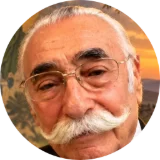
In brief: Nevruz (Nowruz) is the festival celebrated on 21 March with the arrival of spring. According to Seyit Derviş Tur Dede, the Alevis have also given this day a religious meaning: Nevruz is commemorated as the holy day on which night and day become equal and on which Imam Ali was born in the Kaaba. This page covers the meaning of Nevruz among the Alevis, the Nevruz celebrations of the Turkmen Alevis in the Taurus Mountains, and Nevruz nefes (religious poems and hymns).
The following text is taken from Seyit Derviş Tur Dede’s book Erkânname. For a general introduction: What is Alevism?
Contents
Nevruz among the Alevis
Since Alevism is not a lineage or a race, the community of people of various lineages and various peoples who have come together under the Alevi faith has no such concern or ambition rooted in the past. In keeping with their faith, they have adopted from every culture those aspects that serve humanity well. Customs and traditions taken from other cultures are passed through the filter of Alevi philosophy; their bad aspects, harmful to humanity, are discarded, and they are brought into a form useful to humanity and used in that way.
Although we Alevis accept the Nevruz festival as the day on which nature comes back to life, as the festival that leaves the hardships of winter behind and heralds the beginning of spring, we have nevertheless – unlike other societies – given it the appearance of a religious belief. We have given it a quality through which it conveys messages beneficial to humanity. This, precisely, is the feature that distinguishes Alevism from other faiths.
- It is the day on which the sun enters the sign of Aries.
- It is the holy day on which God created the universe.
- It is the day on which night and day become equal.
- It is the day on which the Prophet Abraham (İbrahim) built the Kaaba.
- It is the holy day on which Imam Ali was born inside the Kaaba.
- It is the day on which the Prophet Muhammad, in the sermon of Ghadir Khumm (Gadir Hum), appointed Ali as his executor (vasi) and heir.
The Birth of Imam Ali According to the History Books
After the death of his father, the Prophet Muhammad regarded his uncle Abu Talib as a father and Abu Talib’s wife Fatima as a mother, and strove never to fall short in his respect for them. One day Muhammad sees that his aunt Fatima is unwell. “O mother, I see that something troubles you – how are you?” “O son, for five or six years I have not given birth; now I am pregnant, and that is the cause of my discomfort.”
Muhammad: “Mother, if the baby is a boy, will you give him to me?” “If the child to be born is a boy, I will dedicate him to you (place him in your care).” Muhammad prays to God that the baby may come into the world safe and sound.
Fatima bint Asad (Fatima bint-i Esed) was circumambulating the Kaaba (tawaf) on the first day of spring. The whole clan of Banu Hashim (Beni Haşim) was also there, going round the Kaaba. Fatima bint Asad’s labour pains begin, and she no longer has the strength to walk about outside. At that moment, before the eyes of all the people, the door of the Kaaba opens by itself and Fatima enters the Kaaba. The door immediately closes again by itself. Fatima, having entered, prays: “Yarab, bana velâdeti âsân kıl” (“Lord, make the birth easy for me”) – in Turkish, (Lord, help me). As she prays in this way, Ali comes into the world.
Among those waiting outside, the light (nur) of Ali becomes manifest to Muhammad. The door of the Kaaba opens by itself; as Abu Talib and Muhammad are about to go in, Fatima comes out of the Kaaba with the baby in her arms. The door closes again by itself. Abu Talib takes Fatima, Muhammad wraps the baby in his cloak (hırka) and takes it in his arms, and they go home. At home Abu Talib says that the baby’s name should be Haşim. His mother Fatima wants to name the baby Esad. Then Muhammad says, “Uncle, God wants us to name this baby Ali,” and they agree. Thus the baby is given the name Ali.
When Mary (Meryem), who throughout her life had served the Temple in Jerusalem (Beytül Mukaddes), was close to giving birth and her labour began, God commanded her to leave Jerusalem and go towards the east. God did not even permit Jesus (İsa) to be born in the Temple in Jerusalem. While Ali’s mother was outside, God opened the door of the Sacred Mosque (Mescid-i Haram), drew Fatima in, and the door locked by itself. No one other than Ali has been born in such a holy place. That is why the Nevruz festival has a sacred character for the Alevis. It can be seen, then, that the Alevis have adorned 21 March, the day of Nevruz, with goodness and beauty and presented it to society in a form beneficial to humanity.
The source of these sacred ideas is the principles, derived from the faith of the Ehl-i Beyt (Ahl al-Bayt, the family of the Prophet), of being “master of one’s hand, one’s tongue and one’s loins” (eline, diline, beline sahip olmak). That great human being, Ali, who grew up together with Muhammad in Muhammad’s garden, is a pearl of knowledge and wisdom (ilim irfan). He is the peerless sultan of perfect human beings (insan-ı kâmil). To understand Ali, read the poem “Nat-ı Ali” in Mevlana’s “Divanı Kebir’den Seçme Şiirler” (Selected Poems from the Divan-i Kabir), Milli Eğitim Basımevi, 1965, volume 1, pages 4 and 5, and see how he presents Ali. Listen to what that sublime Veli (friend of God) says: “There are four things; as long as they endure, religion and the world will stand firm:”
- As long as the rich are not miserly with the wealth they have been given.
- As long as scholars act upon the knowledge they have learned and know.
- As long as the ignorant, though they do not know, do not pretend to be learned.
- As long as the poor, too, do not sell their hereafter for their world, religion and the world will stand.
Beautiful sayings of Ali: “Knowledge is the best of inheritances. Good manners (edep) are the best of arts. Piety (takva) is the best of provisions. Worship is the best of capital. Good character is the best of close friends. Good deeds are the best of helpers.”
This peerless human being, this possessor of boundless humility, with these outstanding qualities, lit in the Alevi faith the torch of freedom, peace, brotherhood, love and loving. That is why we Alevis have always been on the side of the good, the beautiful and of justice.
The Nevruz Celebrations of the Turkmen Alevis in the Taurus
On this subject I will give the Turkmen Alevis living in the Taurus Mountains as an example. The Taurus lies in the middle; it is a place of passage from east to west. The nomadic Turkmens (konar göçer) pass through the Taurus. On its snowy mountains, on the highland pastures with grey junipers, they grazed their sheep, goats and camels. So let us take a look at how the Turkmen Alevis living on the highland pastures of the Taurus celebrate Nevruz.
Sultan Nevruz is the birthday of Ali and at the same time the first days of spring. It is the festival of shaking off the sluggishness of winter and attaining the beauties of spring. People put on their festive clothes. They bake pulled flatbreads (çekme çörek) with sesame and grape molasses (pekmez). They roast their wheat and pistachios into kavurga and pop their corn. They put into their saddlebags the apples, oranges and pomegranates they have kept in their chests. If they have them, they take along their sacrificial roosters and lambs. In every village there is a pir or a dede baba who conducts the order of worship (erkân). Together they mount their horses, donkeys or tractors and go to the nearest tomb of a saint (yatır) that they have resolved to visit.
When they arrive at the place of pilgrimage, they first unload their burdens. They clean the surroundings. Then the visit to the tomb they have come to begins, in turn. First the dede or pir offers his reverence (niyaz) at the side threshold of the entrance door of the shrine, saying “Allah, Muhammad, ya Ali”, enters, kneels at the right-hand head of the tomb and assumes the posture of reverence (edep erkân). The others who have come with him offer their reverence in the same way, move on their knees to the tomb and perform their niyaz. Everyone who enters sits kneeling in the posture of reverence.
The dede recites this or a similar prayer:
Bismişah, Allah, Allah! Allahumme salli ala Seyyidina Muhammed ve ala Ali Seyyidina Muhammed (O God, bless our master Muhammad and the family of our master Muhammad): Lâ ilahe illâllah (there is no god but God) – God is one, Muhammad is the Messenger of God (Resulullah), Ali is the Friend of God (Veliyullah), the perfect mürşid of God. Intercede, O Messenger of God! O my sublime God, who created the whole universe! For the honour of Adam, the Chosen of God (Safiyullah), Noah, the Rescued of God (Naciyullah), Abraham, the Friend of God (Halilullah), Ishmael, the Surrendered to God (Teslimullah), Moses, who spoke with God (Kelimullah), Jesus, the Spirit of God (Ruhullah), Muhammad, the Beloved of God (Habibullah), and Ali, the Friend of God (Veliyullah), make our visit to the graves a means of blessing.
My sublime God! For the honour of the Three, the Five, the Seven, the Twelve Imams, the Fourteen Pure Innocents (14 Masum-u Pak), the Seventeen Girded Ones (17 Kemerbest) and the Forty, illuminate with Your divine light the souls of all the departed who have come and gone, and reward them with Your intercession, O my Lord! Do not deprive all our departed who lie here and have walked to God (Hakk’a yürümüş) of the intercession of Muhammad. Adorn the souls of our forebears who have walked to God with Your love, and honour them with the sight of Your Paradise. My sublime God, who rules over the whole universe! Do not let all our departed who lie here suffer the fire of Hell and the torment of the grave! Gladden their souls and make their abode Paradise, O my Lord!
O my sublime God! The prayers we have said and the food (lokma) we have given to eat we dedicate to the souls of our departed who lie here; accept them in Your glorious dergâh! May their graves be light and their abode Paradise. Grant us too, when we come into that state, to appear before You with a pure intention! For the sake of Your names, the Most Gracious and the Most Merciful (Rahman and Rahim), forgive the sins we have committed knowingly or unknowingly! Do not withhold from us Your bountiful mercy from heaven and Your bountiful blessing from the earth.
Do not try anyone with hunger. We repent of the sins we have committed with our hands, our tongues and our loins! For the honour of the Ehl-i Beyt, accept our repentance and our prayers in Your glorious dergâh. For the honour of the erenler, the saints (evliya), the friends of God (veli) and the prophets, do not lead us away from righteousness and the right path. Do not let our path fall to the pathless, nor our affairs to the unjust. Grant all the people of the world to live together in friendship, in an atmosphere of brotherhood, my sublime God!
If one day we follow our ego (nefs) and set out to harm humanity, give no opportunity to that evil ego of ours, O my Lord! The prophethood is Muhammad’s, the velayet (sainthood) Ali’s; by the generosity of the saints, by the breath of the truthful, in the unity of hearts and the harmony of the cem: Gerçeğe Hü (to the Truth: Hu). Let us go into prostration (secde) for the sake of God. The whole congregation goes down into prostration.
While the people are in prostration, the dede recites a prayer such as this:
Bismi Şah, Allah, Allah. On the path by which you have come, in the dar in which you stand, on the meydan of the erenler where you have prostrated, may God Most High not let your efforts be in vain! Whatever wishes and desires you have, may God Most High grant the wishes of your tongues and the desires of your hearts. May your wishes be fulfilled, your hearth be joyful and your lot abundant, may all our sins be forgiven. May your faces be pure and your hearts clean in both worlds. May Hakk, Muhammad and Ali be our helpers. The light is the Prophet’s, the generosity Ali’s, the gülbank Hacı Bektaş Veli’s. Gerçeğe Hü – to the believer, ya Ali! May the martyrs who lie at rest awaken – so he says, and raises the congregation from prostration.
After this act of worship with one prostration, everyone visits the graves of their own family members, if there are any. Then they bring the food, flatbreads and börek they have brought from home and stand for the lokma dar (consecration of the offered food). The dede gives them a lokma prayer. After that the food is distributed equally among the people present and eaten there. Then they clean the surroundings. If there are dilapidated graves, they repair them. When their work is done, mengi dances are performed on an open square or a threshing floor. Halay round dances are danced. The Nevruz festival is celebrated.
When evening comes, they set off for the cemevi with the roosters that have been slaughtered and the food that has been prepared. They take the sacrificial animals, bought jointly or slaughtered individually, to the cemevi together with flatbreads baked on the sac griddle. In the past, the Nevruz cems were generally attended by couples who had given their ikrar (vow) and had musahips (spiritual siblings) and aşinas (spiritual companions). Nowadays young people and children who have taken the hand [of a mürşid] (el almış), whose heads have been blessed (baş okutmuş) and whose ikrar has been taken, also take part.
Before the Cem worship begins, the dede or the mürebbi – whoever is to conduct the cem – first reconciles those who are on bad terms or offended with one another. After everyone taking part in the cem has received consent (razılık) from one another, the Cem worship begins. If there is anyone who does not make peace or does not give consent, he is sent out of the cemevi before the cem even begins. Only after that is the Cem worship started.
I have given the Turkmen Alevis of the Taurus here as one example. In general, the Alevis celebrate the Nevruz festival with worship. I, this humble Kemter Derviş, pray to God Most High that the Nevruz festival may be a source of blessing for all humanity. I wish that people may live together as brothers and sisters in an atmosphere of friendship.
Nevruz Nefes
I believe it would be an omission not to include the poem by Yusuf Fahir Baba, one of the grandsons of Seyit Haşim Baba of Üsküdar, which describes the day on which Ali was born.
Şahi Merdan, Şirri Yezdan Mürteza doğdu bugün,
Pişva-yi Evliya vü esfiya doğdu bugün,
Fatima binti Esed’dir ol Veli’nin Anne’si,
Haşim’i Gül zarının Nergis koncası doğdu bugün
The Shah of heroes (Şah-ı Merdan), the Lion of God (Şir-i Yezdan), Murtaza, was born today,
the leader of the saints and the pure was born today,
Fatima bint Asad is the mother of that Veli,
the narcissus bud of the rose garden of the Hashimites was born today.
Ol asalet membaı cismi kâmile
Çün Ebu Talip’ten oldu hamile
Geçti aylar, günler vakit geldi ta
Doğdu böyle bir mübarek günde Şah
That fount of nobility, that perfect form –
when she conceived by Abu Talib,
months and days passed until the time came:
on such a blessed day the Shah was born.
Öyle bir gün doğdu ol Nevruz idi
Öyle ki bir yevmi nur efruz idi
Başka bir gün olmaz ol yevme eş
Burc-u hamle girdi ol günde güneş
The day on which he was born was Nevruz,
a day that kindled light;
no other day can equal that day:
on that day the sun entered the sign of Aries.
Kâinata nur saçıp feyzi eyledi bahar
Nev hayata girdi her yer cümle var
Doğdu Beytullah’da ol Şah’i Necef
Kimseye nasip değildir böyle bir şeref
Scattering light over the universe, spring bestowed its abundance;
everything that exists everywhere entered a new life;
in the House of God (Beytullah) that Shah of Najaf was born –
such an honour is granted to no one.
Bendegahı Ehli Beyti Mustafa
Böyle günde eylesin zevki sefa
Sayesinde kâinat buldu hayat
Bu gün şükür etsin ümmeti Muhammed
May the servants of the Ehl-i Beyt of Mustafa
rejoice and delight on such a day;
through him the universe found life –
today may the community of Muhammad give thanks.
Greetings to the friends of Ali. A thousand thanks to God, who will once again let us reach a new day of Nevruz.
Gelin ey kardeşler seyran edelim
Ali’nin doğduğu eyyam bu demdir
Bu zevkle münkiri hayran edelim
Ali’nin doğduğu bu kutsal günde
Come, O brothers and sisters, let us behold and rejoice,
now are the days on which Ali was born;
let us astonish the denier with this joy
on this holy day on which Ali was born.
Çerağlar uyansın kurulsun cemler
Gülbenkler çekilsin sürülsün demler
Tevhide gelsinler cümle erenler
Ali’nin doğduğu bu kutsal günde
May the lamps (çerağ) awaken and the cems be held,
may gülbanks be recited and the dem be passed round,
may all the erenler come to the tevhid (affirmation of God’s oneness)
on this holy day on which Ali was born.
Nerdedir sakiler sunsunlar bâde
Gönüller zevk ile olsun küşade
Hamd olsun eriştik biz de murada
Ali’nin doğduğu bu kutsal günde
Where are the cupbearers (saki)? Let them offer the wine,
may hearts open up with joy;
praise be to God, we too have attained our wish
on this holy day on which Ali was born.
Bakın bu meydana süslenmiş güller
Açılmış goncalar lâle sünbüller
Dua’ya başlamış aşkla bülbüller
Ali’nin doğduğu bu kutsal günde
Look at the roses with which this meydan is adorned,
the opened buds, tulips and hyacinths;
the nightingales have begun to pray with love
on this holy day on which Ali was born.
Geldi Sultan Nevruz kalmadı elem
Semâda Melekler cümlesi hürrem
Erenler lütfedip eyledi kerem
Ali’nin doğduğu bu kutsal günde
Sultan Nevruz has come, no sorrow remains,
in the heavens all the angels are joyful;
the erenler in their kindness have shown generosity
on this holy day on which Ali was born.
Hüsnü Baba eyler candan niyazı
İçimize sığmaz elin yobazı
Okunsun nefesler, çalsınlar sazı
Ali’nin doğduğu bu kutsal günde
Hüsnü Baba offers his reverence (niyaz) from the heart;
the bigot (yobaz) of strangers has no place among us;
let nefes be sung, let the saz be played
on this holy day on which Ali was born.
Erler geldi bize mihman olarak
Nevruz bayramını kutlamak için
Şahın meydanında erkân kurarak
Nevruz bayramını kutlamak için
The erenler came to us as guests
to celebrate the Nevruz festival;
setting up the erkân on the meydan of the Shah
to celebrate the Nevruz festival.
Bir yere cem oldu ehli muhabbet
Hü deyip dem sürdü bunlar akibet
Sakiler sundular cem de muhabbet
Nevruz bayramını kutlamak için
The people of love (ehl-i muhabbet) gathered in one place,
crying “Hu”, at last they passed round the dem,
the cupbearers offered love (muhabbet) in the cem
to celebrate the Nevruz festival.
Bugün mevcudat ta gül güle düştü
Çemenzar zeminden taşraya göçtü
Bülbüller şevkile güllere uçtu
Nevruz bayramını kutlamak için
Today in all that exists rose fell upon rose,
the green meadow sprang forth from the ground,
the nightingales flew eagerly to the roses
to celebrate the Nevruz festival.
Bu gündür mevlüdü Şahı Velâyet
Bugün izhar oldu nur’u mübüvvet
Bugün müminler eyledi hürmet
Nevruz bayramını kutlamak için
Today is the birth of the Shah of velayet (sainthood),
today the light of prophethood was made manifest,
today the believers paid their reverence
to celebrate the Nevruz festival.
Gösterdi ruyini burcu hamelden
Şems’i burcu sefahoş oldu o andan
Yaz eyyamı nişan verdi bahardan
Nevruz bayramını kutlamak için
From the sign of Aries it showed its face,
from that moment the sign of the sun became joyful,
the days of summer gave tidings of spring
to celebrate the Nevruz festival.
Kâinat zevkile neşeyle sefaya daldı
Münkür münafikler hayrette kaldı
Raksederek şia semaha kalktı
Nevruz bayramını kutlamak için
The universe plunged into delight, joy and bliss,
the deniers and hypocrites were left in astonishment,
dancing, the Shia (the followers of Ali) rose up for the semah
to celebrate the Nevruz festival.
Teberra ehline ederek lânet
Mühibban pür neşe olmuşlar sermest
Hüsnü’ye bir dolu ettiler himmet
Nevruz bayramını kutlamak için
Pronouncing a curse upon the people of teberra (dissociation),
the lovers (muhibban) have become full of joy and enraptured;
upon Hüsnü they bestowed a full cup of their grace (himmet)
to celebrate the Nevruz festival.
Source: Seyit Derviş Tur, Erkânname – Aleviliğin İslam Yorumu ve Alevi Erkânları (The Islamic Interpretation of Alevism and the Alevi Rites), expanded 3rd edition (ISBN 975-6791-52-7).
More articles on Alevism
Faith and erkân
- What is Alevism? (main page)
- What does Kızılbaş mean? Who is called an Alevi?
- The Four Gates and Forty Stations in Alevi belief
- What is ikrar (the vow), and where does it come from?
- Islam and Alevi belief
- The meaning of the word Islam and its distortion
- The place of women in Alevi belief
- The Fourteen Pure Innocents and the Seventeen Kemerbest
Cem and rites
- What is a Cem? The cemevi, Cem rules and the twelve services
- What is the semah? The sacredness of the semah
- What is musahiplik (spiritual kinship), and where does it come from?
- The görgü erkânı (görgü cem)
- Alevi funeral rites
- Alevi marriage rites
- What is düşkünlük (excommunication)?
Festivals, fasts and holy days
- The month of Muharram and the sanctity of the fast
- Hızır İlyas
- The Feast of Sacrifice (Kurban Bayramı)
The Twelve Imams
- Who are the Twelve Imams?
- Imam Ali
- Imam Hasan
- Imam Hüseyin
- Imam Zeynel Abidin
- Imam Muhammed Bakır
- Imam Cafer-i Sadık
- Imam Musa-i Kâzım
- Imam Rıza
- Imam Muhammed Taki
- Imam Ali Naki
- Imam Hasan Askeri
- Imam Mehdi
The Seven Great Poets (Yedi Ulu Ozan)
- Who are the Seven Great Poets?
- Seyyid Nesimi
- Şah İsmail Hatayi
- Fuzuli
- Yemini
- Virani
- Pir Sultan Abdal
- Kul Himmet
- Noksani Baba
History: the Ehl-i Beyt, Ghadir Khumm and Karbala
Books and Alevi organisation in Europe
- Erkânname
- The first Alevi organisation in Europe (memoirs)
- Alevi İslam – The Path to the Shah
- All books
Deutsch: Alevitentum: Grundlagen, Glaube und zentrale Begriffe · Geschichte der Aleviten-Organisation in Deutschland
About the author: Seyit Derviş Tur Dede
Born in 1936 in Başköy (Çayırlı, Erzincan) into a seyyid family belonging to the Babamansur (Şah Mansur) ocak. He is a co-founder and the first chairman (1990–1993) of the Federation of Alevi Communities (Alevi Cemaatleri Federasyonu), the forerunner of the Alevi Federation of Germany (AABF). From 1994 to 2003 he chaired the Council of Dedes (Dedeler Kurulu) within the federation. He is the author of the books Erkânname (2002) and Avrupa’da İlk Alevi Yapılanması (The First Alevi Organisation in Europe, 2016); his work is cited as a source in academic publications by researchers such as Martin Sökefeld, Zeynel Gül, Burak Gümüş and Bülent Keleş.
Translated from the Turkish original by Seyit Derviş Tur.