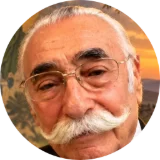
In brief: Kul Himmet is a folk poet who is believed to have lived in the second half of the 16th century in the village of Varzıl (Görümlü) near Almus in the province of Tokat. He was a contemporary of Pir Sultan Abdal and is counted in the Alevi tradition among the Seven Great Poets (Yedi Ulu Ozan). His düvazdeh imam (poems on the Twelve Imams) and his instructive nefes (religious hymns) are still sung with fervour today in Alevi villages and in Cem ceremonies. This page presents his life and his deyiş (songs) as told by Seyit Derviş Tur Dede.
The following text is taken from Seyit Derviş Tur Dede’s book Erkânname. For a general introduction: What is Alevism?
Who was Kul Himmet?
The great folk poet Kul Himmet is one of the Seven Great Poets of the Alevis. We have no detailed, documented information about Kul Himmet’s life. It is believed that he was born in the village of Varzıl (Görümlü) in the Almus district of Tokat and lived in the second half of the 16th century. His grave is said to be in the same village, where his descendants also live. Kul Himmet is said to have been a contemporary of Pir Sultan Abdal and to have been influenced by him.
In his poems and couplets he states clearly that he is bound to the dergâh (lodge) of Hacı Bektaş Veli and to its principles (its faith). Considering that his deyiş teach the Alevi path, the accounts that Kul Himmet, like Pir Sultan Abdal, worked closely with Kalender Çelebi can be said to be true.
The Pen Name “Kul Himmet Üstadım”
Because Kul Himmet’s fame spread far and wide during his lifetime, the poems of many poets stand out in metre and style when we compare them with the poems written by Kul Himmet. Feyzullah Çelebi, who was postnişin (head) of the Hacı Bektaş dergâh, is Hacı Feyzullah Çelebi, the son of Abdül Kadir Çelebi, who lived between 1711 and 1759. This poet, who wrote poems under the pen name “Kul Himmet Üstadım” (Kul Himmet, my master), is known to have lived in the 18th century. The original Kul Himmet, however, whose life we are trying to describe here, lived in the 16th century, and the linguistic features of his deyiş confirm this.
Accordingly, however the pen name “Kul Himmet Üstadım” is expressed, it may be thought to belong to a poet who regarded the 16th-century Kul Himmet as his master. So far, however, no document confirming this has been found. Moreover, in many of these poems no difference in style and content can be seen. All of these couplets, in which love for Hacı Bektaş Veli, for the Ehl-i Beyt (Ahl al-Bayt, the family of the Prophet) and for Imam Ali, and devotion to the Twelve Imams find instructive expression, must at least be accepted as reliable documents. In our literary history every great poet and ozan has been imitated. Over time the poems have become intermingled, and telling them apart is so difficult as to be almost impossible.
Kul Himmet is said to have been devoted to Tahmasp, the son of Shah Ismail, the founder of the Safavid state. Kul Himmet is a great poet both in his command of language and in his poetic talent. His deyiş are sung with fervour in almost every Alevi village and in worship.
Kul Himmet’s couplets, which have shaped the Alevi faith in the sense of prayer, and the service he rendered with these couplets and poems have lived on far beyond his lifetime. And they will live on as long as the Alevi faith lives.
The Deyiş of Kul Himmet
Without reaching the mürşid there is no cure
Lokman hekim merhem çalsa yarama
Mürşide varmadan yoktur çaresi
Günde varsam gelsem Şah’ı kereme
Mürşide varmadan yoktur çaresi
Even if Lokman the healer spread ointment on my wound –
without reaching the mürşid (spiritual guide) there is no cure
Even if I went daily to the grace of the Shah and back –
without reaching the mürşid there is no cure
Varayım ben Hak Muhammed Ali’ye
Biz ’de hizmet ettik biz ’den uluya
İnsem niyaz etsem Kızıl Deliye
Mürşide varmadan yoktur çaresi
Let me go to Hak, Muhammad and Ali
We too have served one greater than ourselves
Even if I knelt and made supplication to Kızıl Deli –
without reaching the mürşid there is no cure
Doksan bin hacıyla Kâbe’ye varsam
Server Muhammed’in nurunu görsem
Muhammed’in tülbendini yıkasam
Mürşide varmadan yoktur çaresi
Even if I reached the Kaaba with ninety thousand pilgrims,
saw the light of Muhammad, the Lord (Server),
and washed Muhammad’s turban cloth –
without reaching the mürşid there is no cure
Yetmiş deve ile Kâbe’den gelsem
Amentü okusam abdestim alsam
Ulu camilerde beş vakti kılsam
Mürşide varmadan yoktur çaresi
Even if I came back from the Kaaba with seventy camels,
recited the creed (Amentü) and performed my ablution,
prayed the five daily prayers in great mosques –
without reaching the mürşid there is no cure
İsmail’e inen koçu getirsem
Cebrail’e her eksiğin bitirsem
Selman gibi Ali’nin devesin gütsem
Mürşide varmadan yoktur çaresi
Even if I brought the ram sent down for Ishmael,
made good every want for Gabriel,
herded Ali’s camels like Salman –
without reaching the mürşid there is no cure
Arafat’ta kurban kessem yedirsem
Hac kurbanı kabul oldu dedirtsem
Pir aşkına su doldursam su versem
Mürşide varmadan yoktur çaresi
Even if I slaughtered a sacrifice on Arafat and fed the people,
had it said that my pilgrimage sacrifice was accepted,
drew water and gave water for the love of the pir –
without reaching the mürşid there is no cure
Turab olsam toprak olsam yol olsam
Çiğnensem de hal evinden hal olsam
Hacı Bektaş eşiğine kul olsam
Mürşide varmadan yoktur çaresi
Even if I became dust, became earth, became a road,
were trodden underfoot and passed from state to state,
became a servant at the threshold of Hacı Bektaş –
without reaching the mürşid there is no cure
Kul Himmet’im eyler hüü Allah
Dikildim dârına Allah eyvallah
Çağrışır talipler Hüü Allah, Allah
Mürşide varmadan yoktur çaresi
My Kul Himmet cries: Hu, Allah!
I stood upon his dâr (the place of accountability) – Allah, eyvallah
The talips (disciples) call out together: Hu Allah, Allah
Without reaching the mürşid there is no cure
Düvazdeh İmam (the Twelve Imams) within the Sura al-Fatiha
Bismillah nuru Huda hakkı için
Kalma günahlara elaman Mürvet
Elhamdülillah, didar hakkı için
Kalma günahlara elaman Mürvet
Bismillah – for the sake of the light of God (Huda),
do not leave me in my sins, mercy, O Generous One (Mürvet)!
Elhamdülillah – for the sake of Your countenance (didar),
do not leave me in my sins, mercy, O Generous One!
Rabbil âlemin Ali ’yel Murtaza
Er rahmanı rahim çektirme ceza
İmam Hasan, şah Hüseyin lütfeyle bize
Kalma günahlara elaman Mürvet
Rabbil âlemin – Ali al-Murtaza,
Er-rahman-ir-rahim – do not make me suffer punishment,
Imam Hasan, Shah Husayn, show us your grace,
do not leave me in my sins, mercy, O Generous One!
Maliki Yevmeddin ’de ilmi mi buldum
İmam Zeynel’den bir himmet aldım
Bakır’ı Cafer’e tevella kıldım
Kalma günahlara elaman Mürvet
In Maliki yevmiddin I found knowledge,
from Imam Zeynel I received a blessing (himmet),
to Bakır and Cafer I turned in love and loyalty (tevella),
do not leave me in my sins, mercy, O Generous One!
İyyake nabudu Musa’yı Kazım
İyyake nestain benim niyazım
İmam Rıza’ya doğrudur özüm
Kalma günahlara elaman Mürvet
Iyyake na’budu – Musa al-Kazim,
Iyyake nesta’in – this is my supplication (niyaz),
towards Imam Rıza my inner self is true,
do not leave me in my sins, mercy, O Generous One!
İhdinas sıratel müstakim Taki
Sıratellezine Ali ‘yel el Naki
Yerin göğün arşın kürsün direği
Kalma günahlara elaman Mürvet
Ihdinas-sıratal-müstakim – Taki,
Sıratallezine – Ali al-Naqi,
pillar of earth and heaven, of the Throne and the Footstool (arş and kürsi),
do not leave me in my sins, mercy, O Generous One!
Enamte aleyhim geçmeden yetiş
Ecel şerbetini içmeden yetiş
Askeri gam gusa basmadan yetiş
Kalma günahlara elaman Mürvet
En’amte aleyhim – come to my aid before it is too late,
come to my aid before I drink the draught of death,
Askeri, come to my aid before grief and sorrow overwhelm me,
do not leave me in my sins, mercy, O Generous One!
Gayrıl mağdubi aleyhim bir ismi Şah’a
Veleddalin âmin ver Mehdi maha
Bizlerde varınca ulu dergâha
Kalma günahlara elaman Mürvet
Gayril-mağdubi aleyhim – a name of the Shah,
Veleddallin, Amin – grant it, Mahdi, you moon,
when we too arrive at the exalted threshold (dergâh),
do not leave me in my sins, mercy, O Generous One!
On dört masumu pak, on iki nazır
Üçler, beşler, kırklar, yediler hazır
Kul Himmet’im der ki bizdedir kusur
Kalma günahlara elaman Mürvet
The Fourteen Pure Innocents, the Twelve Guardians,
the Three, the Five, the Forty and the Seven are present,
my Kul Himmet says: the fault lies with us,
do not leave me in my sins, mercy, O Generous One!
Veli Baba’s interpretation of the Sura al-Fatiha
In this section the book also includes Veli Baba’s interpretation of the Sura al-Fatiha in verse:
Elhamdülillah bulduk Huda’yı
Rabbil âlemisin olduk gedahi
Errahmanir rahim verdik nidayı
Maliki yevmeddin olduk âleme
Elhamdülillah – we have found God (Huda),
Rabbil âlemin – we became His beggars,
Errahmanir-rahim – we raised the call,
Maliki yevmiddin – we stepped out before the world
İyyake nabbudu gözümün nuru
İyyake nestein verdik ikrarı
İhdinas sıratel müstakim yarı
Sıratellezine çaldık kalemi
Iyyake na’budu – light of my eyes,
Iyyake nesta’in – we made the ikrar (vow),
Ihdinas-sıratal-müstakim – O beloved,
Sıratallezine – we put pen to paper
Enamte aleyhim dedim ya Ali
Gayrıl mağdubi aleyhim’e beli
Veleddalin dedik kaldırdık eli
Gözüm dost yolunda durduk selama
En’amte aleyhim – I said: Ya Ali,
to Gayril-mağdubi aleyhim: Yes (beli),
Veleddallin we said and raised our hands,
eyes on the path of the Friend, we stood in greeting
Fatiha Süresi indi şanına
Ezelden kurbandır canım canına
Kimseler ermedi sırrı kânına
İsmini derz ettim “elif lam mim”
The Sura al-Fatiha was revealed in Your honour,
since pre-eternity my soul has been a sacrifice for Your soul,
no one has reached the mine of its secret,
I have inserted Your name: “Alif Lam Mim”
Fatiha Süresin veçhin okudum
İsmin zikretmeyen kula kakıdım
Şükür olsun metahım kumaş dokudum
İhsan eyle kapıdaki kuluna
I read the Sura al-Fatiha according to its true meaning,
I rebuked the servant who does not remember Your name,
thanks be – from my goods I have woven cloth,
show kindness to Your servant at the door
Şükür olsun bir membadan yarattın
Bir ervahtan ervahıma nur kattın
Meleklere hamurumu yoğurttun
Aşıklık defterin sundun elime
Thanks be – from a single source You created,
from one spirit You added light to my spirit,
You had angels knead my clay,
You placed the book of the âşık’s love in my hand
Velim eydür Hak’tan aldım dersimi
Muhabbet çekici yaptı örsümü
Okuduğum ayet bilmem Farsi’mi
Hakk’ın bir kelamı geldi dilime
My Veli says: from Hak I received my lesson,
the hammer of love (muhabbet) shaped my anvil,
whether the verse I read is Persian I do not know,
a word of God (Hakk) came to my tongue
I am a sinner, forgive me my sin
Sevdiğim Allah bir Muhammed ya Ali
Günahkârım günahımı bağışla
Pir’im Hünkâr Hacı Bektaş’ı Veli
Günahkârım günahımı bağışla
My beloved is the One God, Muhammad, ya Ali,
I am a sinner, forgive me my sin,
my pir is Hünkâr Hacı Bektaş-ı Veli,
I am a sinner, forgive me my sin
Fatma anayı ümmüşah bildim
Ağladıkça çeşmim yaşını sildim
Günahkârım sana Mürvet’e geldim
Günahkârım günahımı bağışla
Mother Fatima I have known as Ümmüşah (queen of mothers),
whenever I wept, I wiped the tears from my eyes,
a sinner, I have come to You, the Generous One,
I am a sinner, forgive me my sin
İmam Hasan ile çok yedim içtim
İmam Hüseyin’e derdimi açtım
İmam Zeynal, Bakır, Cafer’e düştüm
Günahkârım günahımı bağışla
With Imam Hasan I have eaten and drunk much,
to Imam Husayn I have opened my sorrow,
to Imam Zeynal, Bakır and Cafer I have turned for refuge,
I am a sinner, forgive me my sin
Kazım Musa Rıza dahi nerdedir
Taki Naki Şah Askeri ordadır
Mehdi mağarada Mansur dârdadır
Günahkârım günahımı bağışla
Where are Kâzım Musa and Rıza too?
Taki, Naki and Shah Askeri are there,
the Mahdi is in the cave, Mansur on the gallows (dâr),
I am a sinner, forgive me my sin
Kul Himmet üstadım söyler ezelden
Mevlam muradımı vere tez elden
Sana cömert derler ezel ezelden
Günahkârım günahımı bağışla
Kul Himmet, my master, speaks from pre-eternity:
may my Lord (Mevla) quickly grant my wish,
since all eternity You have been called the Bountiful,
I am a sinner, forgive me my sin
O Twelve Imams, come to my aid at dawn
Gece gündüz intizarım Pir’ime
On iki İmam seher vakti gel yetiş
Kanım kaynar Ehli beytin yoluna
On iki İmam seher vakti gel yetiş
Night and day I wait in longing for my pir,
O Twelve Imams, come to my aid at dawn,
my blood boils for the path of the Ehl-i Beyt,
O Twelve Imams, come to my aid at dawn
Kimin umudu var kimin akçası
Kimi şalvar giyer yoktur bohçası
Bu garip gönlümün bağı bahçesi
On iki İmam seher vakti gel yetiş
One has his hope, another his money,
some wear baggy trousers and have no bundle,
you vineyard and garden of my lonely, stranger’s heart,
O Twelve Imams, come to my aid at dawn
Bizi ilettiler Mansur dârına
İman ikrar getir derler Pirine
Lanet olsun şol Yezidin canına
On iki İmam seher vakti gel yetiş
They led us to the gallows (dâr) of Mansur,
“Bring faith and ikrar before your pir,” they say,
cursed be the soul of that Yazid,
O Twelve Imams, come to my aid at dawn
Tavus kuşu cevlan kurar bu demde
Çekmişler Mansur’u dâra meydanda
Nice sefillerin boynu urganda
On iki İmam seher vakti gel yetiş
At this moment the peacock spreads its tail,
in the square they have hauled Mansur onto the gallows,
how many wretched ones have the rope around their necks,
O Twelve Imams, come to my aid at dawn
Kul Himmet der Kulhüvallahü ahad
Cesedimde can kalmadı artık bu saat
Dünü günü virdimdir Ali, Muhammed
On iki İmam seher vakti gel yetiş
Kul Himmet says: Qul huwa Allahu ahad (Say: He is God, the One),
at this hour no life is left in my body,
night and day my litany (virt) is: Ali, Muhammad,
O Twelve Imams, come to my aid at dawn
… in the essence is Ali
Aç özünü gafil seyret cihanı
Batında zahirde özde Ali var
Bana inanmazsan oku Kur’anı
Ayette sürede cüzde Ali var
Open your inner self, you heedless one, and behold the world:
in the hidden, in the manifest, in the essence is Ali,
if you do not believe me, read the Quran:
in the verse, in the sura, in the section (cüz) is Ali
Bir sevdaya düştüm yandım ha yandım
Dost elinde bade içtimde kandım
Yedi iklim dört köşeyi dolandım
Dört mevsimde bahar yazda Ali var
I fell into a passion and burned, oh how I burned,
I drank wine from the Friend’s hand and was sated,
I wandered the seven climes and the four corners:
in the four seasons, in spring and summer is Ali
Yaratan kusursuz kusurlar kulda
İbret var arının yaptığı balda
Eren evliyanın gittiği yolda
Hedefde menzilde izde Ali var
The Creator is flawless, the flaws lie with the servant,
there is a lesson in the honey the bee makes,
on the path the erenler and saints have walked:
in the goal, in the station, in the trace is Ali
Perdenin mızraba mızrabın tele
Dikenin yaprağa yaprağın güle
Leylanın Mecnuna Mecnunun çöle
Yaptığı edada nazda Ali var
In the bearing of the fret towards the plectrum, of the plectrum towards the string,
of the thorn towards the leaf, of the leaf towards the rose,
of Leyla towards Mecnun, of Mecnun towards the desert –
in their grace and in their charm is Ali
Velayete yoldaş erenler erler
Sözümü anlamaz Köroğlu körler
Bize bunun için Alevi derler
Bizde falan filan yoktur, bizde Ali var
Companions of velayet (sainthood) are the erenler and the true men,
the blind Köroğlus do not understand my word,
that is why they call us Alevis:
with us there is no so-and-so, with us there is Ali
Brother guest, welcome, greetings to you
Yine mihman gördüm gönlüm şâd oldu
Mihman kardaş safa geldin merhaba
Kalktı gam gasavet bahar yaz oldu
Mihman kardaş safa geldin merhaba
Once again I saw a guest and my heart rejoiced,
brother guest, welcome, greetings to you,
grief and sorrow have lifted, it has become spring and summer,
brother guest, welcome, greetings to you
Dileğim Mevla’dan misafir gele
Yavan yakşi demen yüzümüz güle
Büyük küçük onu hep Hızır bile
Mihman kardaş safa geldin merhaba
My wish from the Lord (Mevla) is that a guest may come,
say not meagre or plentiful – let our faces smile,
young and old, let all regard him as Hızır,
brother guest, welcome, greetings to you
Hak zulüm ettiğine mihman göndermez
Çağırır çabalar ektiği bitmez
Bu yola gidenler menzile yetmez
Mihman kardaş safa geldin merhaba
To one on whom God (Hak) inflicts hardship He sends no guest,
he calls and strives, yet what he sows does not grow,
those who go this way do not reach the destination,
brother guest, welcome, greetings to you
Mihman dedikleri gayet uludur
Mihman ev sahibinin gonca gülüdür
Mihmanımız Hak Muhammed Ali’dir
Mihman kardaş safa geldin merhaba
What is called a guest is most exalted,
the guest is the rosebud of the master of the house,
our guest is Hak, Muhammad, Ali,
brother guest, welcome, greetings to you
Kul Himmet üstadım tuttuğum gele
Mihman nasibini birlikte getire
Misafir Ali’dir öz nefsin dile
Mihman kardaş safa geldin merhaba
May Kul Himmet come, the master to whom I hold fast,
may the guest bring his portion with him,
the guest is Ali – wish it from your own self,
brother guest, welcome, greetings to you
Source: Seyit Derviş Tur, Erkânname – Aleviliğin İslam Yorumu ve Alevi Erkânları (Erkânname – The Alevi Interpretation of Islam and the Alevi Rites), expanded 3rd edition (ISBN 975-6791-52-7).
More articles on Alevism
Faith and erkân (rites)
- What is Alevism? (main page)
- What does Kızılbaş mean? Who is called an Alevi?
- The Four Gates and Forty Stations in Alevi belief
- What is ikrar (vow) and whom does it come from?
- Islam and the Alevi faith
- The meaning of the word Islam and its distortion
- The place of women in Alevi belief
- The Fourteen Pure Innocents (On Dört Masum-u Pak) and the Seventeen Kemerbest
Cem and rites
- What is a Cem? The cemevi, Cem rules and the Twelve Services
- What is semah? The sanctity of the semah
- What is musahiplik (spiritual kinship) and whom does it come from?
- The görgü rite (görgü cem)
- Alevi funeral rites
- Alevi marriage (nikâh) rites
- What is düşkünlük (excommunication)?
Festivals, fasts and holy days
- The month of Muharram and the sanctity of the fast
- Hızır and Ilyas
- Nevruz among the Alevis
- The Feast of Sacrifice (Kurban Bayramı)
The Twelve Imams
- Who are the Twelve Imams?
- Imam Ali
- Imam Hasan
- Imam Husayn (Hüseyin)
- Imam Zayn al-Abidin (Zeynel Abidin)
- Imam Muhammad al-Baqir (Muhammed Bakır)
- Imam Ja’far al-Sadiq (Cafer-i Sadık)
- Imam Musa al-Kazim (Musa-i Kâzım)
- Imam Rida (Rıza)
- Imam Muhammad al-Taqi (Muhammed Taki)
- Imam Ali al-Naqi (Ali Naki)
- Imam Hasan al-Askari (Hasan Askeri)
- Imam Mahdi (Mehdi)
The Seven Great Poets (Yedi Ulu Ozan)
- Who are the Seven Great Poets?
- Seyyid Nesimi
- Shah Ismail Hatayi
- Fuzuli
- Yemini
- Virani
- Pir Sultan Abdal
- Noksani Baba
History: Ehl-i Beyt, Ghadir Khumm and Karbala
Books and Alevi organisation in Europe
- Erkânname
- The First Alevi Organisation in Europe (memoirs)
- Alevi İslam – The Path to the Shah
- All books
In German: Alevitentum: Grundlagen, Glaube und zentrale Begriffe · Geschichte der Aleviten-Organisation in Deutschland
About the author: Seyit Derviş Tur Dede
Born in 1936 in Başköy (Çayırlı, Erzincan) into a seyyid family belonging to the Babamansur (Shah Mansur) ocak. He is a co-founder and the first chairman (1990–1993) of the Federation of Alevi Communities, the forerunner of the Alevi Federation of Germany (AABF). From 1994 to 2003 he chaired the federation’s Council of Dedes. He is the author of the books Erkânname (2002) and Avrupa’da İlk Alevi Yapılanması (The First Alevi Organisation in Europe, 2016); his work is cited as a source in academic publications by researchers such as Martin Sökefeld, Zeynel Gül, Burak Gümüş and Bülent Keleş.
Translated from the Turkish original by Seyit Derviş Tur.