In brief: Alevism is a faith and way of life that places the love of Allah, Muhammad and Ali at its centre, follows the path of the Ehl-i Beyt (Ahl al-Bayt, the Prophet’s family) and the Twelve Imams, and rests on love of humanity, on the principle of “being master of one’s hand, one’s tongue and one’s loins”, and on the rites (erkân) of the Cem (the Alevi worship ceremony).
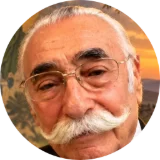
This text was written by Seyit Derviş Tur Dede, one of the founders of Alevi organisation in Europe and author of the book Erkânname, from the perspective of a dede and practitioner.
Contents
WHAT IS ALEVISM?
Alevism is a body of beliefs that carries the sanctity of Allah, Muhammad and Ali in its heart, does not depart from the justice of Imam Ali, has love of humanity at its foundation, and is tolerant, humanist and respectful of every religion, every denomination and every belief. It is an Islamic faith that makes no distinction of language, religion, race or colour, and that makes the principles of being master of one’s hand, one’s tongue and one’s loins a condition. It takes under its roof believing people who wish to come to this faith and quenches their spiritual thirst. It enables people, of their own free will, to submit themselves to judgement within the community in which they live together and to be cleared. It is a secular, democratic, egalitarian, sharing and free way of thought. It aims to create virtuous human beings by raising the human being to the rank of the insan-ı kâmil (the perfect human being). It forms the essential leaven in the human dough that unites both the divine and gnosis (irfan). Overcoming fear and turning to God with love, seeing God in the essence of the insan-ı kâmil through the belief “Enel Hak – Eğnim Hak” (“I am the Truth (God) – my very body is the Truth”), it leads beyond the duality of Creator and created to “vahdet-i vücut” (the unity of being).
The meaning of the word Islam! It is an extremely comprehensive and meaningful word which, beyond believing, brings with it surrender, peace, justice and freedom. It bases one’s life of decency and morality on the values faith provides. It sets in order a person’s morals and character. It does not accept religion as a form and shape or as a dogma. With its structure that gives humanity the best service and order, and without destroying its essence and its spirit, it universalises its inner (bâtınî) character through independent willpower. It unites reason and faith as a whole and serves to create transparent human beings and a clean society. Alevism is the mystical (tasavvufi) belief system created by the mystical thought of Islam whose foundation the Prophet Muhammad and Imam Ali laid in the Cem of the Forty (Kırklar Cemi); it is the Islamic faith brought with the Qur’an by the Prophet Muhammad and Imam Ali and continued by the Ehl-i Beyt and the Twelve Imams.
WHAT ARE THE SACRED VALUES OF THE ALEVI FAITH?
The Alevi community is a community that has come together from various tribes and from various lineages and ethnic origins. For Alevism is not a lineage or a race. It is a faith. One does not become an Alevi by being born of an Alevi mother and father. Those who accept the Ehl-i Beyt Alevi Islamic faith from the heart are Alevis. Among the Alevis there is the lineage of the Seyyid-i Saadet, the Evlad-ı Resul (descendants of the Prophet), which alone is charged with the faith and bound by ikrar (vow). The Alevi faith is the Sufi thought and the mystical path that is the inner (bâtınî) interpretation of the Qur’an. After the Twelve Imams, it is the grandchildren of the Seyyid-i Saadet, Evlad-ı Resul, descended from the lineage of the Twelve Imams, who for 1,400 years have taken the lead in continuing this faith and, by serving it, have made it known to communities. In this era we call all of them pir. The Buyruk (book of teachings) of Imam Jafar also clearly expresses the sanctity of this Seyyid lineage.
The talips, the yol evladı (children of the path) who accept the Alevi faith, learn the path and rites of this faith and all its sacred values from the Seyyid-i Saadet, Evlad-ı Resul. That is why they show extraordinary respect to this lineage of the Seyyid-i Saadet, Evlad-ı Resul and hold it in high esteem. They believe that no evil will come from this lineage. For Surah al-Ahzab, verse 33: “O Ehl-i Beyt! I have created you as an exemplary lineage. Allah wishes to remove from you every kind of impurity and sin and to make you spotlessly pure.”
Surah ash-Shura, verse 23: O My Beloved, say to those who believe in you! For bringing you this true religion, I expect from you no fee and no recompense. I ask of you only and solely allegiance (biat), reverence, respect and devotion to my Ehl-i Beyt.
Out of reverence for our forefathers in the Seyyid lineage and because of the service we render to the faith, the talips call us pir and kiss our hands. Because pir means one who refines the raw and “cooks” the unripe to maturity, the talips, the children of the path, call the rehber, the pir and the mürşid all “pir” or “piro”. My request to the talips too: even if he is of the Seyyid lineage, please look into the person to whom you will show respect and whose hand you will kiss. In Anatolian Kızılbaş Alevism the word dede does not exist. In general there is the word pir. But in the Bektashi order, in order to remove from the rites of the order the precious and meaningful word pir given to the lineage of the Ehl-i Beyt, they used the name “dede”, “dede baba” in place of the word pir. Now our people everywhere call the pir “dede”.
Sadly, as the Seyyid children of this era, many of us use the respect and reverence shown to us for advantage, self-interest and career. I exempt from this our Seyyids who are spotlessly pure and devoted to their faith, their path and their rites. Of course we have Seyyids devoted to their forefathers, their path and their rites, and I respect them. But many, besides not being children worthy of their forefathers, commit unthinkable wrongs and betrayal against the Ehl-i Beyt faith and destroy its sacred values. They commit a betrayal that the Umayyads, the Abbasids, the Seljuks and the Ottomans could not accomplish.
When the majority are traitors, however much the minority shows the right path, the daily slanders of the hypocrite, the two-faced and the liar cannot be stopped. We do not know what lineage these traitors are from. But some of them are those who say that by descent they too are of the Seyyid lineage. Such people who betray their lineage exist in every period of history. Just like Ömer (Umar ibn Sa‘d), the grandson of Seyit Vakkas (Sa‘d ibn Abi Waqqas), who shot the first arrow at Imam Husayn (Hz. Hüseyin) at Karbala. These too betray their lineage. As at Karbala, they exist today too, and they will exist in the future.
WHAT QUALITIES ARE REQUIRED OF A SEYYID WHO IS TO SERVE AS PIR?
If a can (fellow believer) among the Alevis wishes to live as an Alevi in the future – whether he be a Seyyid child or a talip, a child of the path – it is obligatory for him to surrender to a pir. Our faith and our path have continued in this way to this day. Around 730 CE, Hamdan bin Muhammad, the grandson of Imam Hasan, introduced the esoteric system of brotherhood (karmat). It was ordered by Imam Jafar al-Sadiq as rehber, pir, mürşid and the Four Gates and Forty Stations. At a time when the Umayyads had banned musahiplik (spiritual kinship), which had been made obligatory by the Qur’an, Imam Jafar al-Sadiq sanctified musahiplik within the Qarmatian community and kept it alive. That is why musahiplik is still kept alive within the Alevi faith as a religious and sacred value. This system of religious education, being taught in the Dar al-Hikma madrasas he founded, continued until the founding of the Fatimid state in 990 CE. After the Fatimid state was founded, the Fatimids, by founding the University of “EL EZER” (Al-Azhar) in Cairo, ensured the continuity of this Ehl-i Beyt Islamic faith. Against the later fabricated Wahhabi Islam of the Umayyads, they had the Ehl-i Beyt Alevi Islam accepted by the peoples they could reach throughout the world. Al-Azhar University is the first university of the Islamic world:
The meaning of the word “REHBER”! With us (pioneer, one who shows the way): the first gate; it is the service performed in order to educate the uninformed Alevi and make him a talip of the path and rites of the Ehl-i Beyt. (It is the stage of education.) It is the stage of self-education that we call the gate of şeriat in our rites; it is the first rite.
The meaning of the word PIR in Turkish! Master, specialist, expert; it is the service performed to train, in the görgü rite of the tarikat, the cans who have been made talips of the path of the Ehl-i Beyt. In mysticism it is the office of service that refines the raw and “cooks” the unripe to maturity.
The meaning of the word MÜRŞİD! “The one who shows the right path”: it is the office in which the difficulties and problems in matters of faith that the rehber and the pir could not resolve are to be resolved.
Now let us come to this: in what state must a can of ours who is of the lineage of the Seyyid-i Saadet, Evlad-ı Resul be, so that he may serve as rehber or pir? What, then, are the qualities and the values required in a pir?
- First, he must believe without doubt in the oneness of Allah and have embraced faith.
- He must believe in the prophethood of the Prophet Muhammad and have embraced faith.
- In the sanctity of Imam Ali and the Ehl-i Beyt, and that Ali is the executor (vasi) and deputy of the prophethood.
- He must believe in and have accepted that the noble Qur’an is our sacred value.
- He must believe in and have embraced the rehber, the pir, the mürşid, the Four Gates and Forty Stations and the musahip rite, and must remain faithful to the ikrar he has given. A person who does not believe in these 5 sacred values cannot be an Alevi, whatever he may be.
If he believes in these 5 sacred values?
- First, he must be master of his hand, his tongue, his loins and his spouse, and make this his companion.
- He must surrender to a pir, receive education and take a musahip.
- He must enter the musahiplik rite and become a talip of the path of the Ehl-i Beyt.
- He must enter the görgü rite and obtain the consent (razılık) of the whole community he lives with.
- He must repent of the evil he has done, on condition that he never does it again.
- He must remain faithful to the ikrar he has given to his rehber, his pir and his musahip.
- He must not do to others what he would not consider fitting for himself.
- He must purify himself of two-facedness, hypocrisy, lying and slander.
- He must cast ego out of his essence. He must be patient, generous and content,
- He must perform his services for God’s sake, without expecting material gain.
- His heart must be humble, turab (dust); he must love all living and non-living beings in the universe.
- The one you call pir must be a scholar in knowledge (ilmi alim) and of purified nefs (nefsi selim). For an ignorant person is blind though he looks. One does not follow him. Just as these sacred values we have listed are the values to be sought in a pir, so too anyone who holds the Alevi faith – whether of the Seyyid lineage or a talip of the path – who wishes to mature and attain perfection, will have taken a step towards the level of the insan-ı kâmil if he applies the same principles within his own nefs.
According to the Qur’an, the office of pir is the office of the Prophet Muhammad. The Qur’an commands the Prophet Muhammad to worship every night. Surah al-Muddaththir, verses 1 to 5: O you who have put on the robe of prophethood! O Muhammad, who have won the love of God! Arise, raise the people. Call them to worship in the true religion. Glorify your Lord. Keep your garments clean; guard yourself against every kind of evil. With this verse the office of pir was conferred. Surah al-Muzzammil, verse 20: O Muhammad, however hard it may be to rise from sleep in the middle of the night together with you, worshipping at night is more virtuous. By day, worldly affairs await you. Allah sees those who rise to worship with you and will reward them. For a seyyid pir who knows himself, it is an office of heavy responsibility.
Later, as the Islamic world grew and its political, cultural and religious duties multiplied, the Prophet Muhammad said: “I am the city of knowledge, and Ali is the gate of knowledge. Let those who wish to come to me for knowledge go first to Ali.” In this way he left the office of pir to Imam Ali. After that, worship continued every night in Imam Ali’s house with 17 men and 13 women, as 40 cans. Because of this Assembly of the Forty (Kırklar Meclisi), we Anatolian Alevis recognise Imam Ali as pir. Imam Ali tests Imam Hasan and Imam Husayn regarding the office of pir. But it is Imam Husayn who wins the office of pir. That is why we regard Imam Ali and Imam Husayn as pir.
THE MEANING AND FOUNDING OF THE DERGÂH
The Fatimids spread the Dar al-Hikma madrasas, which Imam Jafar al-Sadiq had founded earlier, everywhere, and made tasavvuf – the inner interpretation of the Qur’an – known to many countries of the world of that time through wandering, travelling dervishes, religious scholars called “dahi”, whom they had trained in the Ehl-i Beyt faith. In 1171 the Fatimid state was treacherously handed over to the Abbasids by Saladin (Selahattin Eyyubi). Al-Azhar University was destroyed. They killed the scholars at the university and the pirs who were captured in the Dar al-Hikma madrasas, together with their students. They closed all the Dar al-Hikma madrasas. They also banned the opening of any madrasa under the name Dar al-Hikma.
One of the teachers who fled and saved his life in this massacre at Al-Azhar University was Seyit Firuz, one of the descendants of Musa al-Kazim: Seyit Firuz flees with his son from the city of Cairo in Egypt. He comes from the land of Khorasan in Iran to the town of Ardabil and settles there. Since he is a scholar, he is soon noticed in his surroundings. From then on the people around him, everyone with a difficulty or a problem, turn to Seyit Firuz. Within a short time this goes beyond individual matters. Even conflicts between tribes and blood feuds are brought to Seyit Firuz. The people coming in throngs no longer fit into the tiny house. Seyit Firuz is compelled to build a large place for meetings and education. Because the name Dar al-Hikma madrasa was banned, he gave this educational centre he had built the name “dergâh”, meaning “the door to which you turn” or “the door in which you take refuge”. From that time on, the Ehl-i Beyt educational centres everywhere were given the name “dergâh”.
Our dergâhs, these centres of education, continued until the massacres of the Ottoman sultans Yavuz Sultan Selim and his son Kanuni. After that, village Alevism began. Do not compare the dergâh with the tekke. In the Alevi faith there is no tekke. In the Naqshbandi order, the places where worship is performed by chanting “Hu” are called tekke. The dergâh is a centre for education in religious science. That is, it is the centre of education where the Alevis learn their faith. For “the end of a path not walked with knowledge is darkness”. Things done without education and without teaching are always incomplete and deficient. The person who is to perform the service of pir cannot do so merely by being an ordinary Seyyid child. To be a pir, besides first being of the lineage of the Seyyid-i Saadet, Evlad-ı Resul, “it is also a condition that he be a scholar in knowledge (ilmi alim) and of purified nefs (nefsi selim)”. It is required by the command of the Buyruk of Imam Jafar and the Buyruk of Seyit Safi. Our path and our rites have continued in this way to this day.
HOW WAS A SEYYID TRAINED TO SERVE AS PIR IN VILLAGE ALEVISM?
But after all the Alevi dergâhs were massacred and destroyed in the 15th and 16th centuries, village Alevism began, even if on a small scale. Our dedes and pirs, who had learned the order of dergâh education, preserved the continuity of their faith by applying the same order in their own homes to their children who were to serve as pir, even though there were no dergâhs. In village Alevism, the service of pir was thus performed after a partial education. In this way they also preserved the sacred values handed down through lived practice.
The Seyyid father serving as pir would decide which of his children in the family would take on this office. He would teach the child he had chosen how, where and in what way to master his hand, his tongue, his loins and his whole nefs-i emmare (the self that commands evil). While raising his child, he would see to it that he took a musahip. A few years later he would see to it that his son gave his ikrar to the path in the musahiplik rite and became a talip. At least a year later, he would have him pass through the görgü rite, and the consent (razılık) of the community would be obtained. From then on, as long as he lived, he would take the child he had chosen with him to the conversations and gatherings of the pirs and erenler and to the talips. He would teach his son the qualities a pir must have and the science of tasavvuf. The services he would perform, the conduct expected of him and all the rites he must carry out were taught to him completely. The father pir would test his child in various services under his own supervision.
Whenever he became convinced that his child would serve as pir – when he believed that he was a scholar in knowledge and of purified nefs – he would then hold a Cem rite for the son who was to take on the office of pir. The young man who was to serve as pir would be raised to the dâr by his own pir, in the presence of his talips. Consent would be obtained once again. With his pir giving a prayer, “blessing was bestowed on the service”. After this rite the father pir would say to his talips: this son of mine will serve you as pir after me. From then on that young seyyid would begin the office of pir. Look: rehber, pir and mürşid are the names of the services and offices performed. These names are not the names of persons. Imam Jafar al-Sadiq gave these offices of service the following names in his own language: the “Station of the Dahiler” is the station of the mürşid. The “Station of Hüccet” is the station of the pir. The “Station of Zülmasa” was designated as the station of the rehbers.
These religious services are the outward face of the Alevi faith. They are services performed solely to deliver people from ignorance, to mature them as human beings and to bring them to the level of perfection (kemalet). If we look at the essence of the matter, the Alevi faith is the inner interpretation of the Qur’an, Sufi thought, the mystical path. We call it the path that leads from the heart to God. It is the “tarik-i müstakim” (the straight path). The office of pir is not an easy task, as is commonly thought. Fulfilling it properly is not something everyone can do. It is the task of a true man (er kişi). Its responsibility and its moral burden (vebal) are very great. One does not serve as pir by tucking a file under one’s arm and reciting two prayers. First he must reckon with his own self.
Pir Abdal Musa says that the can who is to serve as pir shall nourish his own nefs with the water of gnosis (marifet). He shall take the root of repentance, mix it with the leaf of seeking forgiveness, pound it well in the mortar of the heart with the pestle of tevhid, knead it with tears in the pot of patience, cook it with the fire of love and bring it to God’s table – and in the hearts of those who have brought it to the point where it can be eaten with the spoon of the wing, there is no doubt, and in their minds no mischief. It is the perfected children of the Seyyid-i Saadet within this measure who can serve as pir. For everything, living and non-living, that exists in the universe is the reflection of all the mysteries of that One Whole and the mirror of His beauty (cemal). And this is the very power we call Allah. This great faith in God, this love of God, is a spiritual power in proportion to the capacity of each person’s heart, mind and understanding. One must believe in this power without limit. We believe that this power is always the helper of what is right, and that it gives to what is wrong what it deserves. May Allah also reform those who do wrong.
Taking a lesson from 35 years of experience, and so that the Ehl-i Beyt Islamic faith should not be further assimilated, the “Öze Dönüş, Ali Yolu, Alevi İslam toplumu” (Return to the Essence, the Path of Ali, Alevi Islamic Community), which we founded in 2017 as “Alevitische Islamische Gemeinde”, was founded as a Religionsgemeinschaft (religious community) with the status of the churches. As the Alevi Islamic Faith Council, the German state accepted the 53-page statutes we wrote and recognised its tax exemption. The sole aim of the dedes and talips who founded this organisation is “to establish a chair of Alevi Islam at German universities and, together with it, a dergâh as a centre for education in religious science, and to serve the education and training of seyyids who will serve as pir”.
Otherwise, the end of a path not walked with knowledge is darkness. We do not know what robes will yet be put on the Ehl-i Beyt Alevi faith in the future, or what meaningless names it will be given, by some such unaware, ignorant seyyids. Even if my life is not long enough to see this chair and this dergâh founded, I believe that there will be young people of the Seyyid-i Saadet, Evlad-ı Resul who will stand by their lineage and their faith. I also believe that the faithful young people of the future will realise the dergâh education system whose foundation we have laid and which we long for. With love and affection (aşk-ı muhabbet), respectfully.
This article was presented on television on 21/07/2020
All articles on Alevism
Faith and rites
- What does Kızılbaş mean? Who is called an Alevi?
- The Four Gates and Forty Stations in the Alevi faith
- What is ikrar, and where does it come from?
- Islam and the Alevi faith
- The meaning of the word Islam and its corruption
- The place of women in the Alevi faith
- The Fourteen Pure Innocents and the Seventeen Kemerbest
Cem and rites
- What is a Cem? The cemevi, the rules of the Cem and the Twelve Services
- What is the semah? The sanctity of the semah
- What is musahiplik (spiritual kinship), and where does it come from?
- The görgü rite (görgü cem)
- The Alevi funeral rite
- The Alevi marriage rite
- What is düşkünlük (excommunication)?
Festivals, fasts and holy days
- The month of Muharram and the sanctity of the fast
- Hızır and İlyas
- Nowruz among the Alevis
- The Feast of Sacrifice (Kurban Bayramı)
The Twelve Imams
- Who are the Twelve Imams?
- Imam Ali
- Imam Hasan
- Imam Hüseyin
- Imam Zeynel Abidin
- Imam Muhammed Bakır
- Imam Cafer-i Sadık
- Imam Musa-i Kâzım
- Imam Rıza
- Imam Muhammed Taki
- Imam Ali Naki
- Imam Hasan Askeri
- Imam Mehdi
The Seven Great Poets
- Who are the Seven Great Poets (Yedi Ulu Ozan)?
- Seyyid Nesimi
- Şah İsmail Hatayi
- Fuzuli
- Yemini
- Virani
- Pir Sultan Abdal
- Kul Himmet
- Noksani Baba
History: the Ahl al-Bayt, Ghadir Khumm and Karbala
Books and Alevi organisation in Europe
- Erkânname
- Avrupa’da İlk Alevi Yapılanması (The First Alevi Organisation in Europe – memoirs)
- Alevi İslam Şah’a Giden Yol (Alevi Islam – The Path to the Shah)
- All books
Deutsch: Alevitentum: Grundlagen, Glaube und zentrale Begriffe · Geschichte der Aleviten-Organisation in Deutschland
About the author: Seyit Derviş Tur Dede
Born in 1936 in Başköy (Çayırlı, Erzincan) into a seyyid family of the Babamansur (Şah Mansur) Ocağı. He is one of the founders and the first chairman (1990–1993) of the Federation of Alevi Communities, the forerunner of the Federation of Alevi Unions in Germany (AABF). From 1994 to 2003 he chaired the Council of Dedes (Dedeler Kurulu) within the federation. He is the author of the books Erkânname (2002) and Avrupa’da İlk Alevi Yapılanması (2016); his work is cited as a source in academic publications by researchers such as Martin Sökefeld, Zeynel Gül, Burak Gümüş and Bülent Keleş.
Translated from the Turkish original by Seyit Derviş Tur.