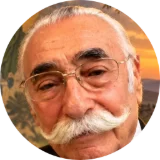
In brief: The semah (ritual turning dance) is one of the twelve services of the Cem worship ceremony; women and men turn together to the accompaniment of the saz (long-necked lute). Seyit Derviş Tur Dede describes the semah as an expression of the human being’s coming from God (Hakk) and returning to God, and of love for the Ehl-i Beyt (Ahl al-Bayt, the family of the Prophet). In 2010 the semah was inscribed on UNESCO’s Representative List of the Intangible Cultural Heritage of Humanity under the name “Semah, Alevi-Bektaşi ritual”.
The following text is taken from Seyit Derviş Tur Dede’s book Erkânname. For a general introduction: What is Alevism?
Contents
The Sacredness of the Semah and Why It Is Performed
The love, the excitement and the joy that God has given to humankind are life itself. For life is full of extraordinary beauty. The purpose of existence is for human beings to know and to feel themselves. It means experiencing, with every new birth, the taste of being. God’s existence is present in all beings. In the life of every being there is the will of God. It is this will that creates, in human life, the love of God, the love of nature and the love of the beloved. This created love gives the human being spiritual value. Love is the one aim for attaining spiritual value within life and for reaching divine sublimity. In this universe, in which the earth, the heavens, the sun and the moon turn, the act of worship of capturing true love by turning, of being purified of the world’s impurities and of drawing near to God (Hakk) is called the semah.
When we examine the semah from a scientific point of view, we see the following: the basic condition of existence is turning. The common resemblance among all beings, from the smallest particle to the most distant stars, is the turning of the electrons and protons in the atoms of which each of them is made. Just as everything turns, the human being too turns – through the turning within the atoms of which the body is made, through the circulation of the blood in the body, through coming from the earth and returning to the earth, and by turning together with the earth – involuntarily, naturally and unconsciously. What distinguishes the human being from other beings and raises it above them, however, is reason. Those who turn the semah, moving in common with all other beings, make their reason take part as well. The semah is the servant’s turning towards the Truth (hakikat), rising through reason and love, abandoning the ego (nefs), passing away in God (Hakk), and returning to servanthood as a matured, perfect human being (kâmil insan). This return! It is a return to serving all of existence and all of creation with love, with a new spirit and a new heart.
The semazen (the one who turns the semah), who begins with love for the Prophet and the Ehl-i Beyt, surrenders his soul to God (Hakk) and begins to turn. A believer (mümin) is at peace in having faith in God, in His angels, in His books and in His prophets. He is in the joy and the understanding of the divine commandments and of the reasons for creation. He defeats his self, his ego – as the Prophet and the Qur’an say: (Die before you die). Verses 27 to 30 of Surah al-Fajr (Fecr) of the Holy Qur’an say exactly this: “O soul (can), secure and at rest, return to your Lord, well pleased with Him and He well pleased with you! O soul, enter among My righteous servants! That you may be, with them, a servant destined for Paradise.”
The semazens who turn the semah open their arms with cries of “Allah, Allah”, turn and are seized by love; turning, they release their souls into the void and break away from outward (zahiri) thoughts. The soul that leaves the body feels that it is drawing near to God. The semazen who attains this love and this ecstasy (vecd) purifies his soul and reaches the state of perfection (kemâlet). The semah is turned solely out of love for God; it is a sacred act of worship. In Alevi belief it is called the “Kırklar Semahı” (Semah of the Forty). It is turned only during the Cem worship, within our worship. Beating the arms like wings (pervaz) and saying “Allah, Allah”, one enters ecstasy and trance through turning – it is a way of drawing near to God. In a word, it is worship. The folkloric types of semah that are danced outside of this are regional dances far removed from its essence.
Under the influence of the regional cultures and folk dances that arose because the Alevis in Anatolia lived cut off from one another, the semah has become detached from its essence and presents a folkloric appearance. That is why we, as dedes, have only the semah that we call the Kırklar Semahı, turned with the wing-beating pervaz movements, performed in our worship. In some places this semah is also called the Erzincan semah. Using the expressions “playing the semah” or “semah dance” (semah oyunu) is quite wrong. As wrong as it is, it is also a sin. The semah is turned in order to draw near to God (Hakk). Therefore the most correct expressions are “we will perform the semah” or “we will turn the semah”.
First Semah Duazdeh
İki turnam gelir başı çağalı
Eğlen turnam eğlen Ali’misin sen
Birisi Muhammed, diğeri Ali
Eğlen turnam eğlen Ali’misin sen
Yoksa Hacı Bektaş Veli ‘misin sen
Two cranes of mine are coming, their heads adorned
Tarry, my crane, tarry – are you Ali?
One of them is Muhammad, the other Ali
Tarry, my crane, tarry – are you Ali?
Or are you Hacı Bektaş Veli?
İki turnam gelir rengi yemyeşil
Biri İmam Hasan ol pakı nesil
Biri İmam Hüseyin Cennet’ten bir gül
Eğlen turnam eğlen Ali’misin sen
Yoksa Hacı Bektaş Veli ‘misin sen
Two cranes of mine are coming, their colour bright green
One is Imam Hasan, of that pure lineage
The other is Imam Hüseyin, a rose from Paradise
Tarry, my crane, tarry – are you Ali?
Or are you Hacı Bektaş Veli?
İki turnam gelir rengi kırmızı
Biri İmam Zeynal sürelim yüzü
Biri İmam Bakır edem niyazı
Eğlen turnam eğlen Ali’misin sen
Yoksa Hacı Bektaş Veli ‘misin sen
Two cranes of mine are coming, their colour red
One is Imam Zeynel – let us lay our faces [before him]
The other is Imam Bakır – let me offer him my reverence (niyaz)
Tarry, my crane, tarry – are you Ali?
Or are you Hacı Bektaş Veli?
İki turnam gelir rengi Cafer’i
Biri İmam Kazım o yol rehberi
Biri İmam Rıza Horasan Pir’i
Eğlen turnam eğlen Ali’misin sen
Yoksa Hacı Bektaş Veli ‘misin sen
Two cranes of mine are coming, their colour that of Cafer
One is Imam Kazım, the guide (rehber) of that path
The other is Imam Rıza, the pir of Khorasan
Tarry, my crane, tarry – are you Ali?
Or are you Hacı Bektaş Veli?
Turnalar Hicazdan sökün eyledi
Muhammed Mehdi’yi yakın eyledi
Hakikat ehlini memnun eyledi
Eylen turnam eylen Ali’misin sen
Yoksa Hacı Bektaş Veli ‘misin sen
The cranes set out from the Hejaz
They brought Muhammad Mehdi near
They gladdened the people of Truth (hakikat)
Tarry, my crane, tarry – are you Ali?
Or are you Hacı Bektaş Veli?
Turnalar geldiler verdiler selam
Aldım selamını eyledim kelam
İlhami şüphesiz eyledim iman
Eylen turnam eylen Ali’misin sen
Yoksa Hacı Bektaş Veli ‘misin sen
The cranes came and gave their greeting
I received their greeting and spoke the word
Through inspiration, without doubt, I professed my faith
Tarry, my crane, tarry – are you Ali?
Or are you Hacı Bektaş Veli?
Second Semah Duazdeh
Devredip gezersin daru fenayı
Bağdat diyarına vardın mı turnam
Medine şehrinde Fatma Ana’yı
Makamı andadır gördün mü turnam
You roam around and wander through the transient world
Did you reach the land of Baghdad, my crane?
In the city of Medina, Mother Fatma –
her station is there – did you see her, my crane?
Bizde beli dedik, bizden uluya
İman aldık ikrar verdik Veli’ye
Necef deryasında İmam Ali’ye
Bu Derya’ya yüzler sürdün mü turnam
We too said “Yes” (beli) – to the Most High above us
We received faith and gave our vow (ikrar) to the Veli
In the sea of Najaf, Imam Ali –
did you lay your face upon this sea, my crane?
Medayın şehrinde Selman’a varıp
Bağdat’ta Kazım’ın kabrini görüp
Baş eğip de eşiğine yüz sürüp
İkrara bent olup, durdun mu turnam
Did you go to Salman in the city of Mada’in,
see the tomb of Kazım in Baghdad,
bow your head and lay your face on his threshold,
and stand bound to your vow, my crane?
Hür şehit de Kerbela’da çürümez
Hakk’tan izin yoktur kalkıp yürümez
İmam Hüseyin’in kanı kurumaz
Şehitler serdarını gördün mü turnam
The free martyr [Hurr] too does not decay in Karbala
Without God’s leave he does not rise and walk
The blood of Imam Hüseyin does not dry
Did you see the commander of the martyrs, my crane?
Hz. Eyüp’ün nikabın kaldır
Tende iki kurt var neyin malıdır
Biri ipek sarar birisi baldır
Bunların sırrına erdin mi turnam
Lift the veil of Job (Hz. Eyüp)
In the body there are two worms – whose property are they?
One spins silk, the other is honey
Did you attain their secret, my crane?
Behlil evcik yapar iki zeminde
Makamını gördü uçmak evinde
Tılsımı da erenlerin ceminde
Kırkların darına durdun mu turnam
Behlül builds a little house on two grounds
He saw his station in the house of Paradise
And its talisman in the cem of the erenler (the saints)
Did you stand in the dar of the Forty, my crane?
Veysel Kıran gezer Yemen elinde
Serin verdi 12 İmam yolunda
İmam Mehdi hangi vakti zamanda
Nasıl zuhur eder sordun mu turnam
Veysel Karani wanders in the land of Yemen
He gave his head on the path of the Twelve Imams
At what time will Imam Mehdi
appear, and how – did you ask, my crane?
Kul Hüseyin’im der ki Hakk’a varalım
Varıp dergâhına yüzler sürelim
Can baş feda edip Şahı görelim
Sen de o sultanı gördün mü turnam
I, Kul Hüseyin, say: let us go to God (Hakk)
Let us go to His dergâh and lay our faces there
Let us sacrifice life and head and see the Shah
Have you too seen that sultan, my crane?
Third Semah Duazdeh
Sabahtan yönümü Hakk’a çevirdim
Muhammed Ali’yi göreyim deyü
Dünyanın gamında çektim elimi
Mürşit i kâmile ereyim deyü
In the morning I turned my face towards God (Hakk),
saying: may I see Muhammad and Ali
I withdrew my hand from the sorrows of the world,
saying: may I reach the perfect mürşid
Varıp bir kâmile yoldaş olmaya
Ahd eyleyip ikrarında durmaya
Dört makamın binasını kurmaya
Ararım ustasın bulayım deyü
To go to a perfect one and become his companion,
to make a covenant and stand by my vow,
to build the edifice of the Four Stations (Dört Makam),
I seek its master, saying: may I find him
Aşığım serimi sevdaya saldım
Aşkın ateşine tutuldum yandım
İmam eşiğinde Peyman’ca durdum
Ali’nin yolunda öleyim deyü
I am a lover (aşık); I gave my head to longing
Seized by the fire of love, I burned
At the threshold of the Imam I stood as in a covenant (peyman)
saying: may I die on the path of Ali
Ol İmam Hasan’ı canımla sevdim
Mazlum Hüseyin’in gülamı oldum
İmam Zeynel ile zindanda durdum
Kendimi kırk pare böleyim deyü
That Imam Hasan I loved with my soul
I became the servant of the oppressed Hüseyin
With Imam Zeynel I stood in the dungeon
saying: may I divide myself into forty pieces
Her zaman ararım kesmem zikrimi
Adına kurbanım İmam Bakır’ın
Dünü günü vird eyleyip okurum
Cafer’den bir nasip alayım deyi
At all times I seek; I do not cease my remembrance (zikr)
I would sacrifice myself for the name of Imam Bakır
Day and night I recite it as my litany (vird)
saying: may I receive a share (nasip) from Cafer
Musa Kazım makamına niyazım
İmam Rıza’ya bağlıdır özüm
Taki, Naki, Askeri’ye var sözüm
Mehdi ile kılıç çalayım deyü
My reverence is to the station of Musa Kazım
My innermost self is bound to Imam Rıza
My word is for Taki, Naki and Askeri
saying: may I wield the sword with Mehdi
Kul Veli’yim Hakk’a secde ederim
Hakkın buyurduğu yola giderim
Dinim Haktır, Hak kelâmı ederim
On iki imama ereyim deyü
I am Kul Veli; I prostrate myself before God (Hakk)
I go on the path that God has commanded
My religion is Truth; I speak the word of God
saying: may I reach the Twelve Imams
Fourth Semah Duazdeh
Muhabbet kapısı açıldı bize
Bugün pirler ile ülfetimiz var
Girmesin kalleşler meclisimize
Bizim erenler ile sohbetimiz var
The door of love (muhabbet) has opened to us
Today we are in close fellowship with the pirs
May no traitors enter our assembly
We are in conversation (sohbet) with our erenler
Aynı cemde herkes muradın buldu
Donandı meclisler nur ile doldu
Hep erenler evliyalar cem oldu
Bu dem bizim bayramımız var
In the same cem everyone found their wish fulfilled
The assemblies were adorned and filled with light
All the erenler and saints (evliya) gathered in cem
At this moment it is our festival
Pirler ocağında bizim yerimiz
Rızadayız taşra çıkmaz yolumuz
Lali gevher sunar gani pirimiz
Kevser şarabından içenimiz var
Our place is in the ocak of the pirs
We are in consent (rıza); our path does not lead outside
Our generous pir offers rubies and pearls
Among us are those who drink of the wine of Kawthar (Kevser)
Pirler huzurunda ikrar verildi
Kudret hazinesi anda açıldı
Bu meydana ikrar iman saçıldı
Erenler halidir hikmetimiz var
In the presence of the pirs the vow (ikrar) was given
Then the treasury of divine power was opened
Vow and faith were scattered over this meydan
It is the state of the erenler – we have our wisdom
Genç Abdal tekbir getirir Allah
Güruhu gülbank ile Allah eyvallah
Pir elinde giydik Elhamdülillah
Başımızda tacı devletimiz var
Duaya dur, duaya dur turnalar.
Genç Abdal proclaims the tekbir: Allah
The congregation with the gülbank (prayer formula): Allah eyvallah
From the hand of the pir we were invested, elhamdülillah (praise be to God)
On our heads is the crown, our good fortune
Stand for the prayer, stand for the prayer, you cranes.
The pir gives the same blessing (dua) to those who turned the semah. After they have returned to their places, the pir recites a salavat (blessing upon the Prophet and his family) in a loud voice. Saying “In the harmony of the cem and the unity of hearts, let us say Allah, Allah”, he leads the congregation down into prostration (secde). He recites the following gülbank:
“Bismi Şah, Allah, Allah! May the times be blessed! May the petitions and acts of worship be accepted! May our efforts not be in vain! For the sake of these acts of worship and these prayers of ours, may God Most High not deprive us of the intercession (şefaat) of Muhammad! May He not separate us from the ranks of the Ehl-i Beyt or from beholding them!
God Most High, who rules over this universe! May You not lead us away from righteousness or from the right path! May You not make us dependent on the worthy or the unworthy. May You grant us our livelihood by lawful (helal) means! For the honour of the erenler and the saints, may You not let us follow the evil thoughts in our hearts, our greed and our ego (nefs) and do things that harm humanity!
May He not withdraw from our cem the beneficent grace and the gracious gaze of the Three, the Five, the Seven, the Twelve Imams, the Fourteen Pure Innocents (14 Masum-u Pak), the Seventeen Girded Ones (17 Kemerbest) and the Forty! For the honour of the prophets and the saints, may He not send us suffering for which we seek a cure in vain! May He give a cure to our pain, healing to our sick, faith to our hearts, and peace and happiness to our homes! May God Most High grant to all those who are now bowed in prostration and say “Allah, Allah” from the bottom of their hearts the wishes of their tongues and the desires of their hearts! May God Most High not let our path fall to the pathless, nor our affairs to the unjust! May He not separate us from this path and this erkân (rites)! The light is the Prophet’s, the generosity Ali’s, the gülbank Hünkâr Hacı Bektaş Veli’s. The tongue be from us, the breath from the pir, the help from God! Gerçeğe Hü (to the Truth: Hu). May the martyrs who lie at rest awaken.” The congregation rises from prostration. The dede recites a salavat.
Source: Seyit Derviş Tur, Erkânname – Aleviliğin İslam Yorumu ve Alevi Erkânları (The Islamic Interpretation of Alevism and the Alevi Rites), expanded 3rd edition (ISBN 975-6791-52-7).
More articles on Alevism
Faith and erkân
- What is Alevism? (main page)
- What does Kızılbaş mean? Who is called an Alevi?
- The Four Gates and Forty Stations in Alevi belief
- What is ikrar (the vow), and where does it come from?
- Islam and Alevi belief
- The meaning of the word Islam and its distortion
- The place of women in Alevi belief
- The Fourteen Pure Innocents and the Seventeen Kemerbest
Cem and rites
- What is a Cem? The cemevi, Cem rules and the twelve services
- What is musahiplik (spiritual kinship), and where does it come from?
- The görgü erkânı (görgü cem)
- Alevi funeral rites
- Alevi marriage rites
- What is düşkünlük (excommunication)?
Festivals, fasts and holy days
- The month of Muharram and the sanctity of the fast
- Hızır İlyas
- Nevruz among the Alevis
- The Feast of Sacrifice (Kurban Bayramı)
The Twelve Imams
- Who are the Twelve Imams?
- Imam Ali
- Imam Hasan
- Imam Hüseyin
- Imam Zeynel Abidin
- Imam Muhammed Bakır
- Imam Cafer-i Sadık
- Imam Musa-i Kâzım
- Imam Rıza
- Imam Muhammed Taki
- Imam Ali Naki
- Imam Hasan Askeri
- Imam Mehdi
The Seven Great Poets (Yedi Ulu Ozan)
- Who are the Seven Great Poets?
- Seyyid Nesimi
- Şah İsmail Hatayi
- Fuzuli
- Yemini
- Virani
- Pir Sultan Abdal
- Kul Himmet
- Noksani Baba
History: the Ehl-i Beyt, Ghadir Khumm and Karbala
Books and Alevi organisation in Europe
- Erkânname
- The first Alevi organisation in Europe (memoirs)
- Alevi İslam – The Path to the Shah
- All books
Deutsch: Alevitentum: Grundlagen, Glaube und zentrale Begriffe · Geschichte der Aleviten-Organisation in Deutschland
About the author: Seyit Derviş Tur Dede
Born in 1936 in Başköy (Çayırlı, Erzincan) into a seyyid family belonging to the Babamansur (Şah Mansur) ocak. He is a co-founder and the first chairman (1990–1993) of the Federation of Alevi Communities (Alevi Cemaatleri Federasyonu), the forerunner of the Alevi Federation of Germany (AABF). From 1994 to 2003 he chaired the Council of Dedes (Dedeler Kurulu) within the federation. He is the author of the books Erkânname (2002) and Avrupa’da İlk Alevi Yapılanması (The First Alevi Organisation in Europe, 2016); his work is cited as a source in academic publications by researchers such as Martin Sökefeld, Zeynel Gül, Burak Gümüş and Bülent Keleş.
Translated from the Turkish original by Seyit Derviş Tur.