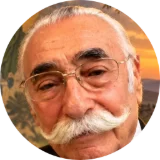
In brief: Noksani Baba (real name İbrahim) is an Alevi poet (ozan) who lived in Erzurum in the 18th century and came from a family attached to the Ağuçan ocak. Although he is not counted among the Seven Great Poets (Yedi Ulu Ozan), his düvazdeh imam (poems on the Twelve Imams), mersiyes (elegies) and nefes (religious hymns) are sung in Cem ceremonies as often as theirs. Seyit Derviş Tur Dede relates how he received the pen name “Noksani” and recounts legends (menkıbe) from his life.
The following text is taken from Seyit Derviş Tur Dede’s book Erkânname. For a general introduction: What is Alevism?
Contents
Who was Noksani Baba?
We have no noteworthy information about Noksani Baba’s date of birth or his life. Yet his couplets, düvazdeh imam and elegies are sung in our Cem ceremonies within the Alevi faith at least as often as the compositions of Kul Himmet, Seyyid Nesimi, Virani, Hatayi, Fuzuli, Yemini and Pir Sultan. Although he is not included among the “Seven Great Poets”, he is held in the same esteem as they are. Many years later the late Şinasi Koç, who worked as a teacher in the village of Taşyurt near Hasankale, came across many of Noksani Baba’s couplets in that region. He learned that a granddaughter of the bearer of the pen name “NOKSANI” – which appears in these couplets that are sung in our Cem ceremonies and that he always heard – worked at the People’s House (Halkevi) in Erzurum.
He met this granddaughter, whose name was Lütfiye. Around 1945 Lütfiye Bacı was an elderly woman of eighty. According to what he learned from her, Noksani had three children named Rıza, İbrahim and Zekiye. From Rıza he had two grandchildren named Adil and Zekiye. From İbrahim he had two grandchildren named Ziya and Lütfiye. From his daughter Lütfiye, in turn, he had two granddaughters named Makbule and Hatice. The Lütfiye with whom Şinasi Koç spoke is the daughter of Noksani Baba’s son İbrahim.
His Life in Erzurum and the Pen Name “Noksani”
According to this information Noksani Baba is an 18th-century poet and was born in Erzurum. His real name is İbrahim. In keeping with the conditions of the time, his father had him educated at a medrese. In those years he became known as “İnce Molla” (the refined mullah). His father İsmail is said to have been a faithful talip (follower) of the “Ağuçan” ocak. One day Sadık Dede, of the Koca Seyyid family from the village of Sun near Elazığ, came to the house of his talip İsmail. The household welcomed their dede with great joy. İbrahim was not among them. Sadık Dede asked about İbrahim. His father replied: he was around here, he will surely be back any moment.
A little later İbrahim came in. Sadık Dede, who knew him well, immediately noticed the change in İbrahim. In Alevi terminology, İbrahim had become captivated by outward (zahiri) knowledge; he was arrogant and convinced that no one was superior to him. Noticing this, Sadık Dede, while praying, struck İbrahim, who was kissing his hand, between the shoulders with both hands and continued his prayer. Smoke came out of İbrahim’s mouth and he fell down unconscious. After a while he came to, looked at Sadık Dede and said the following:
Gönlümün ziyası gözümün nuru
Gönlümde mihmanım sen oldun ezel
Kolumun kuvveti, dizimin feri
Ruh ile revanım sen oldun ezel
Radiance of my heart, light of my eyes,
since pre-eternity you have been the guest in my heart,
strength of my arm, vigour of my knees,
since pre-eternity you have been my soul and my breath of life
Sadık Dede, who witnessed this, gave İbrahim the pen name (tapşırma) “NOKSANI”. After that his deyiş soon became famous on the lips of the people, and he came to be spoken of in the community as a respected, honoured er (man of God).
In Erzurum he often met and conversed (sohbet) with the friends of God (Hak dostları) known as “Limoncu” and “Kavcı”, who came from the villages of Endek and Müşkü near Horasan. Noksani Baba, who had a small grocery shop in the TAŞ shops in Erzurum, is said to have made his living from this shop.
“Bring that muhabbet, and I will give you that much sugar”
One day, while he was talking with one of his friends, a child came: “Noksani Baba, my mother wants sugar for this money.” Noksani Baba was so absorbed in the conversation that, without looking at how much money it was or how much sugar he should give, he gave four or five times the amount in sugar and sent the child off. When the child gave the sugar to his mother, the woman was shocked. “My son! Did you take this sugar without anyone seeing?” The child said, “No, Noksani Baba gave it to me”, but the mother did not believe him. The mother gave the child exactly the same amount of money and together they went to Noksani Baba’s shop.
At that moment Noksani Baba’s guest had left, and he was waiting behind his counter for customers. The child said, “Noksani Baba, will you give me sugar for this money?” and handed over the money. Noksani Baba looked at the money, weighed out the sugar accordingly and gave it. The mother saw that this time the sugar was a quarter of what he had given before. The mother asked: “Noksani Baba, a little while ago I sent the child and for the same money you gave four times this amount of sugar. What has happened now that you give so little sugar?” Noksani Baba: “Ah, my child, bring that muhabbet (spiritual conversation in love), and I will give you that much sugar.” The couplets of Noksani Baba, in whose every state there lay a deeper wisdom, have found their place in Alevi worship and gatherings.
The Deyiş of Noksani Baba
An interpretation of the Sura al-Fatiha: … Hünkâr
Mürüvvet kanisin iki cihanda
Adalet tahtının sultanı Hünkâr
Süreyi Kaf Kur’an sebbel mekanda
Şerh oldu cemalin beyanı Hünkâr
You are the mine of generosity in both worlds,
sultan on the throne of justice, O Hünkâr (Sovereign),
the Sura Qaf of the Quran, in the place of praise,
became the commentary on the tidings of Your beauty, O Hünkâr
Emrine mutidir arzu semavat
Küllü şeye yürür hükmün tamamet
Her kaçan geldikçe yevmül kıyamet
Sen oldun şefaat madeni Hünkâr
Earth and heavens obey Your command,
Your judgement extends perfectly over all things,
and whenever the Day of Resurrection comes,
You are the source of intercession, O Hünkâr
Cemalin mahitap Elhamdülillah
Rabbil âlemisin hatmi Feyzullah
Errahmanırrahim’sin adil Padişah
Maliki yevmüddin mihmanı Hünkâr
Your face is moonlight – Elhamdülillah,
You are Rabbil âlemin, the seal of God’s abundant grace (Feyzullah),
You are Er-rahman-ir-rahim, just Padishah,
guest of Maliki yevmiddin, O Hünkâr
İyyake nabudu dilde ibadet
İsmini zikreden bulur saadet
İyyake nestainu kıl merhamet
Gözler gedaların ihsanın Hünkâr
Iyyake na’budu – worship upon the tongue,
whoever remembers Your name finds bliss,
Iyyake nesta’in – show mercy,
the beggars await Your bounty, O Hünkâr
İhdinas sıratel müstakim zatın
Sıratellezine zatın sıfatın
Enamte aleyhim çoktur nimetin
Döndürürsün çarkı devranı Hünkâr
Ihdinas-sıratal-müstakim is Your essence,
Sıratallezine – Your essence and Your attributes,
En’amte aleyhim – abundant is Your grace,
You turn the wheel of time, O Hünkâr
Muhammed Mustafa Ali’nin nesli
Şebber şübber Zeynal Bakır’dır aslı
Cafer’i Sadık’tır gönlümün yası
Çalar müminlere erkânı Hünkâr
Muhammad Mustafa, Ali’s lineage,
Shabbar and Shubbayr (Hasan and Husayn), Zeynal and Bakır are its root,
Cafer-i Sadık is the mourning of my heart,
the Hünkâr makes the erkân resound for the believers
Musa’yı Kazım’dan İmam Rıza’dan
Taki be Naki’yi Asker ligadan
İnayet Mehdi’yi sahip livadan
Gözler mağarada zamanı Hünkâr
From Musa al-Kazim, from Imam Rıza,
from Taki and Naki, from the encounter with Askeri,
grace from the Mahdi, lord of the banner –
in the cave the Hünkâr awaits his time
Noksani’yem Ali Aba dostumuz
Yedullahdur demanımız destimiz
Doksan bin er ile birlik postumuz
Kılıptır bu bab’da cevlani Hünkâr
I am Noksani, Ali Aba is our friend,
Yedullah (the Hand of God) is our breath and our hand,
with ninety thousand erenler our post (sheepskin seat) is one,
at this gate the Hünkâr has turned his circling dance
If you wish to see God (Hakk), look at the human face
Hakk’ı görmek diler isen sureti insana bak
Arayıp gezme bu halkı çimsin içre cana bak
Aşık’ın miracı derler dostunun didarıdır
Bu söze ispat dilersen defteri Kur’an’a bak
If you wish to see God (Hakk), look at the human face,
do not wander searching among these people, look at the soul within the body,
they say the lover’s ascension (miraç) is the countenance of his Friend,
if you want proof of this word, look into the book of the Quran
Yedi iklim çar köşe bir dilberin veçhindedir
Gel oku ümmül kitabı mektebi irfana bak
Tan edip yetmiş ikiye deme kim beyhudedir
Sen seni fehm eyle sen küfürdeki imana bak
The seven climes and the four corners lie in the face of a beauty,
come, read the Mother of the Book (Ümmül-Kitab), look at the school of gnosis (irfan),
do not reproach the seventy-two (peoples and creeds) and say who is in vain,
understand yourself, look at the faith within unbelief
Herkes bu haliyle buldu Rabbi’ sin bi iştikak
Rab bel âlemin buyurdu Ayeti Kur’an’a bak
Dili Yakub’un ağlayıp zar eyleme Yusuf deyü
Mısır’a sultan olan Yusuf’u Kenan’a bak
Everyone found his Lord in his own state, without detour,
“Rabbil âlemin” He proclaimed – look at the verse of the Quran,
O heart of Jacob, do not weep and lament crying “Joseph!”,
look at Joseph of Canaan who became sultan of Egypt
Âdem’e hürmeten yaratıldı zemini asuman
Secdegahı âlem oldu Lütfi ile ihsana bak
Hakk’ı bul öz kalbin içre gel Noksanı iş bu dem
Himmetlidir evliyanın ahd ile Peyman’ına bak
Out of reverence for Adam the earth and the heavens were created,
he became the place of prostration for the world – look at the grace and bounty,
find God (Hakk) within your own heart, come, Noksani, now is the moment,
blessed is the covenant of the saints – look at their vow (ahd and peyman)
Find the perfect mürşid
Ey mümin gezme yabanda bir kapıya bend ol
Mektebi irfan dilersen Kâmil’i mürşidi bul
Hizmetinde bel bağlayıp gönlüne gir mürşidin
Her ne emreylerse anı can ile eyle kabul
O believer, do not wander in the wilderness, bind yourself to one door,
if you desire the school of gnosis, find the perfect mürşid (kâmil-i mürşid),
gird yourself for his service and win the heart of the mürşid,
whatever he commands, accept it with all your soul
Mürşit’in nefesini hak bil ger küfür ger iman
Külli varın teslim eyle sabr edüben razı ol
Geldi bunca evliyalar vasili didar oldular
Mürşide erişmeyen bulamaz Hakk’a doğru yol
Hold the word (nefes) of the mürşid as truth, be it unbelief or faith,
surrender all that you have, be patient and content,
so many saints came and attained the vision of the divine countenance,
whoever does not reach the mürşid cannot find the way to God (Hakk)
Mürşit’in elinden içtiler ol şarabı vahdeti
Şemsi vecullaha erip dost bildiği o yola
Ol vücudundan camallullah seyredenler Veli dir
Kalbi beytullahda iken etti özün cümleye kul
From the hand of the mürşid they drank that wine of unity (vahdet),
reached the sun of God’s countenance, on the path they knew as the Friend’s,
those who behold the beauty of God (cemalullah) in his being are saints (veli),
while his heart was the House of God (Beytullah), he made himself a servant to all
Bu makama erişen dünya ve ukbadan geçer
Yetmiş ikiden özün eyler nefsi emareden geçer
Noksan’ı Mürşit’ini hak bil, o hep doğruyu seçer
Katreyi ummana sal kim bulasın Hakk’a vusul
Whoever reaches this station (makam) passes beyond this world and the hereafter,
frees his self from the seventy-two and passes beyond the commanding ego (nefs-i emmare),
Noksani, hold your mürşid as true, he always chooses what is right,
cast the drop into the ocean, so that you may attain union with God (vusul)
We are sinners, forgive us our sins
Allah medet ya Muhammed ya Ali
Günahkârız günahımızı bağışla
İmam Hüseyin, Bektaş’ı Veli
Günahkârız günahımızı bağışla
Allah, help us (medet), ya Muhammad, ya Ali,
we are sinners, forgive us our sins,
Imam Husayn, Bektaş-ı Veli,
we are sinners, forgive us our sins
Halil’in narını çimen eyleyen
Münkirin gönlünü güman eyleyen
Doksan bin kâfiri iman eyleyen
Günahkârız günahımızı bağışla
You who turned the fire of Halil (Abraham) into a green meadow,
who cast doubt into the heart of the denier,
who brought ninety thousand unbelievers to faith,
we are sinners, forgive us our sins
Hazreti Üveys’in nikabın veren
Serdar Muhammed’in yolunu süren
Bin bir kelam Hz. Musa’ya soran
Günahkârız günahımızı bağışla
You who gave Hazrat Uways (Üveys) his veil,
who followed the path of Muhammad the leader,
who asked Moses (Musa) a thousand and one words,
we are sinners, forgive us our sins
İmam Hasan ile serin eline alan
İmam Hüseyin ile Hür şehit olan
Zeynel’in zindanda yanına gelen
Günahkârız günahımızı bağışla
You who with Imam Hasan took your head in your hands,
who with Imam Husayn became a martyr as Hurr,
who came to Zeynel in the dungeon,
we are sinners, forgive us our sins
İmam Bakır kazanında sır eren
On iki buyruğu Cafer’e veren
Hatemi Ali’den görüp gözeten
Günahkârız günahımızı bağışla
You who attained the secret in the cauldron of Imam Bakır,
who gave the twelve commandments (buyruk) to Cafer,
who received the seal from Ali and guarded it,
we are sinners, forgive us our sins
Musa’yı Kazım’ın rıza pazarı
İsmi Azam okur kılar nazarı
Yer, gök yokken varlık ezeli
Günahkârız günahımızı bağışla
Musa al-Kazim’s market of contentment (rıza),
who recites the Greatest Name (ism-i azam) and bestows his gaze,
the Eternal who existed when there was neither earth nor sky,
we are sinners, forgive us our sins
Kün deyüp cihan binasın kuran
Eyyub’u umulmaz dertlere salan
Taki Naki Askeri’ye yar olan
Günahkârız günahımızı bağışla
You who said “Kun” (Be!) and raised the edifice of the world,
who cast Job (Eyyub) into unimaginable afflictions,
who were a friend to Taki, Naki and Askeri,
we are sinners, forgive us our sins
Eyyub’un kurdunu döküp sağ eden
Harman çöpü ile Dev’i bağ eden
Miraçta Muhammed’e hitap eden
Günahkârız günahımızı bağışla
You who rid Job of his worms and made him whole,
who bound the demon (dev) with a straw from the threshing floor,
who spoke to Muhammad during the ascension (miraç),
we are sinners, forgive us our sins
Bu Fakir Ednayı sevdaya salan
Üstat Hatayı’dan dersini alan
Darda kalanların carına gelen
Günahkârız günahımızı bağışla
You who cast this lowliest poor one into longing love,
who received his lesson from Master Hatayi,
who come to the aid of those in distress,
we are sinners, forgive us our sins
Source: Seyit Derviş Tur, Erkânname – Aleviliğin İslam Yorumu ve Alevi Erkânları (Erkânname – The Alevi Interpretation of Islam and the Alevi Rites), expanded 3rd edition (ISBN 975-6791-52-7).
More articles on Alevism
Faith and erkân (rites)
- What is Alevism? (main page)
- What does Kızılbaş mean? Who is called an Alevi?
- The Four Gates and Forty Stations in Alevi belief
- What is ikrar (vow) and whom does it come from?
- Islam and the Alevi faith
- The meaning of the word Islam and its distortion
- The place of women in Alevi belief
- The Fourteen Pure Innocents (On Dört Masum-u Pak) and the Seventeen Kemerbest
Cem and rites
- What is a Cem? The cemevi, Cem rules and the Twelve Services
- What is semah? The sanctity of the semah
- What is musahiplik (spiritual kinship) and whom does it come from?
- The görgü rite (görgü cem)
- Alevi funeral rites
- Alevi marriage (nikâh) rites
- What is düşkünlük (excommunication)?
Festivals, fasts and holy days
- The month of Muharram and the sanctity of the fast
- Hızır and Ilyas
- Nevruz among the Alevis
- The Feast of Sacrifice (Kurban Bayramı)
The Twelve Imams
- Who are the Twelve Imams?
- Imam Ali
- Imam Hasan
- Imam Husayn (Hüseyin)
- Imam Zayn al-Abidin (Zeynel Abidin)
- Imam Muhammad al-Baqir (Muhammed Bakır)
- Imam Ja’far al-Sadiq (Cafer-i Sadık)
- Imam Musa al-Kazim (Musa-i Kâzım)
- Imam Rida (Rıza)
- Imam Muhammad al-Taqi (Muhammed Taki)
- Imam Ali al-Naqi (Ali Naki)
- Imam Hasan al-Askari (Hasan Askeri)
- Imam Mahdi (Mehdi)
The Seven Great Poets (Yedi Ulu Ozan)
- Who are the Seven Great Poets?
- Seyyid Nesimi
- Shah Ismail Hatayi
- Fuzuli
- Yemini
- Virani
- Pir Sultan Abdal
- Kul Himmet
History: Ehl-i Beyt, Ghadir Khumm and Karbala
Books and Alevi organisation in Europe
- Erkânname
- The First Alevi Organisation in Europe (memoirs)
- Alevi İslam – The Path to the Shah
- All books
In German: Alevitentum: Grundlagen, Glaube und zentrale Begriffe · Geschichte der Aleviten-Organisation in Deutschland
About the author: Seyit Derviş Tur Dede
Born in 1936 in Başköy (Çayırlı, Erzincan) into a seyyid family belonging to the Babamansur (Shah Mansur) ocak. He is a co-founder and the first chairman (1990–1993) of the Federation of Alevi Communities, the forerunner of the Alevi Federation of Germany (AABF). From 1994 to 2003 he chaired the federation’s Council of Dedes. He is the author of the books Erkânname (2002) and Avrupa’da İlk Alevi Yapılanması (The First Alevi Organisation in Europe, 2016); his work is cited as a source in academic publications by researchers such as Martin Sökefeld, Zeynel Gül, Burak Gümüş and Bülent Keleş.
Translated from the Turkish original by Seyit Derviş Tur.