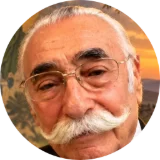
This text is one of Seyit Derviş Tur Dede’s writings on Alevi belief. For a general introduction: What is Alevism? Its beliefs, history and core values
The Feast of Sacrifice (Kurban Bayramı) – What Does Kurban Mean?
I congratulate the entire Islamic world on the Feast of Sacrifice.
The meaning of the word kurban (sacrifice): it means drawing near to God and winning God’s pleasure and closeness. The word kurban passed into our language from Arabic. It comes from the word “kurb”. Its Turkish equivalent means “closeness” or “drawing near”. The meaning intended here is to win God’s closeness and to draw near to God spiritually. It also means sacrificing one’s property and life in the way of God and giving up everything for the sake of His love.
Kurban does not mean only slaughtering or cutting an animal. God’s pleasure is also won by helping the poor, the needy and orphans, and by doing works that benefit humanity. Among these forms of help, by slaughtering an animal and giving meat to the poor, the destitute and orphans who cannot eat meat for months, thereby making them happy and gladdening their hearts, we can of course win God’s pleasure. This is a fine help and a fine good deed. We should also give such help when it is needed.
But if you are going to do a good deed, as far as possible do not immediately think of slaughtering an animal. If you want to do an even more meritorious good work, buy what they need for an orphan or for needy poor people near you, and give it to them. Let me give an example: the weather is getting cold, and a poor acquaintance or neighbour of yours cannot buy wood or coal and has no means to do so. If you buy that family’s wood and coal, if you keep those little ones from freezing all winter, if you buy a pair of shoes for the child running to school in slippers and put them on his feet … or if you provide for an orphan child’s living and send him to school. Or: there are hundreds of children of poor families who would give their lives to go to university. Because their families’ financial situation is not good, they cannot obtain higher education. If you help them and put a child through his studies – I believe, as firmly as I believe in my faith, that you will gain as much merit as if you had sacrificed a thousand animals. Today I make a request to the whole Alevi community in Europe. Please, I beg you: in Europe there is no family that longs for meat. As far as I know, everyone can buy the meat their household needs. Instead of sacrificing an animal here, if you send that sacrifice money to poor families you know in Turkey! I believe you will gain the merit of a thousand sacrifices. This year unemployment and poverty in Turkey are at their highest. Please, for the love of God, do not ignore the voice of this poor man. Look: the noble Quran does not say that you must necessarily slaughter an animal. Please listen carefully to these Quranic verses.
Why Is the Sacrifice Made?
We make the sacrifice first and foremost to win God’s love, to guard ourselves against His wrath and to attain His intercession in the world of eternity (beka âlemi).
Verses 34, 35 and 36 of Sura al-Hajj of the noble Quran say: “For every community He has made it lawful (obligatory) to sacrifice animals, mentioning the name of God over them, as an expression of thanks and gratitude to God in return for the worldly blessings God has given them as provision. Feed the poor and the needy with the meat of these animals you sacrifice.”
Verse 37 of Sura al-Hajj of the noble Quran: “Neither their meat nor their blood will reach God. What reaches God is only your striving, free of ostentation, your good deed and your worship performed for Him. He has subjected them to you so that you may glorify God for having shown you the right path. O Muhammad! Give glad tidings to those who do good to humanity.” The Prophet Muhammad sacrificed 100 animals at the Farewell Pilgrimage and himself ate of the meat of the animals he had sacrificed. With this he commanded that the owner of the sacrifice should also eat of the meat of his sacrifice.
The word of the Quran explains quite openly that merely slaughtering an animal does not mean making a sacrifice. It says that even without slaughtering an animal, by helping those in need, you have made the finest sacrifice. With the sacrifice we slaughter, we fulfil God’s command of mutual help and at the same time unite this duty with a divine faith. The meaning of mutual help! It is to share two thirds of the animal you sacrifice with other people. For the slaughtered animal to be accepted as a sacrifice, one third of the sacrificial meat goes to the household and two thirds are distributed at the door, to the neighbours, to the poor and destitute – then the sacrifice becomes a sacrifice. If you are going to make kavurma (preserved fried meat) or sucuk (garlic sausage) for your home, do not call the animal you slaughter a sacrifice, or you commit a sin. For on the one hand you make the intention, “I am making a sacrifice to win God’s pleasure.” On the other hand you turn the sacrifice you slaughtered into kavurma or sucuk for your own home. God forbid – are you trying to deceive God? Are you aware of what you are doing? It is clear that if two thirds of the sacrificial meat slaughtered at the Feast of Sacrifice, which is the ransom for human life, are not distributed, the slaughtered animal does not count as a sacrifice.
This divine command cannot be reduced simply to slaughtering an animal. The holiest sacrifice is to sacrifice your commanding ego (nefs-i emmare). It is to purify yourself of greed, ego, selfishness, covetousness, duplicity and hypocrisy. Whoever makes a sacrifice must, together with this good deed, also purify himself of all his bad feelings. That is, he must purify himself of bad habits and bad traits and be a person of faith and good morals. Otherwise, if you are stained with every kind of filth and have become a prisoner of your commanding ego, it makes no difference even if you sacrifice a hundred thousand animals. What matters is that you strive to be a pure person. This is also the meaning of the expression that forms a basic principle of Alevi belief: be master of your hand, your tongue and your loins. The aim is to create a pure society cleansed of evil. It is clear that every service rendered to the people with faith and belief is rendered to God. If there is a necessity to slaughter an animal, there are points we must pay great attention to when slaughtering it. By making a sacrifice while tormenting the animal, we commit the greatest of sins. I am of the opinion that it will be best for you if you take into account what I am explaining.
- The animal’s legs, mouth and nose are washed and cleaned.
- The animal must not be next to an animal that has been slaughtered, nor see an animal being slaughtered.
- With its eyes covered, it should be slaughtered without suffering by someone who knows how to slaughter.
- According to Muslim custom, the name of God is mentioned and the “takbir is said”.
- If available, it is more meritorious to make use of the technology of the time and stun the animal for 30 seconds before slaughter, without causing it any pain.
- The internal organs we do not eat, the blood and the other offal should be buried in the earth.
- One third of the sacrificial meat should go to the household and the rest be distributed to the needy poor.
- If there are no poor people in the community you live in who cannot eat meat, there is no need for you to slaughter an animal. Give the money for that sacrifice to a poor person, to an orphan. If you cannot find these either, it is more meritorious to help our cemevis, which serve the faith, culture, peace and friendship of the community, or an equivalent institution if there is one.
Only, in the belief of us Alevis, our rehber, our pir, our mürşid come to our home. The talip thanks God and rejoices that his pir or mürşid has come to his house. In such a case he sacrifices a thanksgiving offering (şükür kurbanı) and invites his neighbours. Together they worship and eat with prayers. In addition, in accordance with our Way and rites, an “ikrar sacrifice” is made in all the rites. These are our existing values, which continue to this day. While millions of animals are slaughtered at the Feast of Sacrifice, I do not think it right that we (Alevis) should abolish these fine values of ours. Keeping these values of our faith alive means keeping our social identity alive. Of course, in certain exceptional cases, we will make our sacrifices. But if, every time we are in difficulty and vow a sacrifice, we think of helping the poor instead of slaughtering an animal, it will be a service to humanity.
Meydana gelmişim can feda için
Ben Muhammed Mustafa’ya kurbanım
Al canımı şahım bağışla suçum
Pençeyi Ali Abaya kurbanım.
I have come into the meydan to offer up my life,
I am a sacrifice for Muhammad Mustafa.
Take my life, my Shah, forgive my sin,
I am a sacrifice for the Pençe-i Al-i Aba (the Five of the Mantle).
Hasan Hulki Rıza şahım diyerek
Şah Hüseyin’e ağlar dayanmaz yürek
Zeynel ile zindanlara girerek
Muhammed Bakır bahaya kurbanım.
Calling Hasan Hulki Rıza “my Shah”,
the heart weeps for Shah Hüseyin and cannot bear it;
entering the dungeons with Zeynel,
I am a sacrifice for Muhammad Bakır, beyond all price.
İmam Cafer gerçek ilim şehridir
O ilme erenler ölmez diridir
Müminlerin gönlü pirler yeridir
Ol imam Musa Kazım Rıza’ya kurbanım.
Imam Cafer is the true city of knowledge,
those who attain that knowledge never die, they live;
the heart of the believers is the dwelling of the pirs,
I am a sacrifice for that Imam Musa Kazım and for Rıza.
İmam Rıza ile Muhammed Taki
Dertlerin dermanı Ali-yel Naki
Hasan-ül Askeri defterim oku
Kâmillerde güzel huya kurbanım.
Imam Rıza and Muhammad Taki,
Ali-yel Naki, the cure for all sorrows,
Hasan-ül Askeri, read my ledger,
I am a sacrifice for the fair nature of the perfect ones.
Mehdi sahibi zaman yardım et bize
Uğratma engele sen çıkart düze
Bu Gürani doğan bendedir size
Güruhu Naci’den soya kurbanım.
Mehdi, Lord of the Age, help us,
let us not meet with obstacles, bring us out onto level ground;
this Gürani is your servant from birth,
I am a sacrifice for the lineage of the Güruh-u Naci (the saved community).
What Does Bayram (Feast) Mean?
The term bayram is the Turkicised form of the word “Bedhrem”, which comes from Persian. Among the people it means laughter, enjoyment, loving, gladdening and a happy day. It is a shared value adopted by all members of Muslim society and collectively accepted.
In general, feasts are divided into three kinds:
- Religious feasts.
- National feasts.
- Personal feasts.
Every society has religious feasts that it accepts according to its own faith. Since it would be very long, I will try to give here the kinds of feast that many of you also know. The Feast of Sacrifice (Kurban Bayramı) is a holy religious feast for all Muslims. All Muslims, of whatever persuasion, follow the command of verses 100 to 113 of Sura as-Saffat of the noble Quran. First, in remembrance of the ram sent to the Prophet Ishmael as a ransom for his life, they perform an act of worship with two or three prostrations expressing their thanks and gratitude to God. After that, those whose circumstances permit sacrifice the “fidye” (ransom) offerings. Those who cannot make a sacrifice try to celebrate a fine feast by helping the poor and orphans according to their financial means. And those in need of help wait for the hak lokması (the rightful, consecrated morsel) that will come. The more help comes to them, the more they too rejoice and the more beautifully they celebrate their feast. The verses that provide for the celebration of the Feast of Sacrifice are the following:
Verse 100 of Sura as-Saffat: “Abraham prayed: My Lord, grant me a child who will be among the righteous.”
Verse 101 of Sura as-Saffat: “So We gave him the good news of a gentle son.”
Verse 102 of Sura as-Saffat: “When the child was old enough to walk alongside him, he said: ‘O my son, I see in my sleep that I am sacrificing you. Consider, what do you say?’ He said: ‘O my dear father! Do what you are commanded. You will see, God willing, that I am one of the patient.’”
Sura as-Saffat, verses 103 to 105: “So when they had both submitted to God, the father laid his son down on his forehead. Just as he was about to sacrifice him, We called out: ‘O Abraham, you have fulfilled the dream. Thus do We reward those who are true to their covenant.’”
Sura as-Saffat, verses 106 to 112: “That was indeed a clear trial. We gave him a great sacrifice as a ransom (fidye). And We left for him a good name among later generations: Peace be upon Abraham. Thus do We reward the good. He was truly one of Our believing servants. And We gave him the good news of Isaac, a prophet, one of the righteous.”
The Torah and the Quran describe this event best. All scholars cite them as sources. Look at what chapter 15 of the Torah says: “In a dream the word of the Lord comes to Abraham: Do not be afraid, I am your shield; I will reward you very greatly.” Abraham asks: “O Lord! What will you give me? I am going childless, and the master of my house will be this Eliezer of Damascus.” Abraham said: “Behold, you have given me no offspring; one born in my house will be my heir.” The word came from the Lord: “These will not be your heirs. The one who will come from your own loins will be your heir.” At that time Abraham was 85 years old.
Chapter 16: “Sarai, Abraham’s wife, said to Abraham: Since the Lord has kept me from bearing children, I give you my Egyptian maidservant Hagar (Hacer); perhaps I shall have children through her.” Sarai gave her maidservant to her husband Abraham to be his second wife. From this marriage Hagar became pregnant. When the pregnant Hagar gained value in Abraham’s eyes, Sarai became jealous and tormented Hagar. Unable to bear Sarai’s torment, Hagar fled from the house into the desert. Then the angel of the Lord came and said to her: “Return to your home, for you are pregnant and will bear a son. You shall name him Ishmael. I will make him fruitful.” When Hagar bore Ishmael, Abraham was 86 years old.
Chapter 17: When Abraham was 99 years old, the Lord came again. He commanded that all the men in the household and the male children who had completed eight days be circumcised. At that time Ishmael was 13 years old; he and his 99-year-old father were circumcised together. God asks Abraham: Where is your wife Sarai? From her too I will give you a son. You shall name him Isaac. I will bless him too. As for Ishmael, I have blessed him, and I will make him fruitful and multiply him exceedingly; he will be the father of twelve princes. When Isaac was born, Abraham was 100 years old and Ishmael 13. The birth of Isaac and his sanctity are described in chapter 22. Of course, no one can have anything to say against the sanctity of the Prophet Isaac. But many historians write that behind the claim that the sacrifice concerned the second son lies Zionist politics.
The message of the Torah and the Quran: the Prophet Abraham sees in his dream that he is sacrificing Ishmael. They relate that as he was about to fulfil this dream, a ram was sent to him by God. Because a ram came in place of the slaughter of the Prophet Ishmael, the animals sacrificed at the Feast of Sacrifice are slaughtered as a ransom for human life, with the aim of feeding the poor and in order to win God’s pleasure. This superficial understanding of the sharia is an outward (zahiri) interpretation of Islam. With such interpretations, millions of animals are slaughtered every year. With similar false interpretations, Muslims have been divided for 1,400 years and many massacres have been committed in the name of religion. Above we have explained, with evidence, that sacrifice is not only the slaughter of an animal. We too want the feasts always to be celebrated. But instead of slaughtering so many animals, we also fulfil our duty of the good deed called sacrifice by meeting whatever needs the needy poor have.
Here I will deal only with the religious feasts. In the Muslim world we live in, the religious feasts are generally the Feast of Sacrifice, the Ramadan Feast, Nevruz, Hıdırellez and the Feast of Ghadir Khumm (Kadir-i Hum). For the friends of the Ehl-i Beyt, the holiest feast is the feast of “Ghadir Khumm”. Although in some regions other feasts are considered holy, these four are the foremost. I consider it an obligatory duty for myself to give information here on an important subject I have researched, because I am convinced it will be useful to both Alevis and Sunnis. Among these, the Alevi community attaches little importance only to the Ramadan Feast. Unfortunately, if you ask Alevis who do not celebrate the Ramadan Feast, many of them do not know why they do not celebrate it. Indeed, some even celebrate the feast in full because they do not know the reason.
Verse 185 of Sura al-Baqara of the noble Quran says of the month of Ramadan: “The month of Ramadan is that in which the Quran was sent down as guidance for people and as clear proofs distinguishing right from wrong. Whoever of you witnesses this month, let him fast in it. Those who are ill or on a journey, let them make up the days they could not fast later. God wants ease for you, not hardship. He has made it lawful so that you remember Him for having guided you. Perhaps you will be grateful.”
It is said that the first revelation came to the Prophet Muhammad on the night between the 26th and 27th of Ramadan, and every four years on the night between the 27th and 28th. This night is the night on which the prophethood was made legitimate. It is the night of the coming into being of Islam. It is because of this night that the month of Ramadan acquired its sanctity. This holy night is called the night of “Kadir” (the Night of Power). Because the Alevis believe without doubt in the Prophet’s messengership, in the sanctity of Islam and in the existence and sanctity of the Ehl-i Beyt, they express their thanks and praise to exalted God. They keep the fast for three days, namely on the 26th, 27th and 28th days. And that is as it should be.
But those who do not fast on these days are more numerous than those who do. This is the result of a lack of knowledge. They are against me, against you and against the Quran. I know very well that this herd of common people, who look at the world through blinkers, will criticise me heavily for what I am explaining. But wherever you go in the world, 2+2=4. Not five. That is, the truth is one; there cannot be two truths – whatever anyone says. This humble one (the author) explains it by citing the Quran and the holy books as sources.
Can you imagine? In this month, proclaimed holy to the Muslims by the word of God, those same Muslims wounded Imam Ali with a poisoned sword on the 19th of Ramadan. Thus Imam Ali drank the draught of martyrdom on the twenty-first of Ramadan. Until that day the fast was kept in the month of Ramadan, but not for 30 days. Nor was there any such feast. Only in the time of Caliph Umar, it is said, sweets were distributed to encourage people to fast. That is why one name of this feast is the Sugar Feast (Şeker Bayramı). But when Muawiya had Imam Ali martyred through a thousand and one tricks, he proclaimed his own caliphate everywhere as a reward for his joy at being rid of a rival like Imam Ali. In addition, he ordered all his governors to hold a great feast everywhere at the end of the month of Ramadan, because he had got rid of a rival like Ali. Now he enjoyed being caliph of the Muslims. We find not a single historical source that a feast was held at the end of the month of Ramadan in the time of the Prophet Muhammad and of the four caliphs up to that day.
But the clan of Abu Sufyan, which had been hostile to the Prophet Muhammad from the very first days – Muawiya bin Abu Sufyan, son of the woman Hind, Abu Sufyan’s wife and Muawiya’s mother, who had chewed the liver of Hamza, the Prophet Muhammad’s uncle – sent his hired killer Ibn Muljam to Kufa and had Imam Ali martyred. When he had thus placed himself at the head of the caliphate he had seized with a thousand and one tricks, eight days later, at the end of Ramadan, the Ramadan Feast was invented. Well then, can a Muslim who knows this celebrate this feast with an easy conscience? Let there be no misunderstanding: we never make any Alevi–Sunni discrimination, and just as we have always been against those who discriminate in this way, so we are today. Which Muslim – whether Alevi or Sunni – who knows the Prophet Muhammad as the true Prophet, hopes for his intercession and invokes blessings and peace upon him and his Ehl-i Beyt, and who learns and knows that such injustices took place, would celebrate this feast with an easy conscience? I know this very well. Because I have explained, on the basis of historical sources, that the Umayyad clan and Muawiya are guilty, the apostles of Umayyad Islam will level criticism with various fabricated hadiths. Let them know in advance that, had I accepted those fabricated hadiths, I too would have covered everything up as they do.
I lived in Turkey until the age of 30. When learned dedes came to us and held muhabbet (spiritual conversation), I used to listen to them. With my own ears I witnessed the young people of the day who took part in that muhabbet asking various dedes the following question many times:
The young people asked the dede: “The Sunnis keep the Ramadan fast and celebrate the Ramadan Feast. Why do we not keep the fast and celebrate the feast joyfully as they do?” I see no need to write down the negative and illogical statements of certain uninformed dedes. But there are valuable dedes who have educated themselves and know very well the commands and principles of the Quran, the Buyruk and our Four Gates and Forty Stations; I shall give the names of those I remember. There were respected dedes such as Seyit Derviş Yusuf of the Kureşli gazis, known by the nickname “Yer tanrısı”, Seyit Süleyman of Moğundu and Seyit Cafer of the Şah Mansur, Seyit Mehmet of the Auçan ocak, Salih Dede of the Camal Abdal ocak and Eyüp Dede of the Pirsultan ocak. The common statement of almost all these knowledgeable dedes was this. The dede’s answer: “My children! Fasting is a pure act of worship without hypocrisy. Fasting carries great merit. We too in Alevi belief have our Muharram fast and our Hızır fast. In addition, we have the right to fast three days in Ramadan. This fast is kept before and after the Night of Power. As for the Ramadan Feast, it is a feast that the Umayyad clan invented after having Imam Ali martyred. The Prophet Muhammad and Imam Ali did not celebrate any such feast, so why should we? They martyred Imam Ali on the 21st of the month of Ramadan. For the Alevis, who love the Prophet Muhammad, Imam Ali and the Ehl-i Beyt and have given them their ikrar, the time from the 20th of Ramadan until the end of the feast is a time of mourning,” they used to say.
“Shall we mourn that they killed Imam Ali? Or shall we, like the Umayyads, share Muawiya’s joy and celebrate a feast?” – such was the knowledge and counsel they gave us. And we are obliged to pass on to future generations the knowledge we received from our elders. That is precisely why knowledgeable Alevis, followers of tasavvuf who know the history of the Muslims well, and widely read scholars attach little importance to the Ramadan Feast. But feasts, for whatever reason they are celebrated, symbolise peace, love and friendship. Moreover, we live together with our Sunni neighbours. Even if there are some differences in our beliefs, it is our right to respect the values of faith they hold sacred. And celebrating their feasts is also our human duty. Explaining such historical sources is only for the sake of information, not for division. This, then, is the reason why the Alevis do not celebrate the Ramadan Feast.
The Feast of Sacrifice is a holy feast for the Alevis too. But from the Ottoman period to this day, the Alevis’ dergâhs were destroyed. Because they had no cemevis in which to worship officially, some Alevis living in the cities among Sunni neighbours went with their neighbours to the mosques for the feast prayer. Another part, since we had no cemevis, could not perform the feast worship. There are Alevis who for many years have not seen a Cem or a congregation and have not performed the feast worship. Today there are those who find it strange that the Feast of Sacrifice worship is held in our associations or cemevis. They will also find strange the worship of the Feast of Ghadir Khumm that we shall hold from now on. Yet the Feast of Ghadir Khumm is the day on which the Prophet gave Imam Ali the governing velayet (leadership) of the religion of Islam. This day should be the holiest feast for the Alevis. In addition, the mourning for Imam Ali should be observed from the 21st of the Ramadan fast until the third day of the Ramadan Feast. Unfortunately, we Anatolian Alevis have lost many of our values. We believe that as the community becomes more aware, they will make good these deficiencies and also remove unconscious prejudices.
The holiest service that all our dedes, the administrators of cemevis and the administrators of associations serving the Alevi-Bektashi faith can render to the Alevi community is this: on the Feast of Sacrifice, held holy by the Alevi community; on the birthday of the Prophet Muhammad; at the Nevruz Feast, the birthday of Imam Ali; on the birthday of Fatima; at the Feast of Ghadir Khumm, the day the velayet was given to Imam Ali; and at the Hıdırellez Feast:
early in the morning at sunrise, or in the evening of the same day, they should hold a Cem of thanksgiving, gratitude and worship with three prostrations. This will be the most beneficial religious service that can be given to the community. On these holy days of ours, besides worship, we should do good and give charity. Let us not neglect to help the poor, orphans and the needy who, though in want, cannot ask anyone for anything. You should give material and spiritual support to our institutions that serve our faith and culture. For strength comes from unity. The stronger we are, the better we can serve humanity and people.
Alevism, handed down by being lived, forms the nucleus of the main source of our general culture within our families and in our daily lives. Those who do not know at all this beautiful faith of ours – the tasavvuf thought of Islam – and our worship are trying to present Alevism as outside religion and faith. Many missionaries have sprung up who get their information from Sunni, Jewish and Christian sources and present themselves as Alevis. They turn the Alevi faith we live upside down and present it to society. But the most dangerous thing is that our young people, who have not yet learned Alevi belief well, believe their baseless fabrications. For in the fabricated Alevism they present there is no faith, no worship, no pir and no ikrar. This understanding suits those whose foreheads have never touched the ground in prostration to this day and who have never seen the Way and the rites (yol, erkân). For years I have struggled by giving seminars and panels. Still, as long as I live, I will struggle against these people who make a plaything of Alevism. I wrote my book Erkânname, which I believe will be the best service to Alevi belief. My hope is that it will be a useful service to humanity and to the Alevi community.
With love and affection (Aşk-ı muhabbetle).
More articles on Alevism
Faith and erkân (rites)
- What is Alevism? (main page)
- What does Kızılbaş mean? Who is called Alevi?
- The Four Gates and Forty Stations in Alevi belief
- What is ikrar (the vow) and where does it come from?
- Islam and Alevi belief
- The meaning of the word Islam and its distortion
- The place of women in Alevi belief
- The Fourteen Innocent Pure Ones and the Seventeen Girdle-Bearers
Cem and rites
- What is a Cem? The cemevi, its rules and the twelve services
- What is the semah? Its sacredness
- What is musahiplik (spiritual kinship)?
- The görgü cem
- Alevilerde Cenaze Erkânı
- The Alevi marriage rite
- What is düşkünlük (excommunication)?
Festivals, fasts and holy days
The Twelve Imams
- Who are the Twelve Imams?
- Imam Ali
- Imam Hasan
- Imam Hüseyin
- Imam Zeynel Abidin
- Imam Muhammad Bakır
- Imam Cafer-i Sadık
- Imam Musa-i Kâzım
- Imam Rıza
- Imam Muhammad Taki
- Imam Ali Naki
- Imam Hasan Askeri
- Imam Mehdi
The Seven Great Poets
- Who are the Seven Great Poets (Yedi Ulu Ozan)?
- Seyyid Nesimi
- Şah İsmail Hatayi
- Fuzuli
- Yemini
- Virani
- Pir Sultan Abdal
- Kul Himmet
- Noksani Baba
History: Ehl-i Beyt, Ghadir Khumm and Karbala
Books and Alevi organisation in Europe
- Erkânname
- The first Alevi organisation in Europe (memoirs)
- Alevi İslam – The Path to the Shah
- All books
German: Alevitentum: Grundlagen, Glaube und zentrale Begriffe · Geschichte der Aleviten-Organisation in Deutschland
About the author: Seyit Derviş Tur Dede
Born in 1936 in Başköy (Çayırlı, Erzincan) into a seyyid family belonging to the Babamansur (Şah Mansur) ocak. He is a co-founder and the first chairman (1990–1993) of the Federation of Alevi Communities, the forerunner of the Alevi Federation of Germany (AABF). From 1994 to 2003 he chaired the Council of Dedes within the federation. He is the author of the books Erkânname (2002) and Avrupa’da İlk Alevi Yapılanması (The First Alevi Organisation in Europe, 2016); his work is cited as a source in academic publications by researchers such as Martin Sökefeld, Zeynel Gül, Burak Gümüş and Bülent Keleş.
Translated from the Turkish original by Seyit Derviş Tur.