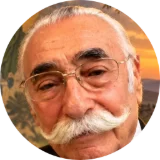
This text is one of Seyit Derviş Tur Dede’s writings on the Alevi faith. For a general introduction, see: What is Alevism? Its faith, history and core values
WHERE DOES THE IKRAR COME FROM? WHAT DOES IT MEAN?
What does ikrar mean? It means believing in Allah, embracing faith and remaining bound to Him forever, and giving one’s word to remain faithful to all His commandments and to the right path He has shown. This is a surrender in faith between the Creator and the created. It is this surrender in faith that has been called ikrar (vow). There are also the promises we give one another in the community in which we live. Agreements, under the name “İsak”, are likewise a sacred ikrar of great value. Among people, too, a person who does not stand by the word he has given – of whom it is said “He is not a man of his word” – is given no credit and no value. He is called hypocritical, deceitful and two-faced.
The First Oath of Allegiance (Biat, Ikrar)
The gathering of the souls of the jinn, fairies and angels, created from air and fire, in the presence of God, their recognition of the oneness of Allah, their acceptance of it and their giving of the ikrar, is called “Elestübezm, Kaalü-Belâ” (the assembly of “Am I not your Lord?” – “Yes!”). This act is called the first “biat” (oath of allegiance, ikrar).
The Second Oath of Allegiance (Biat, Ikrar)
God wished to make the children of Adam, whom He would appoint as His vicegerent, sovereign over the universe He had created. To this end He first created Adam, peace be upon him.
Surah al-Hajj, verse 5: “God commanded the angels and the jinn to prostrate (biat) before Adam, the most beautiful of His creations, and to give him their ikrar.”
In accordance with verses 33 and 34 of Surah al-Baqara, the acceptance of Adam by the angels and the jinn as God’s vicegerent and their prostration before Adam is called the “second biat” (ikrar). This second “biat” (ikrar) forms the basic philosophy of the Alevi faith. For in this ikrar there are prostration before Adam and surrender.
The Third Oath of Allegiance (Biat, Ikrar)
It has become manifest in humankind. The first ikrar given by a human being goes back to the Prophet Abraham. As the Prophet Abraham went to his wife Hacer (Hagar) on their first night (wedding night), he said: “My Allah, if You grant me a son from among the righteous, I shall sacrifice to You what I love most.” Hz. Abraham, having made such a wish and given this ikrar, sacrificed 100 of his most beloved camels on the day his son Ishmael was born and distributed them to the poor and needy. Months and years pass. In his dreams he is told: Why do you not sacrifice what you love most? These sacrifices you have slaughtered are not the being you love most. As long as you do not sacrifice what you love, none of them will take its place. In the end, when he laid his son Ishmael beneath the knife, Allah did not permit Ishmael to be slaughtered. He sent a ram to be slaughtered in Ishmael’s place.
Thus the Prophet Abraham fulfilled the ikrar he had given. Almighty Allah said to the Prophet Abraham: “Thus do We reward those who are faithful to their ikrar.” The animals still sacrificed today at the Feast of Sacrifice are the ransom for human life.
After the event of the sacrifice, the Prophet Abraham is 99 years old. His wife Saray (Sarah) is 90 years old. His son Ishmael is 13 years old. Almighty Allah once again enters Abraham’s inner being: “I am Allah Almighty. Be perfect; between you and Me we shall establish a bond of covenant (akit, ikrar). I shall multiply you exceedingly. I shall give Saray a son too. You shall name him İsak (Isaac). I shall make him fruitful as well. And I shall make Ishmael the father of 12 princes. My covenant (contract) between Me and you and your descendants after you shall remain eternal and firm throughout the generations. The covenant (ikrar) I wish to be firm is this! Every male among you shall be circumcised in his member. As a sign of My covenant we shall also have a witness. My covenant shall be in your flesh as an eternal covenant. Whoever is not circumcised has broken My covenant and is not of us,” He says. Source: Torah, chapters 5-6-7.
After this command of Almighty Allah, the Prophet Abraham gathers the men in his household and in the area under his rule. He himself at 99 and his son at 13 are circumcised together. This ikrar is the ikrar of recognising the oneness of Allah. For the community that is circumcised, it is the most sacred ikrar of recognising the oneness of Allah. This very ikrar continues to this day. We call it the third ikrar.
The meaning of the word ikrar! Besides its religious value, it has the same degree of value in social life.
THE IMPORTANCE OF THE IKRAR IN THE ALEVI FAITH
The Oaths of Allegiance Given to the Prophet Muhammad (the Ikrars Given)
The First Oath of Aqaba (Ikrar)
It was given in Mecca, at night, in the year 621 CE. Seven women and five men took part. All of them had already become Muslims. Because of the large number of women, this event was called the “Biat-un Nisa” (the women’s oath of allegiance) – at a time when women were not valued as human beings and were sold in the markets. On this, verse 12 of Surah al-Mumtahana gave the following command: “O My Beloved! When believing women come to you to pledge allegiance to you on condition that they associate nothing with Allah, do not steal, do not commit adultery, do not kill their children, do not claim another’s child as their own, do not slander their husbands, and do not disobey you in what is right, then accept them. Ask Allah’s forgiveness for them. Truly, Allah is forgiving and merciful.”
The Second Oath of Aqaba (Ikrar)
It was given in Medina, at night, in the year 622 CE. Forty-eight people took part in this oath of allegiance. So that it would be orderly, 12 of them were chosen for the service of nakib (representatives, overseers). All who took part were believers (mümin) and Muslims who had embraced faith. Most of those at this oath of allegiance were men. Here verse 10 of Surah al-Fath had come down: “O Muhammad! Truly, those who give you their hands while bowing before you are counted as bowing before Allah and giving their hands to Him. The hand of Allah is above their hands. Whoever turns back from this word he has given (ikrar) turns back only to his own harm. Whoever fulfils the word (ikrar) he has given to Allah, Allah will grant him great blessing.” At this oath of allegiance the oath of tevella and teberra was also sworn. The 12 services in our rites, the holding of our cems at night, and similar rules come down from the order of this second oath of allegiance.
The Third, the Oath of Hudaybiyya (Ikrar)
In the year 628 CE the Prophet Muhammad goes to Mecca to visit the Kaaba. Abu Sufyan’s army does not let the Prophet Muhammad enter Mecca. The Prophet Muhammad then halts near Mecca at a place called “Hudaybiyya”. He sends an envoy to Abu Sufyan to announce that they would only visit the Kaaba and then turn back and leave. But Abu Sufyan does not permit it. Sending envoys back and forth, they lose a great deal of time. Finally the Prophet Muhammad sends as his envoy Osman (Uthman), a close relative of Abu Sufyan, who had not yet become caliph. When Osman does not return for five days, some negative rumours begin among the people around the Prophet Muhammad. To give no room to these negative things, the Prophet Muhammad took the oath of allegiance (their ikrar) of the people there, making them swear that they would be together forever and stand together in war and in peace.
Biat means ikrar; it means giving one’s word. This oath of allegiance was taken at Hudaybiyya beneath the Sidre tree. At this oath taken beneath the tree, a branch of the tree was used instead of the hand. That is why this oath of allegiance is called the “Oath of Şecere-i Rıdvan” (the Tree of Good Pleasure). At this oath, too, the oath of “tevella and teberra” (love those who love the Ehl-i Beyt, and do not love those who do not) was sworn. 1,524 people took part in this oath of allegiance, and it was given by day. All who took part were men. After this event, verse 19 of Surah al-Fath comes down. This verse says: “O Muhammad! By God, Allah was pleased with the believers when they gave you their hands beneath the tree, bowing before you. He knew what was in their hearts, gave them security and will soon reward them. Allah is the Mighty. Allah is the Ruler.”
The “holding of görgü with the tarık” that our dedes use in the görgü rite (the cem of accountability) is a rule that comes down from this oath of allegiance. At this oath given to the Prophet Muhammad too, not the hand but a branch of the tree was used. It is called the “third biat”. To prevent the visits of the friends of the Ehl-i Beyt, who visited this sanctified Sidre tree every year on the same day, the second caliph Ömer (Umar) had the tree uprooted and removed. He had the soil worked over and made its location unrecognisable. I leave the interpretation to my readers.
The Ehl-i Beyt – the sürek (rites, rituals), the path and the rites (yol and erkân) in the Alevi Islamic faith – is the Islamic thought that the Prophet Muhammad proclaimed during his lifetime through the revelations or the inspirations that came to his heart, and established by living it. And Imam Jafar al-Sadiq (İmam Cafer-i Sadık) set in order the system of worship of Islam that is to produce this pure human being and transparent community. The followers of the Ehl-i Beyt and the Alevis keep this sacred faith alive to this day. The purpose of worship is to establish a relationship with Allah. The human being’s relationship with the Creator comes about only through worship. And the essence of worship is prayer (dua). One day the Companions asked the Prophet Muhammad: “O light of my eyes, you went on the Miraç (the Ascension) and spoke with Allah. Who will speak with Allah after you?” The Prophet Muhammad says: “As-salâtu mi‘râju’l-mu’minîn.” Its meaning in Turkish is: “Every believer ascends to the Miraç in his worship.” Imam Ali has a beautiful saying: “From worship in which no relationship with God is formed, I again take refuge in God.” The means of attaining togetherness with the Creator is worship. And the source of the spiritual illumination and togetherness of worship is prayer.
The Alevi Islamic faith, continuing from the Prophet Muhammad, the Ehl-i Beyt and the Twelve Imams and brought to Anatolia by the Horasan erenleri (the perfected ones from Khorasan), was guided by the educational system of the dergâhs (lodges). After the dergâhs were subjected to massacres and banned in the 15th and 16th centuries by the Ottoman sultans Yavuz Sultan Selim and his son Kanuni (Suleiman the Magnificent), our pirs continued the same instruction in their homes – however sparse, however incomplete – and carried it down to the year 1950. After 1950 the office of pir continued without training. The right-winger according to his own thinking, the left-winger according to his own thinking, the unbeliever according to his own thinking – in this way it has reached our day in a state of confusion. Because most of the believers too were uninformed, they remained silent in the face of all this. Now this confusion and lack of training is trying, if only in part, to tear the Ehl-i Beyt Islamic faith away from its own essence.
In the Anatolian village Alevi faith there is a sacred saying: “Öl ikrar verme, öl ikrarıdan geri dönme. Verenin malı, dönenin canı” (“Die rather than give an ikrar [lightly]; die rather than turn back from your ikrar. The one who gives it stakes his goods; the one who turns back, his life.”). To one who understands, this expression clearly conveys the meaning and the sacred value of the word ikrar. In Anatolian Alevism there is a religious order called “El ele, el Hakka” (“hand in hand, the hand to God”). In this system all the ocaks of the Seyyid-i Saadet and Evlad-ı Resul (descendants of the Prophet) gave ikrar to one another and kissed one another’s hands. The other tribes that were talips also determined their mürşid, their pir and their rehber through this system and gave them their ikrar.
If we analyse it well, the rehber is the office-holder of the Gate of Şeriat. At the Gate of Şeriat he is there to teach and educate the uninformed cans and purify them of evil. Here the can who is a talip first gives his ikrar to the rehber. The rehber in turn educates him, takes his ikrar to the Ehl-i Beyt, to the Alevi Islamic faith, its path and its rites, and makes him a talip of the path. The rehber too has given ikrar to the pir. The rehber brings the talip he has educated to the pir. The pir first takes the ikrar of the talip who has come. The task of the office of pir is to refine the raw and to “cook” the unripe to maturity. The pir teaches the talip who has given ikrar the Alevi faith with all its sacred values and the subtleties of our path and our rites, and thus prepares him for the görgü rite. He informs the talips thoroughly about the Alevi path and rites and gives them counsel: I described the qualities a pir must have in my talk of 21/6/2020. Anyone who wishes can turn on Düzgün TV and listen to it.
We said that when we study all religions, as described, we encounter two systems of belief and worship. The first is “the şeriat, the outward (zâhirî) face of faith”; the second is “tasavvuf (mysticism), the inner (bâtınî) face of faith.” The Alevi Islamic faith too has both an outward face and an inner face. At the gates of şeriat, tarikat and marifet, which make up 90% of the outward face, the Alevis become talips of the path of the Ehl-i Beyt through the bond of ikrar between pir and talip, and by abiding by the rules they strive to win God’s pleasure. For the fundamental element of the gates of şeriat and tarikat in the Alevi faith is the ikrar, faith (iman) and the Ehl-i Beyt. At its head stands Imam Ali. It is the path and the goal through which, it is believed, one reaches Allah by fulfilling the rules at the gates of ikrar that the Alevi path and rites prescribe.
If a believer wishes to know himself, he must place his trust (tevekkül) in Allah in the fullest sense. Then he will have reached the point of finding both Allah and himself. To describe oneself as one is, when speaking of oneself, is honesty and the station of the arifler (the knowers). To be one with Allah is the world of vahdaniyet (oneness, perfection – kemalet). This too is the station of the arifler. Whoever reaches that station says whatever he says from Allah. Whatever he sees, he sees from Allah, and whatever he knows, he knows from Allah. The one from whom Almighty Allah lifts the veil of the ego has attained his goal. He reaches the station of true gnosis (irfan), and this station is the station of the community of the arifler. The station of the arifler resembles clear, pure water. Just as pure water cleanses all dirt, the arifler too are always pure and strive to purify their surroundings as well.
Let us imagine this! There is a water on the face of the earth; at the spring it is perfectly clear, spotlessly pure, unmixed, and heals those who drink it. With this water people wash away their filth and dirt. This water gives life to the trees, the grain, the fruits, the vegetables and the soil. As it flows everywhere, it also carries away the filth along its paths and cleanses them. Sadly, while that lovely pure water cleanses us and the world, it itself becomes polluted. But there is another water that lies beneath the earth and never comes to the surface. It does not lose its spotless clarity. The veil between these two waters is the ground, the earth.
Just like the nefs-i emmare (the self that commands evil) in the human being. If this veil called earth were removed from between them, these two waters would meet, and the polluted water too would become at least a little purer.
In the Alevi faith there are believing cans who have given their ikrar to the path, passed through the gates of şeriat, tarikat and marifet, and attained perfection (kemalet). These cans, who have matured and attained perfection at these first levels, reform their nefs (ıslah-ı nefs) to win Allah’s pleasure and strive to purify themselves of evil. At the second level they give their ikrar to the oneness of Allah without any doubt and take care to remain bound to their ikrar. At the third level they strive to free themselves from greed (tamah) and ego (benlik), to become dust (turab, humble), and, by struggling with the nefs, to purify the soul. The whole aim: with this faith and doctrine (itikat) they strive to reach that hidden treasure called “Küntü Kenz” that brought the universe into being.
For everything that exists in the universe is the reflection of all the mysteries of that one whole and the mirror of His beauty (cemal) – and this is the very power we call Hakk (Allah). Such believers know that whatever God has created in the universe, He has bound its likeness to the nefs of the human being. But the cover of the nefs-i emmare draws a veil over the path that leads to God. If the believer removes this cover, the veil (hicap), and can look upon the universe with the nefs-i mutmaine (the self at peace), he sees the divine sign that exists, and the wisdom of God, in his own nefs. In such states he has taken a step towards seeing the divine truth. There is not a single atom in which there is not the light of Allah. That is, He accepts every kind of prayer (münacat) because of the exaltedness of that light. The heart of the muhip (the lover) opens through patience, through niyaz (humble supplication) and through surrender. Things and creatures are not separate from God. Created things are the mirror of the creative light. They are not separate from the Creator. The veil (hicap) between God and the servant is again the servant’s own nefs-i emmare. Allah is everywhere – from the atom to the sun, from the drop to the ocean.
That is to say: if you cannot cleanse your nefs with the water of pure intention and pure knowledge – just as a mill does not turn with water carried to it – the cleansing of the nefs is not possible in medreses and places of education into which unlawful morsels (haram lokma) have been mixed. The truth of the matter is that one must of necessity cleanse the nefs from within with the water of inner (bâtın) knowledge. One must remove the veil with the tradition of the kelime-i tevhid (the profession of God’s oneness), so that by mixing the “water of outward knowledge” with the “water of inner knowledge”, one may try to purify the water of outward knowledge relatively as well. This means that the veil is the nefs, and what rules is also the nefs. Then we must turn the nefs-i emmare into the nefs-i mutmaine. The faith of tasavvuf, which is called mystical thought, is above all the path that leads from the heart to Allah. It is the faith of “tefekkür” (contemplation), which brings about the union of the divine essence (cevher) with the insan-ı kâmil and leads the human being on a deep journey directed towards contact with the creating and life-giving power.
“The scientist, the psychologist Jung, has addressed a clear and plain call to the world: ‘Modern science and psychology have not yet been able to unravel the miracle produced by tevhid and contemplation.’ Nor can they.
Qur’an, Surah Qaf, verse 16: “We are nearer to the human being than his jugular vein.” No one has yet unravelled the wisdom of this.
The essence of the faith of tasavvuf in all the revealed religions – recognising no form, rule or condition – is its single ultimate goal: the unity of being, that is, “vahdet-i vücut”. What exists, and continues to exist at this moment, is only that exalted Allah. Love for Him and the awareness of unity guide the existing soul. Today in Anatolia the system of belief and worship based on the faith of tasavvuf is also called the Alevi faith.
In all religions, within the general framework and in a language people can understand, only the basic common points are taught. Beyond them lies an infinite realm of soul and knowledge that relates to developed selves. This realm is not the basic common points that the şeriat provides. It is the deep, infinite realm of unity reached through contemplation and faith. One who cannot enter that realm of unity, who cannot receive his share from that field of gnosis (irfan meydanı), who cannot pass into a trance in awe (huşu) and draw near to God, cannot understand or know this. May Almighty Allah give us all this heart and that faith! May He grant us to live that moment!
To come to know God and become His friend, one must first know one’s own essence. They ask Imam Ali: “O Ali, how can we see and know the sacred Being we call God?” See what a beautiful, clear answer Imam Ali gives: “Whoever knows himself has known his God.” See also what the Prophet Muhammad said on this subject: “The art of cleansing the nefs is knowing the nefs, and that depends on conduct. Conduct takes two forms: one is acquiring knowledge and speaking little (terk-i kelâm); the other is eating little (terk-i taam). The purpose of this is to withdraw partly from the human condition, to retreat into seclusion, to discipline one’s own nefs and to surrender to the existence of God.”
In village Alevism before 1950, everyone’s mürşid, pir and rehber came to the village every year and held the görgü and the questioning (sorgu) of his talip. But with urbanisation, times and conditions changed; in this environment there remained no pir who checks the state of his talips every year, performs the musahiplik rite and the görgü rite, and takes the ikrar. We can say there remained no talip to give the ikrar either. It can be said that these bonds of ikrar have largely disappeared. Of course there are those who, even if a minority, maintain these bonds of ikrar. We remember them with respect. They carry out these rites with their own pirs. Apart from them, we all know of the majority whose bonds of ikrar have been broken and who have lost one another. For pir and talip who have lost one another, the Buyruk (book of teachings) of Imam Jafar al-Sadiq shows this way: if the pir to whom the first ikrar was given has gone to God, and there is no one among his brothers or children worthy of that office, then for the one who thus cannot reach his pir – whether he be a Seyyid or a talip, a child of the path – there is no objection whatsoever to giving ikrar and surrendering to a pir in the region where he lives whom he knows and knows to perform these rites, an evlad-ı resul (descendant of the Prophet), a scholar in knowledge (ilmi alim) and a person of purified nefs (nefsi selim), becoming a talip of the path and being examined (in the görgü).
The oath of allegiance (biat, ikrar) has never remained bound to a single person. The oath of allegiance was given to the Prophet Muhammad three times: the first oath of Aqaba, the second oath of Aqaba and the third, the oath of Hudaybiyya – events that prove that the oath of allegiance is continuous. The oath of allegiance was given to the Prophet Muhammad, and after him the oath of allegiance was given to Imam Ali in the region of Ghadir Khumm (Kadir Hum). That it is to be given to those who are worthy is clearly expressed in the noble Qur’an as follows:
Surah ash-Shura, verse 23: “O My Beloved! Say: For this true religion that I have brought you, I ask of you no reward. I ask only and solely that you give ikrar to my Ehl-i Beyt and pledge your loyalty (your oath of allegiance) to them.”
Surah al-Maida, verse 35: “O you who believe! Fear Allah and seek a way, a guide (REHBER), to reach Him. (Give ikrar) on His path, so that you may be saved.”
The Alevis who hold this faith believe that they are on the right path by binding themselves to a pir who descends from the Prophet’s lineage, who is mature, master of his nefs, and trustworthy in knowledge and doctrine. Here verse 35 of Surah al-Maida states it clearly: “Fear Allah; seek and find for yourselves a way, a guide, a rehber, to reach Allah. Give him ikrar on the path of Allah, so that you may attain salvation.” According to this verse, each person is responsible for the ikrar he himself has given.
The Stations of the Ikrar in the Alevi Faith
1- The ikrar of recognising the oneness of Allah at circumcision
2- The ikrar one gives to one’s spouse in the name of Allah at marriage.
3- The ikrar one gives to one’s rehber.
4- The ikrar one gives to one’s musahip (companion in spiritual kinship).
5- The ikrar of becoming a talip of the Alevi Ehl-i Beyt faith and its path.
6- The ikrar one gives to one’s pir.
7- The ikrar given under oath by one who follows God’s command “Die before you die”: in the görgü rite he puts on the collarless shirt and swears that he will harm no living or non-living being. It ensures that the Alevi community is a transparent and pure community.
8- The ikrar one gives to one’s mürşid.
The 12 Imams of the lineage of the Ehl-i Beyt and the Seyyids descended from them have, from the beginning of the 7th century to this day, ordered outward religious rules and rites in order to reform the common people (avam) through the Alevi Islamic faith and purify them of evil. In this Alevi path and its rites, through the system of “El ele, el Hakka”, the system of talip and pir, and the order of the Four Gates and Forty Stations, they strove to guide people and purify them of evil. They established the system of worship that opens the way to the station of the insan-ı kâmil. This established order of rites is the path of tevhid practised by the Prophet Muhammad, Imam Ali and the Imams descended from them. I have not found anything comparable to our path and our rites, which our forefathers and our great pirs have carried and conducted to this day, and you will not find it either: with its outward aspect, our sacred faith is, even today in the 20th century, a faith that enables people to live together in friendship, in an atmosphere of brotherhood, without distinction of race, religion, language or sex. The communities that live the religion of the Alevi Ehl-i Beyt Islam are called Alevis. With my respects. This programme was broadcast on television on 12/07/2020.
More articles on Alevism
Faith and rites
- What is Alevism? (overview)
- What does Kızılbaş mean? Who is called an Alevi?
- The Four Gates and Forty Stations in the Alevi faith
- Islam and the Alevi faith
- The meaning of the word Islam and its corruption
- The place of women in the Alevi faith
- The Fourteen Pure Innocents and the Seventeen Kemerbest
Cem and rites
- What is a Cem? The cemevi, the rules of the Cem and the Twelve Services
- What is the semah? The sanctity of the semah
- What is musahiplik (spiritual kinship), and where does it come from?
- The görgü rite (görgü cem)
- The Alevi funeral rite
- The Alevi marriage rite
- What is düşkünlük (excommunication)?
Festivals, fasts and holy days
- The month of Muharram and the sanctity of the fast
- Hızır and İlyas
- Nowruz among the Alevis
- The Feast of Sacrifice (Kurban Bayramı)
The Twelve Imams
- Who are the Twelve Imams?
- Imam Ali
- Imam Hasan
- Imam Hüseyin
- Imam Zeynel Abidin
- Imam Muhammed Bakır
- Imam Cafer-i Sadık
- Imam Musa-i Kâzım
- Imam Rıza
- Imam Muhammed Taki
- Imam Ali Naki
- Imam Hasan Askeri
- Imam Mehdi
The Seven Great Poets
- Who are the Seven Great Poets (Yedi Ulu Ozan)?
- Seyyid Nesimi
- Şah İsmail Hatayi
- Fuzuli
- Yemini
- Virani
- Pir Sultan Abdal
- Kul Himmet
- Noksani Baba
History: the Ahl al-Bayt, Ghadir Khumm and Karbala
Books and Alevi organisation in Europe
- Erkânname
- Avrupa’da İlk Alevi Yapılanması (The First Alevi Organisation in Europe – memoirs)
- Alevi İslam Şah’a Giden Yol (Alevi Islam – The Path to the Shah)
- All books
Deutsch: Alevitentum: Grundlagen, Glaube und zentrale Begriffe · Geschichte der Aleviten-Organisation in Deutschland
About the author: Seyit Derviş Tur Dede
Born in 1936 in Başköy (Çayırlı, Erzincan) into a seyyid family of the Babamansur (Şah Mansur) Ocağı. He is one of the founders and the first chairman (1990–1993) of the Federation of Alevi Communities, the forerunner of the Federation of Alevi Unions in Germany (AABF). From 1994 to 2003 he chaired the Council of Dedes (Dedeler Kurulu) within the federation. He is the author of the books Erkânname (2002) and Avrupa’da İlk Alevi Yapılanması (2016); his work is cited as a source in academic publications by researchers such as Martin Sökefeld, Zeynel Gül, Burak Gümüş and Bülent Keleş.
Translated from the Turkish original by Seyit Derviş Tur.