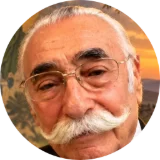
In brief: Shah İsmail Hatayi (1487–1524) is the founder of the Safavid state and one of the Seven Great Poets (Yedi Ulu Ozan) of the Alevi-Bektashi tradition. The nefes (sacred hymns), düvazdeh imam (poems on the Twelve Imams) and mersiyes (elegies) he wrote under the pen name “Hatayi” are still recited in Cem ceremonies today. Seyit Derviş Tur Dede describes the origins of the Ardabil (Erdebil) dergâh, Shah İsmail’s childhood, the founding of the Safavid state and Hatayi’s role in gathering and ordering Alevism.
The following text is taken from Seyit Derviş Tur Dede’s book Erkânname. For a general introduction: What is Alevism?
Contents
- Who was Shah İsmail Hatayi? (1487 – 1524)
- The Ardabil dergâh and the Safavid lineage
- Shah İsmail’s childhood: captivity, escape and Gilan
- The Sarıkaya highland near Erzincan and the Kızılbaş army
- Shah İsmail’s personality and education
- The Shirvan campaign and the founding of the Safavid state (1501)
- Accession to the throne in Tabriz
- Shah İsmail’s place in Alevism
- The genealogy of the Safavids and of Shah İsmail
- The nefes of Shah Hatayi
Who was Shah İsmail Hatayi? (1487 – 1524)
“Şah Hatayı” is the pen name (mahlas) that Shah İsmail used in his beyits (verses). Its meaning is “the adorning of a flower with flowers”: a flower with a beautiful, intoxicating fragrance produced together by many separate flowers. Shah İsmail, whose aim was to enable people to come together for their happiness and live in friendship and brotherhood, used the pen name Hatayı, which means “soft as Indian cloth”.
The Ardabil dergâh and the Safavid lineage
To keep alive the memory of his lineage in the state he founded, he gave it the name “Safavi” (Safavid), in reference to the name of his great ancestor “Seyit Safiyüd’din İshak” of Ardabil, who was born in 1252, united the Halveti and Kalenderi paths and founded the Yesevi order, and whose line reaches Imam Musa al-Kazim in the 23rd generation. In the time of Seyit Safiyüd’din, the sheikhs of the Ardabil dergâh did not concern themselves with politics. They had devoted themselves to learning and to the faith of the Ehl-i Beyt (Ahl al-Bayt, the family of the Prophet). Seyit Safiyyüdin’s great ancestor “Seyit Füruuz” is said to have served at the level of a teacher in the Darulhikme madrasas (Houses of Wisdom) in Egypt in the second half of the eleventh century, until the year 1171 CE. When “Selahaddin Eyyubi” (Saladin) overthrew the Fatimid state with insidious cunning in 1171, he then closed the Darulhikme madrasas. He had the library of the Darul-İlm plundered. Many of the books that had been written he had thrown into the “River Nile” and burned, on the grounds that they did not conform to the sharia. He closed al-Azhar University. He had many of the scholars trained there killed. Thus he put an end to the Fatimid state. He handed the state over to the Abbasid caliph. Fleeing this oppression, “Seyit Füruuz” came to Ardabil and settled there. In Ardabil he founded his dergâh.
Using the same system as the “Darulhikme madrasas”, he trained dervishes to spread the faith of the Ehl-i Beyt. He sent them on assignment to the land of Rum (Anatolia) and in every direction to spread the faith of the Ehl-i Beyt. In the 1100s and 1200s all communities – whether Arabs, Kurds, Turks or Persians – lived in a tribal system, even though they were under the rule of a state.
The abolition of blood feuds and kirvelik
Seyit Füruuz and his son İvaz-el Havas are deeply troubled by the blood feuds between the tribes. Father and son ponder long. Seyit Füruuz decides for himself: “Blood feuds between the tribes who come to us and become our talips (followers) are a sin according to the faith of the Ehl-i Beyt. Did not the Prophet Muhammad, during his Farewell Pilgrimage, in his sermon at Mina, renounce the blood feud for Rabi, son of Haris and grandson of Abdulmuttalib, and forbid blood feuds? Now we, too, must abolish the blood feuds between the tribes.”
History tells us that Seyit Füruuz was a wise personality who had taught at the Darulhikme madrasas. One day he gathers his son and the other dervishes: “Look, you erenler: when our forefather Muhammad Mustafa went on the Farewell Pilgrimage together with Ali al-Murtaza, he said in his first sermon at Mina: ‘O people, listen to me well: I take all the customs of the Age of Ignorance (Cahiliye) beneath my feet and trample them. From now on I abolish all blood feuds. The first blood feud I abolish is the blood feud for Rabi, son of Haris and grandson of my uncle Abdulmuttalib. I have renounced it. You, too, renounce all blood feuds. From now on let there be no blood feuds among Muslims.’ But these people continue the Islam that Muawiya turned upside down. They are once again pursuing the blood feuds that our forefather the Prophet Muhammad abolished by his command. Let us not depart from the path of our forefathers Muhammad Mustafa and Ali al-Murtaza.” And he explains to the dervishes at the gathering how the blood feuds continuing between the tribes could be abolished.
“Through verses 143 and 144 of Surat al-Baqara of the Quran, our forefather the Prophet Muhammad Mustafa was commanded to take the Kaaba, the Station of Abraham, as the qibla (direction of prayer). When the Companions asked, ‘O Muhammad, why have you turned your direction in worship from Jerusalem to the Kaaba?’, the Prophet Muhammad replied: ‘I am continuing the religion of my forefather Abraham.’ It is presumably for this reason that he made circumcision, which was obligatory for the Prophet Abraham, obligatory for the Islamic community. Being circumcised is the vow (ikrar) of acknowledging the oneness of God. The one who stands beside and helps the child who is circumcised and gives this vow is a witness between God and the one being circumcised. Because this witnessing exists between God and the one who, through circumcision, vows to acknowledge the oneness of God, it is sacred, and its sanctity is in no way open to question.
We should use the sanctity of this witnessing between the tribes by having the child of one tribal chief circumcised in the lap of another tribal chief, thereby establishing a sacred spiritual kinship between them and in this way removing the enmities,” he says, and begins to put this into practice. Through this idea, blood feuds were abolished in eastern and south-eastern Anatolia, especially among the Kurdish and Turkish Alevis living at tribal level. Through this practice kirvelik (circumcision sponsorship) became sacred. The most fruitful period of this service reached its peak at the beginning of the 13th century, in the time of Seyit Safiyüddin, the sixth descendant of Seyit Firuz. In 1334 Seyit Safiyyüddin “walks to God” (dies) and is buried in the courtyard of his dergâh in Ardabil.
Sadreddin Musa and the captives released by Timur
After the death of Seyit Safiyüddin, his son Sad-reddin Musa takes over the leadership of the dergâh. In 1337 Sad-reddin Musa goes on the Hajj and there, before the caliph of the time, the Sultan of Medina “Şahabettin Ahmet bin Hüseyin”, he proves through research that the lineage of his sixth ancestor “Zerrin Külah Seyit Firuz” reaches Imam Musa al-Kazim, and has it confirmed. Thus it was proven beyond dispute that the Safavid rulers are of seyyid lineage.
In the great battle fought on the Çubuk plain near Ankara in 1402 between Timurlenk (Tamerlane) and Yıldırım (Bayezid I), who lived in the time of Sadreddin, son of Seyit Safiyüddin, Yıldırım’s armies were defeated. Timur had taken hundreds of thousands of the population and Yıldırım’s soldiers captive and carried them off to Iran. On his return to Iran he goes to the Ardabil dergâh, visits Sadreddin, kisses his hand and asks for his blessing. When Timur asks, “My sheikh, do you have any request of me?”, Seyit Sad-reddin asks for all the captives to be released. Upon this request Timur releases all the captives so that they may return to their homelands. The hundreds of thousands thus freed from captivity brought back with them, on their return to Anatolia, the love of the Safavid family and began to live its mystical faith. The return of these hundreds of thousands of captives to Anatolia contributed greatly to the spread of the Alevi faith in Anatolia.
Sheikh Cüneyt, Shah Haydar and the Khorasan pirs
Sheikh Cüneyt (Junayd), one of the grandsons descended from Sad-reddin Musa’s sons Hâce Ali Şah and Şah İbrahim, is the son-in-law of Uzun Hasan. Between 1420 and 1451 he wanted to come with his mürids (disciples) to the region called Kurt Beli in order to settle in Anatolia, but Murad II prevented this. Later he went to Konya but did not stay there either. Finally he took refuge with his father-in-law Uzun Hasan. Cüneyt lost his life in 1460 in a battle against the Shirvanshahs.
After Cüneyt, his son Haydar is seated on the post (seat) of sheikh at the Ardabil dergâh. This choice was made in accordance with Cüneyt’s will. That Haydar was installed although Cüneyt had another adult son was due to Haydar’s mother being the sister of Uzun Hasan. In matters of the Alevi yol (path) and erkân (rites), Haydar is said to have been more knowledgeable than his brothers and to have had the qualities to serve as sheikh on the post of Ardabil. The path and rites of the Ehl-i Beyt founded by Imam Jafar al-Sadiq around the year 750 were continued systematically by Seyit Safiyüddin in the 1270s in the dergâh he headed. After him, his sons and grandsons, though with some interruptions, carried it on unchanged until Shah İsmail.
Sheikh Cüneyt continues unchanged the dergâh which, in the time of his grandfather and father, had trained sheikhs and pirs of seyyid lineage in an academy-like system. He sends the sheikhs and pirs trained at the Ardabil dergâh to every part of Anatolia, the so-called land of Rum, to found dergâhs. After Sheikh Cüneyt his son Shah Haydar continues in the same way. Our pirs, spoken of in today’s Alevi deyiş (songs) as the “90,000 Khorasan pirs”, were trained in this dergâh, came to Anatolia and founded their dergâhs.
Shah Haydar marries Elem Şah Halime Begüm, daughter of his maternal uncle Uzun Hasan. This marriage gives him strong backing. From this marriage he has three sons, named Yar Ali, İsmail and İbrahim. Shah İsmail was born on 17 July 1487. In his first years Shah Haydar is occupied with binding Anatolia to himself. He puts his talented mürids through rigorous training in the dergâh, educates them to the highest level in yol and erkân, knowledge and experience, and sends them as “halife” (deputies) to particular places. These Rehber-halifes (guiding deputies) found dergâhs on the Ardabil model wherever they go and work for the spread of the Alevi faith.
From 1460 to 1488, with this system and without waging war on anyone, Shah Haydar enlarges his territory and gains millions of mürids. These mürids regarded Shah Haydar as a sacred pir. Shah Haydar had no regular armed force; his followers consisted of poor civilians. Yakup Bey, son of his maternal uncle Uzun Hasan, unable to stomach Haydar being so revered and growing so great, seizes the opportunity and opens war against Shah Haydar, who is both his aunt’s son and his brother-in-law.
In August 1488 Shah Haydar loses the battle he fought against Süleyman, son of Biçen, one of the commanders of his cousin Yakup Bey, and is killed.
Shah İsmail’s childhood: captivity, escape and Gilan
The mürids who recognised Shah Haydar as pir now gather around his eldest son Yar Ali. Yakup Bey, son of Uzun Hasan, thinking that this development would pose a danger to him in future, imprisons his three nephews Yar Ali, İsmail and İbrahim in the fortress of Istar in Iran. This imprisonment lasts four and a half years.
Within these four and a half years Yakup Bey also kills his brothers who appeared to be heirs to the throne and continues his reign. Finally he had set his mind on killing his own brother Yusuf Sultan too, but their mother Selçuk Şah Hatun had noticed it. When one day he abruptly takes Yusuf into the forest to hunt roe deer, the mother gives up hope that her son Yusuf will return. The mother can bear it no longer and decides to put an end to the cruelty of this tyrannical son.
Every time Yakup Bey returns from hunting, he drinks in his room the “rhubarb sherbet” specially prepared for him, and then takes off his hunting clothes. His mother, knowing this, decides to do away with the cruel Yakup, who is massacring his family and brothers. She believes she will do humanity a good service by bringing her gentle, merciful son Yusuf to power. So, without hesitation, she puts a poison that kills instantly into the sherbet that Yakup will drink.
Selçuk Şah Hatun waits for Yakup Bey to arrive, on the one hand in deep sorrow because she is going to poison her own son. On the other hand she tries to console herself, talking to herself: “What can one do! It is predestination: let everyone accept their fate. So that no disaster befalls Yusuf, and so that the state is saved from injustice and oppression, it has fallen to my lot to rid it of this frenzied, bloodthirsty tyrant,” and so she waits.
Events do not turn out as Selçuk Şah Hatun had imagined. Yusuf returns safe and sound with his elder brother Yakup. The two brothers enter together the hall where the sherbet is always ready. Yakup at once takes the sherbet, drinks half, and gives the other half to Yusuf. As Yusuf drinks the other half, he sees his brother collapse to the floor, and instead of helping him he himself falls to the ground; the two brothers die there of the poison their mother had prepared. Hearing and seeing this, their mother Selçuk Şah Hatun runs screaming to her sons, drinks the poison left at the bottom of the bowl herself and dies, falling between her sons lying on the floor.
After Yakup Bey’s death his sons fall into a struggle for the throne. One of them, Rüstem Mirza Bey, draws the mürids of the Ardabil dergâh to his side and brings Yar Ali, İsmail and İbrahim out of the dungeon so that he may take the throne. With the strength of the mürids of the Ardabil dergâh he destroys the forces of Sungur Mirza. He also deals with his other brothers and succeeds his father.
Unfortunately, enemies then spread the following rumour in order to set Rüstem Mirza and Alemşah Banu (Shah İsmail’s mother) against each other: “The Kızılbaş are secretly preparing; soon they will raid Karabakh, kill Rüstem Mirza and put Yar Ali Sultan in his place.” They convey this rumour to Rüstem Sultan as though it were a specially important piece of news.
Rüstem Mirza does not see through this plan of the enemies at all and believes it to be true. In any case, the large number of mürids bound to the Ardabil dergâh frightened him, and he considered them the most dangerous rivals. At once he places a force of raiding cavalry under the command of a commander named Serdar Hüseyin. Commander Serdar Hüseyin raids the Ardabil dergâh in a sudden attack and devastates everything. Yar Ali, trapped inside the dergâh with a few men, fights to his last breath. In the end, in that fight in 1493, Yar Ali is killed. Only with difficulty was Shah İsmail able to get his mother away.
The mürids who witness this cruelty spirit away six-year-old İsmail and four-year-old İbrahim and hide them. İsmail is hidden in the Rum quarter of Ardabil by a woman named Ebe. But given the possibility that the children would be found, they smuggle İsmail to Gilan. They prepare a special apartment in the tower of the palace of Şerif Hasan Han, the physician of the fortress of Gilan, and hide İsmail there. In this hiding place in Gilan his mother Alemşah Banu finds scholars of the highest rank and ensures that her son receives the best possible education. The highly gifted İsmail is educated here for a full six years, without letting a single day go to waste.
The Sarıkaya highland near Erzincan and the Kızılbaş army
The struggle for power that breaks out within the Akkoyunlu (Aq Qoyunlu) administration works to İsmail’s advantage. At the age of 12 İsmail leaves Gilan with many of his mürids. He crosses to Tarum, west of the Caspian Sea. He does not stay long there either. Via Hal-hal he goes to Ardabil. But the governor of Ardabil does not let İsmail and his mürids into Ardabil. İsmail goes with his mürids to Erguvan on the Caspian shore. He spends the relentless winter of the 15th century in Erguvan.
His whole aim was to cross into Anatolia. For, through the Rehber-halifes trained in the time of his father Shah Haydar and sent to Anatolia, Anatolia had become the stronghold of the Alevi faith. While waiting out the winter of the 15th century in Erguvan, he sends envoys in every direction to gather in Erzincan in summer, after the month of June. After the winter, one night Shah İsmail sets out from the Sad hollow and, by way of Yerevan, then via Iğdır, Kağızman, Erzurum and Tercan, pitches his tents on the Sarıkaya highland near Erzincan.
Not only does he meet no difficulty on the journey, but his arrival in Anatolia arouses great joy among the Alevis. This 13-year-old young leader of the faith had raised Anatolia to its feet with joy and hope. In short, Anatolia was streaming to Erzincan. From Sivas, Amasya, Tokat, Malatya and Maraş the Zülkadir Turkmens, the Karamanids, from Tarsus the Varsak Turkmens, the Ustacalı, the Şamlı and Rumlu Turkmens, from Antalya the Tekeli Turkmens pitch their tents band after band all around the Sarıkaya highland near Erzincan.
At this time Bayezid II was busy in the west with the capture of Modon and Koron. He was convinced that no one in the east and south-east could harm him. For that reason he had left Anatolia to itself. Thus the Turks of the Middle East and southern Anatolia laid the foundation, at the gathering on the Sarıkaya highland, for the conditions in which the Safavid state would be founded.
In August 1501, on the Sarıkaya highland near Erzincan, Shah İsmail formed his first army, made up of his followers wearing red börk (felt caps) on their heads. His goal was to take Shirvan. These red-capped mürids at his side fight with such heart and soul that, with a love hard to believe and with cries of “For the path of the Shah of Sainthood (Ali), for Shah İsmail, let life and limb be sacrificed!”, they easily overcome every obstacle in their way.
With this momentum Shah İsmail plans to eliminate the Akkoyunlu ruler Elvend Mirza. To achieve this, a state order is needed first. Then a strong army was required. To build it, he appoints viziers and commanders – Şamlı Lala Hüseyin Bey, Dulkadirli Dede Abdal Bey, Ustacalı Muhammed Bey, Bayburtlu Karaca İlyas and Tekelü Sarı Ali Bey – and establishes a provisional state order. With this force he opens war on the Akkoyunlu. He defeats Elvend Mirza’s armies and enters the capital city of Lahican. Elvend Mirza, too, loses his life in this war. Shah İsmail establishes his dergâh provisionally in Lahican.
Shah İsmail’s personality and education
The country, convulsed by ceaseless civil wars ever since the invasion of Genghis Khan’s armies, and the Akkoyunlu population, which never knew peace, needed calm and tranquillity. The order under the rule of the Safavid family, which envisaged people living together as brothers and sisters, and the happiness, peace and spiritual love promised to the people, led the people voluntarily towards the Alevi faith. Shah İsmail had gained great trust among the people. He now had great confidence in himself and in his mürids.
Shah İsmail had received a thorough education from the scholars around Ardabil. In the poems he wrote in Turkish in the style of divan poetry in quantitative metre (aruz), just as in the nefes he wrote in the language of the people, his language is extremely plain and fluent. Because his poems are generally humble and written in a style that expresses even the feelings of the kalenders (wandering dervishes), the unfortunate, the oppressed and the unhappy, he succeeded in establishing a throne in the hearts of the people.
At that time Shah İsmail was 15 years old. Since the age of two he had wrestled with deaths and disasters and lived a legendary life. The people interpreted his survival of these disasters as keramet (miraculous grace) inherited from his ancestors. For that reason the people had, without any hesitation, accorded this 15-year-old youth the status of a saint (veli) from birth and accepted him as sheikh.
As advanced as Shah İsmail was in knowledge and gnosis (irfan), he was a lover beyond what words can express in his love of the Ehl-i Beyt and his devotion to them. He had also learned to ride well and had mastered all the sports pertaining to warfare.
His mother Alemşah Banu did not consider even this sufficient. She engaged the most distinguished orators around her so that her son would learn how to address large crowds and how to influence them, and she had him taught how a statesman should conduct himself at important academic gatherings, without neglecting to speak little but to the point. That is why it is written in many history books that Shah İsmail listens much and speaks little, expressing many of his wishes and desires in his poems. He never laughs out loud but contents himself with a smile. In a modest manner he places his hand on his breast when he gives an address.
This demeanour of Shah İsmail increased everyone’s love and respect for him even further. Those who saw the young sheikh (Shah İsmail) seated on the post of the pir believed without doubt that he possessed a very mature, fully developed personality before which every head bowed in reverence.
The city of Lahican, formerly the capital of the Akkoyunlu, now overflows as the dergâh of the Safavid sheikh Shah İsmail and of the Alevis. The provisional dergâh in Lahican is visited every day by hundreds, thousands of mürids. The “Ayin-i Cem” (Cem ceremonies), which had been held secretly for six years, now began to be held openly everywhere. In the great meydan of the dergâh the cries of “Medet ya Ali” (Help, O Ali) rise without ceasing. While beyits, eulogies, düvazdeh (poems commemorating the Twelve Imams), Karbala elegies and menkıbes were recited, the love and fervour of the mürids reached an indescribable pitch.
The Shirvan campaign and the founding of the Safavid state (1501)
While the dergâh was thus the scene of lively times with religious ceremonies, the commanders on the other side were preparing to form a new army. At their head were Emir Şemseddin Zekeriya, Şemseddin Geylani, Şamlı Hüseyin Bey and Abdal Bey of the Varsak lords; the army they formed was a great army made up of the brave Turkish tribes of the Avşar, Gacar, Varsak, Şamlı, Tekeli, Rumlu, Zülkadirli, Ustacalı and Karabağlı, together with Persian horsemen – 7,000 picked riders.
Shah İsmail’s whole desire was to kill the murderer, the ruler of Shirvan Şah Ferruh Yesar, who had caused the bloody disasters of his grandfather Sheikh Cüneyt and his father Sheikh Haydar, and take his revenge. This cavalry army of 7,000 is completed in two months. Now the time has come to march on Shirvan. On that day the drums begin to beat. 7,000 riders with red headgear suddenly fill the plain of Lahican. No one knew where they had come from. All the preparations had been made in the strictest secrecy.
As the drumbeats quickened, the cavalry regiments drew closer to one another and formed up for muster. When the cavalry regiments had lined up in order, the final preparations were complete. When suddenly a tremendous sound of the great kettledrum was heard, the small drums at once fell silent. All the riders stood ready, all eyes turned to the gate of the Lahican dergâh. After a few minutes Shah İsmail advanced slowly, slowly on a white horse. On his back was gilded armour, on his head a red kalpak, and between the green turban wound round this kalpak rose a white plume.
The young sheikh of the Ardabil dergâh, smiling and with his hand on his breast, returned the salute of the commanders, left the gate of the dergâh and advanced slowly. Alemşah Banu trembled with emotion as she watched this magnificent sight. “She had grown old now. She could only stand with the support of helpers.” At that moment she prayed thus:
“O Lord! O Bari Huda (God the Creator)! How can I thank You? You have saved my Shah İsmail from so many disasters. You have brought him to this age. You have shown me today’s happiness. Now I entrust him to You again. I send him to take revenge for his father and his grandfather. For the love of the Shah of Sainthood, for the love of the Twelve Imams and the Fourteen Pure Innocents, for the love of the visible and hidden erenler who are present and watching over us: guard and protect him,” she prayed, and he set out on his way.
While Shah İsmail’s army is on the road to Shirvan and Ferruh Yesar is preparing to take part of the Akkoyunlu lands, a few border soldiers arrive drenched in blood and sweat with the bad news: “The Kızılbaş have made a sudden raid; their horsemen have crossed the border. They are coming towards Shirvan.” This news, followed in quick succession by reports that the Kızılbaş were approaching Shirvan wave upon wave with lightning speed, had bewildered Ferruh Yesar.
As fast as possible he mounts his horse, takes command of his army of 20,000 that is at the ready, and goes to meet Shah İsmail’s advancing army. The great warrior Ferruh Yesar, very sure of himself, had no doubt that he would defeat Shah İsmail’s army. But things do not turn out as he had reckoned.
Shah İsmail’s soldiers, surging with deep rancour and the desire for revenge, hurl themselves upon the men of Shirvan with lightning speed, crying “Medet ya Ali”. As the bloody struggle continues until nightfall, the army of Shirvan begins to break up in a heavy defeat. Those who take advantage of the darkness of the night flee and try to save their lives.
Despite this success, no satisfaction could be seen in Shah İsmail’s camp. Everyone’s wish and desire was to capture Ferruh Yesar, the murderer of Sheikh Cüneyt and Shah Haydar. Shah İsmail and his commanders were deliberating around the fire they had lit about what they would do in the morning. At that moment sudden news comes from the sentry posts: the enemy is going to attack in the night. Immediately afterwards the sounds of fighting come from where the sentries are posted a little way ahead. The forces sent as reinforcements kill many of the attackers, and some are captured alive. The captives are brought before Shah İsmail.
Among the captives they recognise the old man as Şah Ferruh Yesar. Shah İsmail asks: “Why did you kill my grandfather and my father?” When Ferruh Yesar replies, “Killing Kızılbaş is a meritorious deed (sevap). Had I been able, I would have killed you too and all the Kızılbaş gathered around you,” the soldiers take him a little way off and kill him too. They scatter the army of Shirvan and take Shirvan. Shah İsmail’s brave and agile horsemen occupy all the cities and towns of the Shirvan state within five days. The Safavid state, founded in Shirvan in 1501, has coins struck and the hutbe (Friday sermon) read in the name of the Twelve Imams, and thus officially proclaims the founding of the Safavid state.
Accession to the throne in Tabriz
The council assembled in the palace of Shirvan under the chairmanship of Shah İsmail decides, after taking the fortress of Baku, to take also the fortress of Gülistan and the fortress of Tabriz, and to establish the government in the palace of Tabriz. Following this decision they take the planned fortresses one after another. Finally they defeat the Akkoyunlu ruler Elvend Mirza and settle in the palace of Tabriz.
After settling in the palace of Tabriz, Shah İsmail also brings his mother Elem Şah Banu to Tabriz. After his mother arrives, he announces that he will hold the ceremony of girding the sword. Orders are sent out everywhere. Viziers and commanders make their preparations. Ceremonial processions are prepared. Through town criers the whole population is ordered to gather in the palace square. Once the people have gathered, Vizier Emir Şemseddin gives the command to begin the ceremony.
Shah İsmail, on a white horse, as if he had been a ruler for forty years, with the red crown wound with a green turban on his head and the diamond-studded plume rising above it, in a modest manner, smiling at the applause rising around him, greets those around him with his right hand on his breast. In this way Shah İsmail rides up to the gate of the dergâh and dismounts from his horse.
At the window of the palace, where Âlem Şah Banu is following her son, tears of joy begin to flow from her eyes. This sensitive, capable and equally courageous woman had aged and grown so frail that she could neither rise from her place nor go outside. She sighs deeply over her own old age and begins to pray: “O Almighty God, I do not know how to thank You for letting me see this day of my Shah İsmail! Thanks and praise be to You for letting me live this joy at this moment,” and so she continues praying.
On entering the dergâh, Shah İsmail first goes to his mother, kisses her hand and asks for her blessing. The call to prayer (ezan) is recited according to the Shiite creed. Shah İsmail performs his prayer of two prostrations in the mescit (prayer hall). After the prayer, the hutbe is read in Shah İsmail’s name, and in the mosque of Hasan Padişah the oath of allegiance (biat) begins to be taken. The notables of Tabriz, the tribal chiefs, the ulema and the aghas – everyone has come with their own people to pledge allegiance. Such a teeming crowd that, if you threw a handful of earth in the city of Tabriz, it would not reach the ground. With the crowd continuing in this way, the ceremony of allegiance lasts a full week.
After the ceremonies of allegiance are over, written proclamations are drawn up in every direction announcing “the end of the Akkoyunlu state, the founding of the Safavid state in its place, and the accession of Shah İsmail to the throne of this state”. The letters written are sent to every corner of Turkestan, Iran and Anatolia.
In the Erkânname this section is followed by a detailed account of the Şahkulu uprising, Shah İsmail’s correspondence with Sultan Bayezid II, the fatwas against the Anatolian Kızılbaş under Yavuz Sultan Selim, and the Battle of Chaldiran in 1514.
Shah İsmail’s place in Alevism
In our conviction, if we consider the works Shah İsmail accomplished in 37 years, the true genius of this great man emerges beyond any doubt. Again in our view, he united the old Turkish beliefs and traditions with the sacred values of the religion of Islam. He had worship conducted, in all services, with prayers and duaz (supplication poems) recited in the Turkish language spoken by the people.
The “Darulhikme madrasas” founded by Imam Jafar al-Sadiq were continued by his thirteenth-generation ancestor, Seyyit Füruz, through the founding of the Ardabil dergâh. His grandfather Sheikh Cüneyt, his father Shah Haydar and Shah İsmail reorganised them in Central Asia under the name of dergâh. In the belief system that we Anatolian Alevis maintain, too – however great the influence of the Hacı Bektaş dergâh – the Ardabil dergâh has made a very great contribution.
It is Shah İsmail Hatayi who, with his personality devoted to tasavvuf (Islamic mysticism), gathered and ordered Alevism after Hacı Bektaş Veli. His work “Deh-name”, written before the age of 18, with 272 beyits, together with his compositions such as duazda (düvazdeh), mersiye and miraçlama (poems on the Prophet’s ascension), is an admirable body of work. In his mesnevi “Nasihatname”, a book of counsel consisting of 166 couplets, he teaches submission to what God gives, to His bounty and His will. A person who accomplishes all this in so short a life becomes a Shah or a Sheikh; he cannot be a commander who directs wars.
The genealogy of the Safavids and of Shah İsmail
The line of descent given in the Erkânname, from Shah İsmail back to Imam Ali, is as follows:
- Şah İsmail
- Şah Haydar
- Şeyh Cüneyt
- Sadreddin İbrahim
- Hâce Ali
- Sadreddin Musa
- Safiyyüddin İshak
- Emineddin Cebrail
- Şeyh Salih
- Kutbüddin
- Selahaddin Reşid
- Muhammed-ül Hafız
- İvaz-ül Havâs
- Seyit Füruz Şah
- Muhammed Şah
- Şeref Şah
- Muhammed
- Hasan
- Muhammed-ül Ekber
- İbrahim
- Cafer
- Muhammed-ül Nazır
- İsmail
- Muhammed
- Ahmed-ül Arabi
- Ebül Muhammed
- Ebül Kasım
- Ebül Hamza
- Imam Musa al-Kazim (İmam Musa-i Kâzım)
- Imam Jafar al-Sadiq (İmam Cafer-i Sadık)
- Imam Muhammad al-Baqir (İmam Muhammed Bakır)
- Imam Zayn al-Abidin (İmam Zeynel Abidin)
- Imam Husayn (İmam Hüseyin, the Martyr of Karbala)
- Imam Ali (Hz. Ali)
The nefes of Shah Hatayi
Gönül ne gezersin seyran yerinde (Heart, why do you wander in the place of pleasure?)
Gönül ne gezersin seyran yerinde
Âlemde her şeyin var olmayınca
Olura olmaza dost deyip gezme
Bir ahdine bütün yar olamayınca
Heart, why do you wander in the place of pleasure,
so long as you do not possess everything in the world?
Do not go about calling just anyone a friend,
so long as you have no whole companion true to his pledge.
Yürü sofu yürü yolundan azma
Elin gıybetine kuyular kazma
Varıp her dükkânda metanı satma
Yanında mürşidin var olmayınca
Go, pious one, go, do not stray from your path;
do not dig pits with backbiting about others;
do not go and sell your goods in every shop,
so long as your mürşid is not at your side.
Kalktı havalandı gönlümün kuşu
Koy gıybet etmek kötünün işi
Ustasın tanımaz bunda her kişi
Anın kim mürşidi er olmayınca
The bird of my heart has risen and taken flight;
leave it – backbiting is the work of the wicked.
Here not everyone recognises his master,
so long as his mürşid is not a true man (of God).
Varup bir kötüye sen olma düçar
Çarkına deyerde dolunu döker
Ne Huda’dan korkar ne hicap eder
Bir insanda namus ar olmayınca
Do not go and fall in with a wicked man;
he strikes your wheel and spills your cup;
he neither fears God nor feels shame,
when there is no honour or modesty in a person.
Şah Hatayı’m edem bu sırrı beyan
Kâmil midir cahil sözüne uyan
Bir başdan ağlamak ömredir ziyan
İki başta muhib yar olmayınca
I am Shah Hatayi; let me reveal this secret:
is he perfect who follows the word of the ignorant?
Weeping from one side only is a loss to life,
so long as there is no loving companion on both sides.
Bir gece rüyama gir Hacı Bektaş (Come into my dream one night, Hacı Bektaş)
Gece gündüz hayâlüne dönerim
Bir gece rüyama gir Hacı Bektaş
Günahkârım günahımdan bezerim
Özüm dara çektim sor Hacı Bektaş
Night and day I circle around your image –
come into my dream one night, Hacı Bektaş.
I am a sinner; I am weary of my sin;
I have placed myself in the dar – ask me, Hacı Bektaş.
Derdimin dermanı yaremin içi
Dört güruh mevcuddur Güruh’u Naci
Belinde kemeri başında tacı
Yüzünde bal akar nur Hacı Bektaş
You cure of my pain, you inmost of my wound;
four companies exist – (yours is) the company of the saved;
the belt about your waist, the crown upon your head,
honey flows from your face, light, Hacı Bektaş.
Gahi bulut olup göğe ağarsın
Gahi rahmet olup yere yağarsın
Aymısın günmüsün kanda doğarsın
Ilgın, ılgın esen yel Hacı Bektaş
Now you become a cloud and rise to the sky,
now you become mercy (rain) and fall upon the earth;
are you the moon, are you the sun, where do you rise?
You gently, gently blowing breeze, Hacı Bektaş.
Yandı bu garib kul, nedir çaresi
Yine tazelendi yürek yaresi
Olunmaz dertlere derman olası
Bu senin bendindir sar Hacı Bektaş
This poor servant has burned – what is the remedy?
Again the wound of the heart has opened afresh;
you who are to be the cure for incurable ills –
this is your servant; bind his wound, Hacı Bektaş.
Derd-mend Hatayı eder niyazı
Ulu Pir katardan ayırma bizi
Bir mahşer günüdür isterim sizi
Muhammed önünde çâr Hacı Bektaş
The sorrowful Hatayi offers his plea:
great pir, do not part us from the line (of your own).
On the Day of Gathering I shall ask for you –
refuge before Muhammad, Hacı Bektaş.
Hak deyip tuttuğum yoldan ayrılmam (I will not leave the path I took in God’s name)
Muhammed Ali’nin aldım elini
Hak deyip tuttuğum elden ayrılmam
On iki İmam’ın tuttum yolunu
Hak deyüb tuttuğum yoldan ayrılmam
I have taken the hand of Muhammad and Ali –
I will not let go of the hand I took in God’s name.
I have followed the path of the Twelve Imams –
I will not leave the path I took in God’s name.
Mürşidin nefesi Hak nefesidir
Sözünü tutmayan Hakk’ın nesidir
Tuttuğum bu yol Hak rızasıdır
Hak deyüb tuttuğum yoldan ayrılmam
The breath of the mürşid is the breath of God;
what is he to God who does not keep his word?
This path I follow is God’s good pleasure –
I will not leave the path I took in God’s name.
Mürşidin gittiği Veli yoludur
Gitme dediğine gitmemelidir
Zahir batın, Hak Muhammed Ali’dir
Hak deyüb tuttuğum yoldan ayrılmam
The path the mürşid walks is the path of the saint;
where he says “Do not go”, one must not go.
Outwardly and inwardly, God is Muhammad and Ali –
I will not leave the path I took in God’s name.
Hakk Erenler bir araya derile
Cümle âşıklara nasib verile
Aşikâre Hakk gözüyle görüle
Hakk deyüb tuttuğum yoldan ayrılmam
May the erenler of God be gathered together,
may all lovers be given their share,
may it be seen openly with the eye of God –
I will not leave the path I took in God’s name.
Şah Hatayi’m Hakk bil, tuttuğun eli
Zahirde batında Hakk görür seni
Gerçek erenlerden aldım haberi
Hakk deyüb tuttuğum yoldan ayrılmam
I am Shah Hatayi: know the hand you have taken as God;
outwardly and inwardly God sees you.
From the true erenler I have received the tidings –
I will not leave the path I took in God’s name.
Bir Mürşid-i kâmil bul da andan gel (Find a perfect mürşid, and then come)
Ali’nin sırrına ereyim dersen
Bir Mürşid’i kâmil bul da andan gel
Küfrünü iman’a satayım dersen
Var kendi küfrünü bil de andan gel
If you say, “I wish to attain the secret of Ali”,
find a perfect mürşid, and then come.
If you say, “I wish to trade my unbelief for faith”,
go, know your own unbelief, and then come.
Şeriat manisi insan’a sözdür
Tarikat süreci gece gündüzdür
Gönül bahri aşk dır, derya denizdir
Damla ol ummana dal da öyle gel
The meaning of the sharia is a word to mankind;
the course of the tarikat runs night and day;
the sea of the heart is love, an ocean, a sea –
become a drop, dive into the ocean, and come thus.
Pişire, pişire söyle sözünü
Hâk’i paydan ayırma sen gözünü
Mürşid’ine teslim eyle özünü
Müsahib kapısın bul da andan gel
Speak your word only after letting it ripen long;
do not take your eyes off the dust beneath the feet (humility);
surrender your self to your mürşid;
find the door of the musahip (spiritual companion), and then come.
Cellad olup sen nefsine kıyagör
Arif olup her manadan duyagör
Cesedini kendi elin ile yuyagör
Kendi namazını kıl da andan gel
Become an executioner and put your ego (nefs) to death;
become a gnostic and perceive every meaning;
wash your corpse with your own hand;
perform your own funeral prayer, and then come.
Şah Hatayı’m mana vardır dilinden
Ayırasın kendin kinden kibirden
Ölmeden evvel ölmek var bu yoldan
Var ölmezden evvel, öl de andan gel
I am Shah Hatayi; there is meaning in his words:
you must separate yourself from rancour and pride.
On this path there is dying before death –
go, die before you die, and then come.
Mürşid-i kâmile varmadan olmaz (It cannot be without going to a perfect mürşid)
Gönül ne durursun sen de varsana
Mürşid’i Kâmile varmadan olmaz
Varıp eşiğine yüzün sürsene
Mürşid’i Kâmile varmadan olmaz
Heart, why do you hesitate? Go there too!
It cannot be without going to a perfect mürşid.
Go and lay your face upon his threshold!
It cannot be without going to a perfect mürşid.
Mürşidini isteyen kendi arayı
Arayanlar bulur derde çareyi
Yüzbin okusa da akla karayı
Mürşid’i kâmile varmadan olmaz
Whoever wants his mürşid must seek him himself;
those who seek find the cure for their pain.
Even if one reads white and black (the written word) a hundred thousand times,
it cannot be without going to a perfect mürşid.
Bu dünya durdukça sen hep dursan da
On ambar dolusu kitap görsen de
Her harfine bin bir mana versen de
Mürşid’i kâmile varmadan olmaz
Even if you endure as long as this world endures,
even if you see ten granaries full of books,
even if you give a thousand and one meanings to each of their letters,
it cannot be without going to a perfect mürşid.
Halil yaptı Kâbe’yi oldu nebi
Muhammed’e rehber oldu Cebrail
Farz oldu, varmayanlar oldu melül
Mürşid’i kâmile varmadan olmaz
Halil (Abraham) built the Kaaba and became a prophet;
Gabriel became a rehber to Muhammad;
it became a duty, and those who did not go were left forlorn –
it cannot be without going to a perfect mürşid.
Hatayi sözünün manisin verdi
Hakk ile yaptığı akdinde durdu
Cebrail Musa’ya Hızır’a var dedi
Mürşid’i kâmile varmadan olmaz
Hatayi has given the meaning of his words;
he stood by the covenant he made with God.
Gabriel said to Musa (Moses): “Go to Hızır!” –
it cannot be without going to a perfect mürşid.
… kaçana lanet (… a curse on whoever flees)
Muhammed Ali’den kurulu yoldur
Evvel Rehberinden kaçana lanet
Evvel ikrar verip sonra dönene
Yapıştığı elden kaçana lanet
It is a path founded by Muhammad and Ali –
a curse on whoever first flees from his rehber!
On whoever first gives the vow and then turns back,
a curse on whoever flees from the hand he once grasped!
Erenler bu yolda hazırdır hazır
Müsahib kavlini defterde kazır
Gerekse eylesin bin kere özür
Anlar ile yiyip içene lanet
The erenler are present on this path, present;
(whoever) scrapes the musahip’s pledge from the register –
though he beg pardon a thousand times –
a curse on whoever eats and drinks with such people!
Aklını beyenip ikrarın bozup
Kalkıp havalanıp nefsine uyup
Teberra gömleğin eğnine giyip
Azâzil yurduna göçene lanet
Whoever admires his own reason and breaks his vow,
who rises up, grows haughty and follows his ego,
who puts on the shirt of renunciation (teberra) –
a curse on whoever moves to the homeland of Azazil (the Devil)!
İblis gibi ellerin aybına bakıp
İnancın terk edip dinden çıkıp
Şeytan halkasını boynuna takıp
Gıybet edip sırrı açana lanet
Whoever, like Iblis, looks at the faults of others,
abandons his faith and leaves the religion,
who hangs the Devil’s ring around his neck –
a curse on whoever backbites and reveals the secret!
Beyenmeyip erenlerin sözünü
Benlik yurduna salmış özünü
Hakk olan kapıdan dönmüş yüzünü
Azâzil donunu giyene lanet
Whoever disdains the word of the erenler,
who has released his self into the homeland of egoism,
who has turned his face from the door that is God –
a curse on whoever puts on the garb of Azazil!
Hatayi’yim der bir veliyim yoluyla
Sultanın sohbeti her dem kuluyla
Gönülde kin kibir söyler dil ile
Özünü muhabbetten kaçırana lanet
Hatayi says: I am on the path of a saint;
the Sultan’s converse is ever with his servant.
Whoever bears rancour and pride in his heart and speaks (otherwise) with his tongue –
a curse on whoever keeps himself away from the muhabbet (communion of love)!
Er olayım dersen er ile görüş (If you would be a true man, keep company with a true man)
Dünyadan elin çek divâne gönül
Ulaş bir ustada er ile görüş
Mürşid nazarını yâd ederse dil
İkilikten çıkıp bir ile görüş
Withdraw your hand from the world, you mad heart;
reach a master, keep company with a true man.
If the tongue remembers the gaze of the mürşid,
step out of duality and meet the One.
Er eteğine yüz sürmek istersen
Aslına zatına ermek istersen
Hakk’ın cemalini görmek dilersen
Nur ile nur ol, sır ile görüş
If you wish to lay your face upon the hem of a true man,
if you wish to reach your origin, your essence,
if you long to see the countenance of God,
become light with the light, meet the secret.
Sen nefsini öldür ola gör yeksan
Varlık gömleğini eylegil üryan
Yedi iklim dört köşede lamekân
Erenlerin sırrı olan nur ile görüş
Kill your ego and see it laid level with the ground;
strip off the shirt of existence;
placeless in the seven climes and four corners of the world,
meet the light that is the secret of the erenler.
Hatayı biçare kuldur şahına
Hünkâr Hacı Bektaş nazargâhına
Deli gönül var git düş dergâhına
Er olayım dersen er ile görüş
Hatayi is a helpless servant of his Shah,
(a servant) at the place of Hünkâr Hacı Bektaş’s gaze.
Mad heart, go and fall down at his dergâh;
if you would be a true man, keep company with a true man.
Gel dinim imanım İmam Hüseyin (Come, my religion, my faith, Imam Husayn)
Türbenin üstünü nakş eylemişler
Gel dinim imanım İmam Hüseyin
Seni dört köşeye baş eylemişler
Gel dinim imanım İmam Hüseyin
They have adorned your tomb with ornament –
come, my religion, my faith, Imam Husayn!
They have made you head of the four corners of the world –
come, my religion, my faith, Imam Husayn!
Çağlar sular gibi akasım gelmez
Şehrine girince çıkasım gelmez
Yezidin yüzüne bakasım gelmez
Gel dinim imanım İmam Hüseyin
I have no wish to flow away like roaring waters;
once I have entered your city, I have no wish to leave;
I have no wish to look upon Yazid’s face –
come, my religion, my faith, Imam Husayn!
Senin aşıkların yanar yakılır
On iki İmam katarına katılır
Bunda Yezitlere lanet okunur
Gel dinim imanım İmam Hüseyin
Your lovers burn and are consumed,
they join the line of the Twelve Imams;
here the Yazids are cursed –
come, my religion, my faith, Imam Husayn!
Senin dervişlerin semahlar döner
Kadir geceleri şamdanlar yanar
Katarımız İmam Cafer’e uyar
Gel dinim imanım İmam Hüseyin
Your dervishes turn in the semah;
on the Nights of Power (Kadir) the candlesticks burn;
our line follows Imam Jafar –
come, my religion, my faith, Imam Husayn!
İmam Hüseyin’in kolları bağlı
Muhip aşıkların ciğeri dağlı
Hazreti Ali’nin en küçük oğlu
Gel dinim imanım İmam Hüseyin
Imam Husayn’s arms are bound;
the hearts of his loving devotees are seared;
youngest son of Hazrat Ali –
come, my religion, my faith, Imam Husayn!
Şah Hatayım der erenler nerde
Çalısız kayasız bir sahra yerde
Kerbela çölünde kandilde nurda
Gel dinim imanım İmam Hüseyin
I am Shah Hatayi and I ask: where are the erenler?
In a desert place without bush or rock,
in the desert of Karbala, in the light of the lamp –
come, my religion, my faith, Imam Husayn!
Source: Seyit Derviş Tur, Erkânname – Aleviliğin İslam Yorumu ve Alevi Erkânları (Erkânname – The Alevi Interpretation of Islam and the Alevi Rites), expanded 3rd edition (ISBN 975-6791-52-7).
More articles on Alevism
Faith and erkân
- What is Alevism? (main page)
- What does Kızılbaş mean? Who is called an Alevi?
- The Four Gates and Forty Stations in Alevi belief
- What is ikrar (the vow), and where does it come from?
- Islam and Alevi belief
- The meaning of the word “Islam” and its distortion
- The place of women in Alevi belief
- The Fourteen Pure Innocents and the Seventeen Kemerbest
Cem and rites
- What is a Cem? The cemevi, its rules and the twelve services
- What is the semah? The sanctity of the semah
- What is musahiplik (spiritual kinship), and where does it come from?
- The görgü rite (görgü cem)
- Alevi funeral rites
- Alevi marriage rites
- What is düşkünlük (excommunication)?
Festivals, fasts and holy days
- The month of Muharram and the sanctity of the fast
- Hızır İlyas
- Nevruz among the Alevis
- The Feast of Sacrifice (Kurban Bayramı)
The Twelve Imams
- Who are the Twelve Imams?
- Imam Ali
- Imam Hasan
- Imam Husayn
- Imam Zayn al-Abidin
- Imam Muhammad al-Baqir
- Imam Jafar al-Sadiq
- Imam Musa al-Kazim
- Imam Ali al-Rida
- Imam Muhammad al-Taqi
- Imam Ali al-Naqi
- Imam Hasan al-Askari
- Imam Mahdi
The Seven Great Poets
- Who are the Seven Great Poets (Yedi Ulu Ozan)?
- Seyyid Nesimi
- Fuzuli
- Yemini
- Virani
- Pir Sultan Abdal
- Kul Himmet
- Noksani Baba
History: Ehl-i Beyt, Ghadir Khumm and Karbala
Books and Alevi organisation in Europe
- Erkânname
- The first Alevi organisation in Europe (memoirs)
- Alevi Islam – The Path to the Shah
- All books
In German: Alevitentum: Grundlagen, Glaube und zentrale Begriffe · Geschichte der Aleviten-Organisation in Deutschland
About the author: Seyit Derviş Tur Dede
Born in 1936 in Başköy (Çayırlı, Erzincan) into a seyyid family belonging to the Babamansur (Şah Mansur) ocak. He is a co-founder and the first chairman (1990–1993) of the Federation of Alevi Communities, the forerunner of the Alevi Federation of Germany (AABF). From 1994 to 2003 he chaired the Council of Dedes within the federation. Erkânname (2002) and Avrupa’da İlk Alevi Yapılanması (2016); his work is cited as a source in academic publications by researchers such as Martin Sökefeld, Zeynel Gül, Burak Gümüş and Bülent Keleş.
Translated from the Turkish original by Seyit Derviş Tur.